Venusian Starseed: Meaning, Traits, Origins and Mission
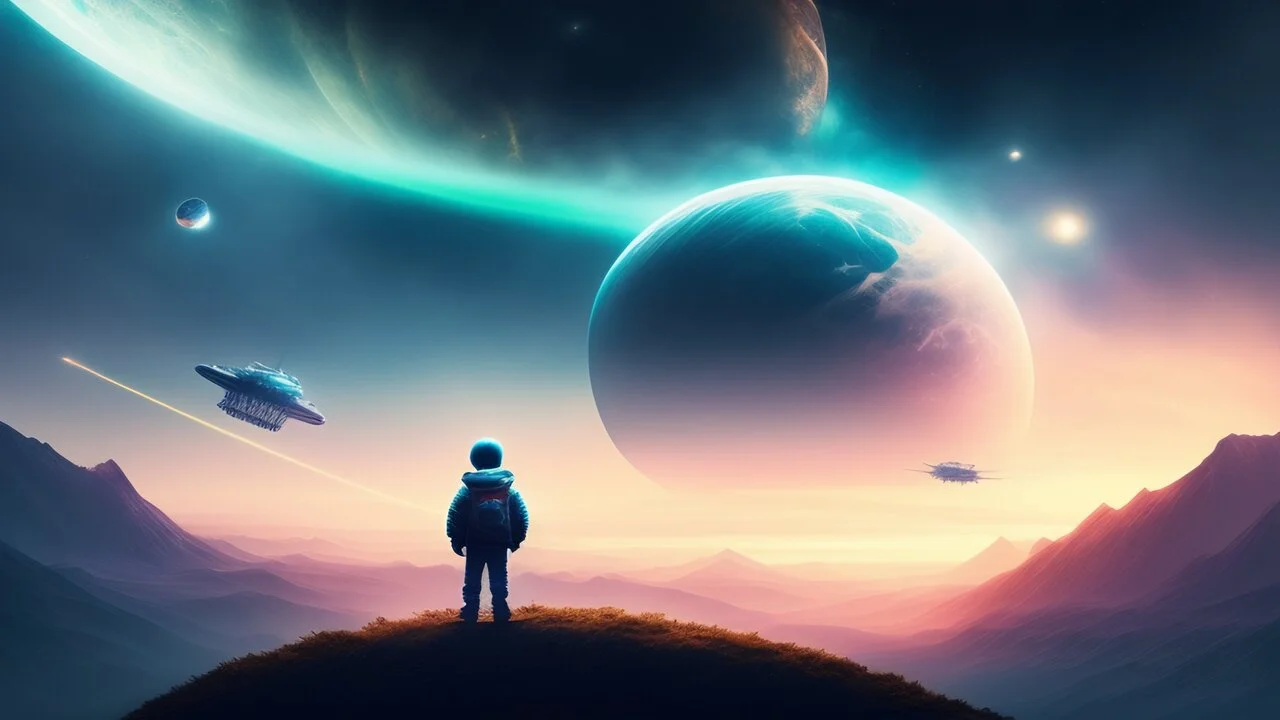
Venusians are described as the starseeds of love and beauty. The planet they are named after is the hottest place in the solar system, and that contrast is a good place to start.
Key Takeaways
A Venusian starseed, sometimes called a Venus starseed, is a person whose soul is believed to have originated in the energy of Venus before being born on Earth.
In starseed teaching, Venusians are the lovers, artists and harmonizers of the starseed family, sent here to bring more beauty, tenderness and connection into the world.
If the description of an empathic, beauty-loving soul who never quite felt at home here sounds familiar, this guide covers what the idea means and where it came from. It also walks through the traits, mission, challenges and relationships associated with Venusians.
What Is a Venusian Starseed?
In the wider framework of what a starseed is, each type is linked to a place of origin and a set of gifts. Venusians are linked to the planet of love and are described as the heart of the starseed family.
Teachers describe them as natural feelers. They sense the emotional temperature of a room quickly, tend to smooth over conflict and often become the person others confide in.
They are also called dimension weavers. The belief is that Venusians move easily between the physical and spiritual worlds, which is said to make them intuitive and, at times, vulnerable to heavy or draining energy.
That openness is why so much Venusian teaching focuses on protection and grounding. Being able to feel everything is a gift only when you can also close the door.
Where Do Venus Starseeds Come From?
The Venusian origin story draws on two sources: the planet and goddess Venus, and a body of channeled teaching about beings called the Hathors.
The Hathor thread comes mainly from The Hathor Material (1996), a book in which Tom Kenyon channels a group presenting themselves as an ascended civilization.
On his site, the Hathors describe their origin as coming “by way of Sirius,” then proceeding “to your solar system and the etheric realms of Venus.”
The same material links them to Hathor, the ancient Egyptian goddess of love, music and joy. Many Venusian starseeds report a strong interest in ancient Egypt, and this connection is the reason teachers give for it. It also explains why Venusians are sometimes described as cousins of Sirian starseeds.
The planet itself tells a very different story. According to NASA, the surface of Venus reaches about 872 degrees Fahrenheit, under dense clouds of sulfuric acid. It spins backward compared with Earth, so a Venusian day of 243 Earth days is longer than its 225-day year.
No physical life could survive there, which is why the teaching speaks of the “etheric” Venus rather than the planet’s surface. The starseed Venus is a spiritual plane named after the goddess, while the astronomical Venus is a furnace that looks gentle from far away.
There is a lesson in that contrast. Venusians are often described the same way: soft and luminous on the outside, with far more heat underneath than people expect.
Is a Venusian Starseed the Same as Venus in Astrology?
No. In astrology, Venus is a planet in everyone’s birth chart, and it governs love, pleasure and values. It rules the signs Taurus and Libra, so people with those signs prominent in their chart are sometimes called “Venusian” in temperament.
A Venusian starseed is a different idea: a claim about where a soul came from, not about the sky at your birth. The two often overlap in practice, since people with strong Venus placements tend to relate to the Venusian description, but one does not require the other.
What Are the Traits of a Venusian Starseed?
People who identify as Venusians tend to recognize themselves in the traits below. None of them is proof of anything, but together they form the picture teachers describe.
Many of these overlap with what psychology calls high sensitivity, and with the traits of different types of empaths. The Venusian label adds a story about origin and purpose on top of that temperament.
What Do Venusian Starseeds Look Like?
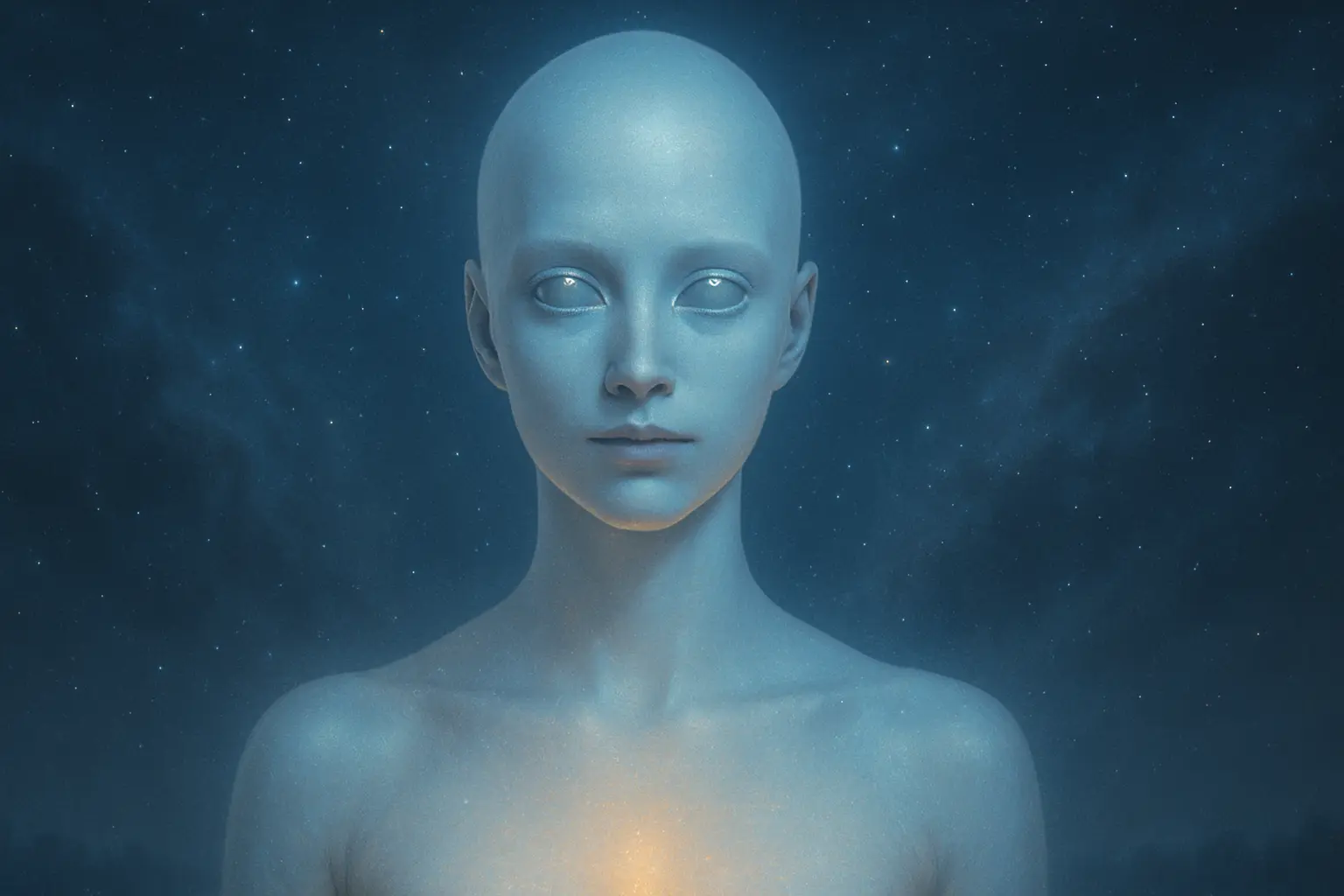
There is no physical test for being a Venusian starseed, and teachers who describe one usually mean it as a pattern, not a rule. Still, a few features come up often in Venusian descriptions.
Treat appearance as the weakest of all the signs. How you feel, what you love and how you treat people say far more about a Venusian nature than any feature of the face.
What Is the Venusian Mission on Earth?
The mission most often described is simple to state and hard to live: bring more love, beauty and harmony into the world.
In practice, teachers point to four areas where Venusians are said to do this work.
The mission is often compared with that of Hadarian starseeds, another group described as compassionate and relationship-centered. It also overlaps with the qualities of divine feminine energy: receptivity, intuition and the power to nurture.
What Challenges Do Venusian Starseeds Face?
Venusians are often called reflectors. Their warmth and visibility act like a mirror, and people who spend time around them can find their own unhealed feelings showing up, such as envy, insecurity, or resentment.
This can lead to a painful pattern. A Venusian offers kindness, and someone reacts with hostility that they don’t understand themselves. Over time, many Venusians start to blame themselves for reactions that were never about them.
Several other struggles are commonly described:
The answer described in most teaching is less mystical than it sounds: boundaries, rest, and honest self-examination. The work of meeting your own shadow self matters here, because a reflector who understands their own reactions is much harder to knock off balance.
What Is the Venusian Starseed Symbol?
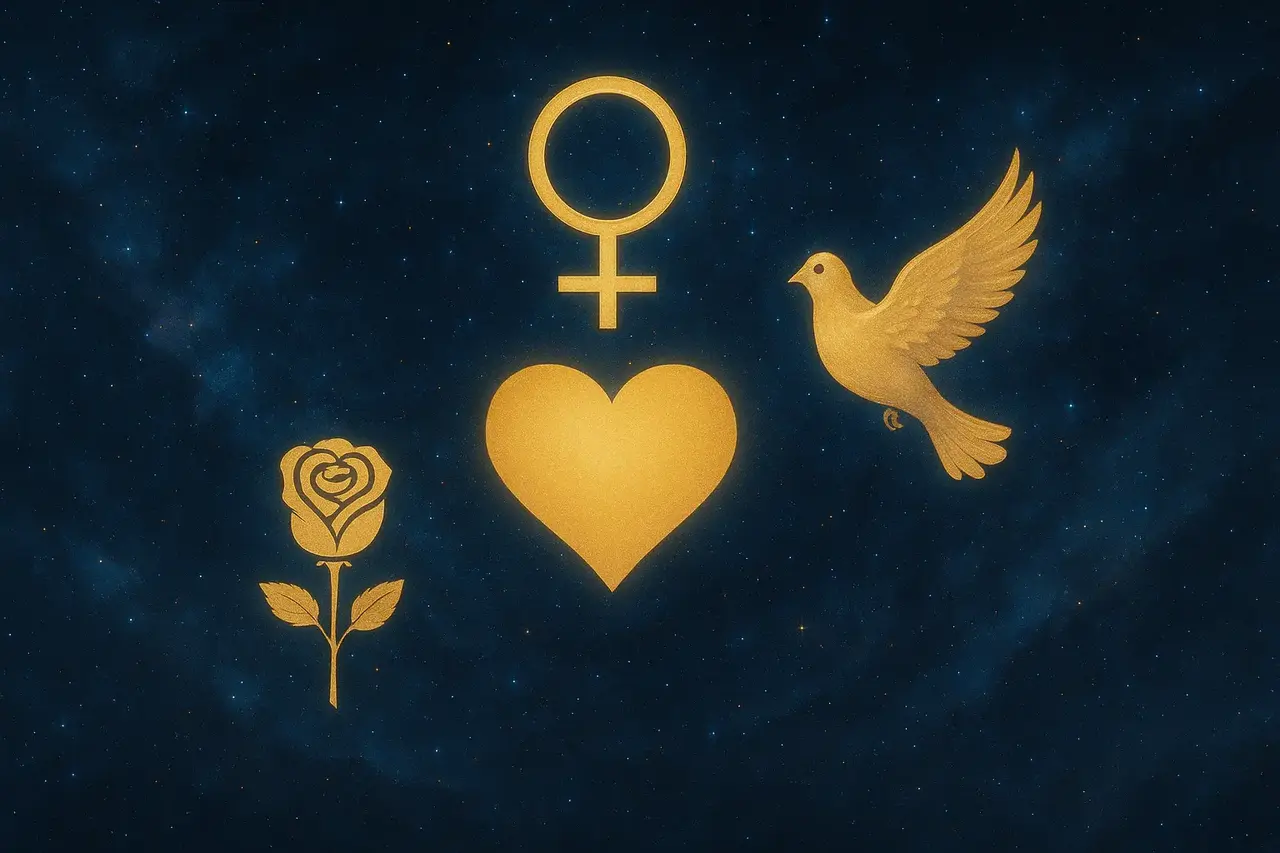
No single symbol belongs to Venusians, but four images come up again and again.
Most Venusians find that one of these carries more meaning for them than the others. Use the one that does.
What Does Venusian Energy Feel Like?
Venusian energy is described as gentle, warm and soothing. People often say they relax around a Venusian without knowing why.
That energy is tied to the heart chakra. Venusians are said to sense emotions easily and respond with kindness, which makes them natural listeners and caregivers.
There is also a creative, magnetic side. Venusians are often described as strong manifesters of beauty, able to turn a bare room, a plain meal or an ordinary evening into something that feels cared for.
The shadow of this energy is depletion. Warmth given without limits turns into exhaustion. Grounding habits, time alone and body-based practices such as somatic practices help keep the well from running dry.
How Do Venusian Starseeds Approach Love and Twin Flames?
Love is where Venusians are said to shine and struggle most. They look for deep emotional connection, value intimacy over excitement and can be extraordinarily devoted partners.
Many also carry a fear of vulnerability. Because they feel so much, being hurt costs more, and some protect themselves by holding back from commitment.
Starseed teaching often speaks of Venusians and twin flames: the idea of a soul counterpart who mirrors you completely.
The common advice is that a Venusian meets that kind of connection only after doing their own healing, since a partner who reflects everything will also reflect every unhealed wound.
Whether or not you believe in twin flames, that advice holds up. The relationship you can sustain depends on how well you can meet yourself.
What Should You Do If You Feel Like a Venusian Starseed?
Recognizing yourself in this description often comes with relief, and sometimes with grief for years spent feeling too sensitive for the world. That sensitivity was never a flaw you chose. What you build with it from here is up to you.
Start with one practical step this week: choose one relationship or setting where you give far more than you receive, and set one clear boundary there. Venusian warmth lasts longer when it is protected.
Then read about the related Hadarian and Pleiadian starseeds. Notice which descriptions fit and which don’t, since that tells you more about yourself than any single label can.