
Higher Self: What It Is, How to Connect With It, and How to Hear Its Guidance

You give better advice to your friends than to yourself. Research says the fix is a step back, and spiritual traditions have a name for the one who steps back.
Key Takeaways
The higher self is the wisest, calmest, most loving aspect of who you are. Spiritual traditions describe it as your true self, your soul, or your link to the divine. Others speak of higher consciousness.
It sees clearly while the rest of you is caught up in fear, habit, and reaction.
Connecting with it does not mean becoming someone else. It means learning to hear a softer voice that was there all along. Most people already know that voice. It is the one that speaks up in rare moments of clarity, then gets drowned out again.
What Is the Higher Self?
It is your deepest nature, distinct from the personality you show the world. Most descriptions call it eternal, loving, peaceful, and aware of your highest potential. Your job, history, or body does not define it.
The idea has deep roots. In Hindu philosophy, the Atman is the true self, the essence beneath body and mind. In the 19th century, Theosophy founder Helena Blavatsky defined the higher self as “Atma,” the inseparable ray of the universal self (Wikipedia).
American writer Ralph Waldo Emerson took the idea in a different direction. In his 1841 essay “The Over-Soul,” he described a great unity “within which every man’s particular being is contained and made one with all other” (Wikipedia).
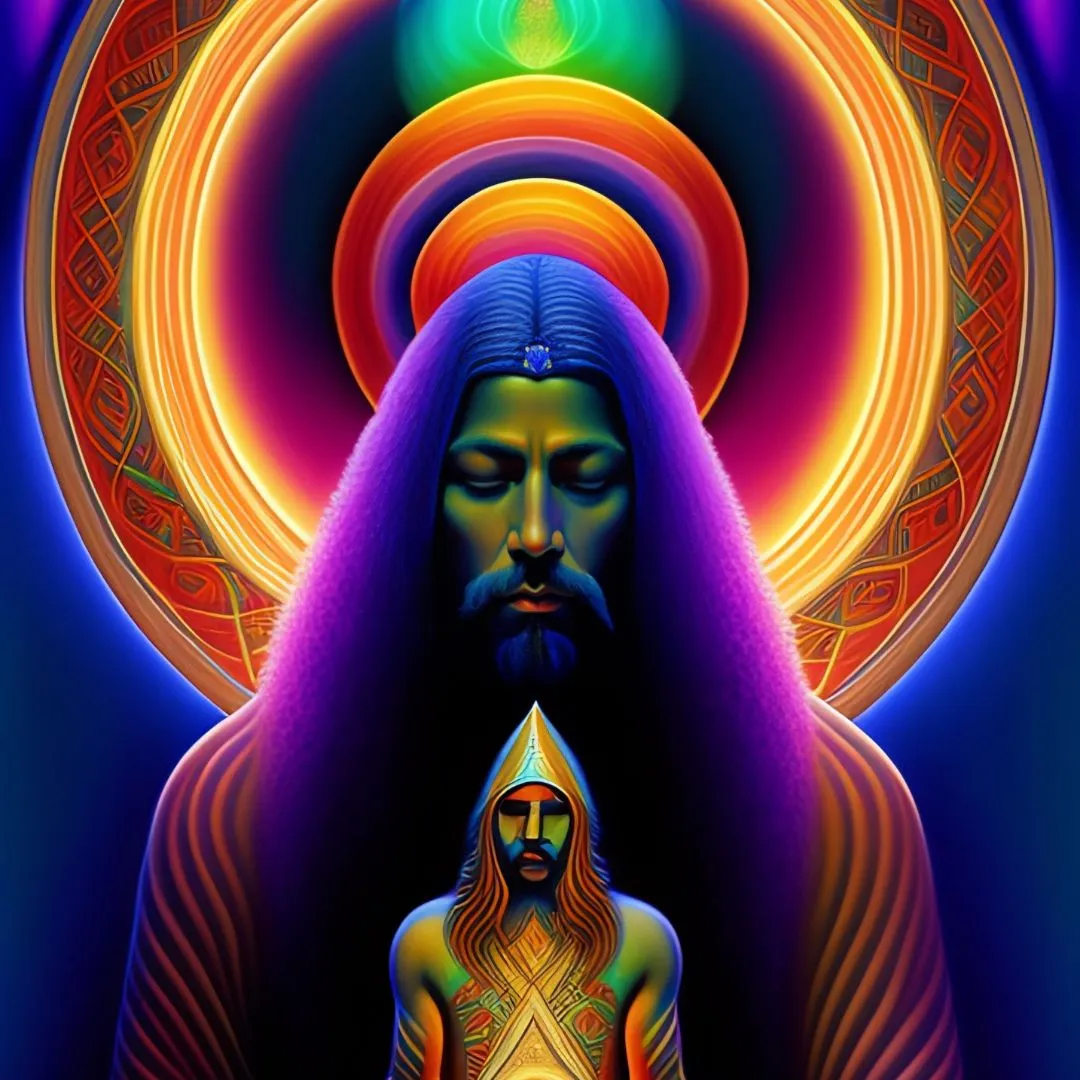
Psychology picked up the thread too. Italian psychiatrist Roberto Assagioli founded psychosynthesis.
He treated the self as a real part of each person, and he often gave it that very name. Today the idea sits at the heart of New Age spirituality, which sees this inner self as a guide toward purpose.
Is the Higher Self the Same as the Soul or the Ego?
It overlaps with the soul. It is the ego’s opposite.
The practical point stays the same in every version. There is more to you than the anxious commentary in your head. That extra layer is what people mean by the word higher. Learning to stop identifying with your thoughts widens that gap.
What Are the Signs You Are Disconnected From Your Higher Self?
You may be out of touch with your deeper self when several of these sound familiar:
None of these signs means something is wrong with you. They mean the louder parts of you have done most of the talking. That balance can change with practice.

What Are the Signs Your Higher Self Is Active?
People who feel more connected often notice changes like these:
These are signs of growth, not trophies. Some days you will feel close to this inner wisdom. Other days you will not. Both are part of the practice.
How Do You Connect With Your Higher Self?
You connect by creating enough stillness and distance from the ego to hear something deeper. These practices are the classic doorways:
Psychology research supports stepping back.
Psychologists Igor Grossmann and Ethan Kross ran three experiments with 693 people. They found that people reasoned more wisely about other people’s problems than their own. Asked to view their own situation from a distance, people closed that gap (Grossmann and Kross, 2014).
That finding is a useful bridge. Asking “What does she really need right now?” about yourself creates the same distance. It loosens the ego’s grip long enough for wiser thinking to come through.

How Does Your Higher Self Communicate?
Spiritual teachers describe several channels of inner guidance:
Discernment matters here. Not every inner voice deserves your trust. Genuine guidance tends to feel calm, kind, and grounded, even when it asks something hard of you.
Voices that feel frantic, fearful, grandiose, or cruel usually come from the ego. Old wounds speak that way too.
Using spiritual language to avoid real problems has a name, spiritual bypassing, so watch for it. An inner voice that urges harm to yourself or anyone else is not spiritual guidance. Please reach out to a mental health professional.
What Happens When You Reach Your Higher Self?
Reaching it is less like arriving at a destination than like waking up more often. Most teachers describe moments of connection rather than a permanent state.
In those moments, the mind grows still. Fear loosens its grip. You act from your values instead of your reactions. Many people describe a feeling of coming home to themselves.
Eastern traditions go further. In yoga and Vedanta, full realization of the true self is liberation, or moksha. In Buddhism, the closest idea is awakening. The traditions’ own words for it are collected in our article on self-realization.
For most people, the practical change is gradual and unglamorous. Nobody hands you a certificate. Reactions soften. Choices get simpler. The gap between who you are and who you mean to be starts to close.
What Chakra Is Linked to the Higher Self?
Yoga traditions most often link this inner self to the crown chakra, or Sahasrāra. The name means “thousand-petaled.” It is described as the most subtle chakra, related to pure consciousness, and it sits at the top of the head.
People who work with the chakras often focus on the crown in meditation to deepen this sense of connection. Our guide to the crown chakra explains its meaning, signs of balance, and practices.
How Do You Connect With Yourself Spiritually?
Connecting with yourself spiritually means becoming aware of your whole being: body, mind, and spirit. The path is personal rather than doctrinal. Some people find spiritual connection through prayer and religious practice. Others find it through meditation, yoga, nature, and gratitude.
Be honest about what actually moves you, not what you think should move you. A practice that feels alive will deepen your connection. A practice done out of duty usually fades.
These simple steps help:
Is Spiritual Growth About Expansion or Attachment?
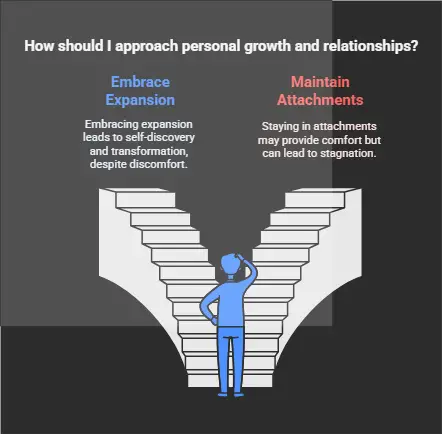
Spiritual growth asks you to choose expansion over attachment. Expansion means growing toward greater awareness. You live by your values, even when change is uncomfortable. Attachment means clinging to people, roles, or situations out of fear rather than genuine alignment.
Attachment often disguises itself as connection. It can look like staying in a job that drains you.
It can look like holding on to an identity you have outgrown, or needing approval to feel worthy. The familiar feels safe even when it no longer fits. Growth rarely feels comfortable at first, which is exactly why fear dresses up as loyalty.
Your deeper self tends to pull toward expansion. Listening may mean letting go of what you have outgrown so that something truer has room to arrive. If letting go feels frightening, our guide to trusting the universe speaks to that fear.
Subscribe to Create Higher Vibrations!
Get Inspiration and Practical advice straight to your inbox.
What Would Your Higher Self Do Next?
Think of one decision in front of you right now. It does not need to be large.
Write it down. Then ask the question in the third person, using your own name: “What would serve [your name] best here?” Read your answer slowly. Notice whether it sounds calm and generous. An anxious answer sounds different.
A calm, unhurried answer is usually worth trusting. Take one small, concrete step in that direction before tonight. This inner wisdom rarely shouts. It waits for you to listen, then offers the next step, never the whole staircase.