
How to Love Yourself: What Self-Love Is and 12 Ways to Practice It

Self-love is less a feeling than a way of treating yourself, one choice at a time.
Key Takeaways
Learning how to love yourself starts with how you treat yourself on an ordinary day. Self-love means accepting who you are, caring for your needs, and speaking to yourself the way you would speak to a good friend. It grows through practice, not through waiting to feel worthy first.

What Does It Mean to Love Yourself?
So, what is self love? Self-love is a steady, caring relationship with yourself. It covers your body, your emotions, your mind, and your spirit. You accept yourself as you are while you keep growing.
In practice, it shows up as a few habits:
Self-love does not mean you always feel confident. Some days you will not like yourself much. Self-love is how you treat yourself on those days too.
Is Self-Love Selfish?
No. The confusion is old, so it helps to see where the line sits.
Aristotle wrote about self-love, which he called philautia, in the Nicomachean Ethics. He described two kinds.
One kind grabs for personal gain, and he called it bad and common. The other loves the self by pursuing virtue, and he called it the best kind of good.
In 1956, psychologist Erich Fromm made a similar case in The Art of Loving. He criticized the belief that loving others is a virtue while loving yourself is a sin.
He argued that self-love should not be confused with narcissism. Loving your neighbor for their humanity, he said, logically includes loving yourself for the same reason.
That echoes an older teaching. Mark 12:31 says, “Thou shalt love thy neighbour as thyself.”
So here is the working difference:

What Is the Difference Between Self-Love and Self-Esteem?
Self-esteem is how you rate yourself. It often depends on doing well and on comparing yourself with others. When you fail, self-esteem drops.
Self-love and self-acceptance do not depend on winning. Kristin Neff, who defined self-compassion in 2003, argued that it avoids the downward comparison tied to chasing self-esteem. You do not need to be better than anyone to treat yourself well.
That makes self-love a steadier base for self-worth. It holds on bad days, which is when you need it most.
Why Is It So Hard to Love Yourself?
Many people find self-love harder than loving anyone else. Common reasons include:
None of these means you are broken. They are habits of mind, and habits can change. Our guide to limiting beliefs goes deeper into the stories underneath them.
How Do You Begin to Love Yourself?
Begin with self-compassion. It is the most researched form of self-love, and it is easier to start than full self-love.
Self-compassion means treating your own pain or failure with the kindness you would offer a friend. A 2012 meta-analysis of 14 studies found a large link between self-compassion and mental health. Higher self-compassion went with fewer mental health symptoms.
Many people fear that kindness toward themselves will make them lazy. The research says the opposite.
Psychologists Juliana Breines and Serena Chen ran four experiments on this. They found that self-compassion after a failure raised motivation to improve. One group studied longer for a hard test after failing a first one.
So the first step is simple. The next time you make a mistake, notice the critic. Then ask what you would say to a friend in the same spot. Say that to yourself.
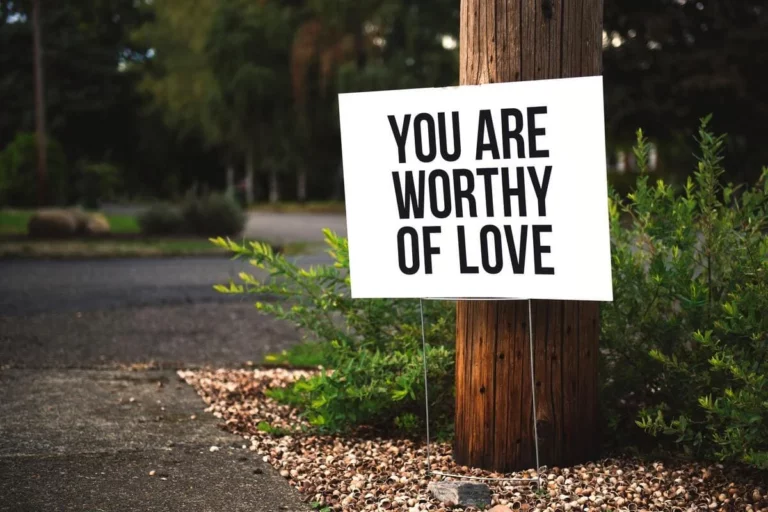
12 Ways to Love Yourself
These are the practices that matter most. Pick one or two to start. Add more once they feel natural.
What Is Mirror Work?
Mirror work is the practice of looking into your own eyes in a mirror and speaking to yourself with kindness. Author Louise Hay popularized it through her teaching and her 1984 book You Can Heal Your Life.
The practice is simple. Stand at a mirror. Make eye contact. Say your name and one caring sentence. “I see you trying.” “You are doing your best today.”
Many people find mirror work uncomfortable at first. That discomfort is useful information. It shows you where self-judgment lives. Start with a few seconds. Build up over time.
Do Affirmations Help You Love Yourself?
They can, but not in the way most people think. Psychologist Joanne Wood and her colleagues tested a popular affirmation in 2009. The phrase was “I’m a lovable person.”
People with high self-esteem felt slightly better after repeating it. People with low self-esteem felt worse. The statement clashed with what they believed, so their minds argued back.
The fix is to choose statements you can believe right now. Try neutral or growing phrases:
As belief grows, the statements can grow too.

How Do You Love Yourself in a Relationship?
Loving yourself inside a relationship means keeping your own needs in view. You stay close to your partner without disappearing into them.
It looks like saying what you want, even when it risks a small conflict. Keeping friends, hobbies, and time of your own is part of it. So is noticing when you shrink to keep the peace.
A partner can add to your self-worth. A partner cannot be its only source. Our article on emotional intimacy explores how to stay open without losing yourself.
How Do You Quiet Your Inner Critic?
Your inner critic often repeats old stories shaped by fear, shame, or past criticism. It sounds like truth because you have heard it so often.
Four habits weaken its grip:
Shame often fuels the critic. Our article on what shame is explains how it works and how to loosen it.
How Do Boundaries Protect Self-Love?
Boundaries tell other people that your time and energy matter. They tell you the same thing. They are not walls. They are the edges that keep you from disappearing into other people’s needs.
A boundary can be small. Leave a conversation that turns cruel. Decline a favor you have no energy for. Keep one evening a week for yourself.
When you hold boundaries, you stop trying to earn love through constant giving. You start to respect yourself without having to perform.

How Do You Love Yourself When You Are Depressed?
Depression makes self-love harder. It drains energy and turns self-talk darker. So shrink the goal.
On a depressed day, self-love might mean one glass of water, one shower, or one text to a friend. That is enough. Praise the effort, not the result.
Depression is a health condition. If low mood lasts more than two weeks, talk to a doctor. If you have thoughts of self-harm, get help today.
The U.S. Suicide and Crisis Lifeline answers calls and texts at 988. Gentle practices such as meditation for depression can support treatment, not replace it.
What If Trauma Makes Self-Love Feel Impossible?
After trauma, self-love advice can feel out of reach. Standing at a mirror saying “I am worthy” may set off a flood of reasons you are not. That reaction is not a failure. It is a nervous system that learned to stay on guard.
A gentler order often works better:
Our introduction to somatic practices covers body-based tools for the first step. A trauma-informed therapist can guide the rest.

Subscribe to Create Higher Vibrations!
Get Inspiration and Practical advice straight to your inbox.
One Question for Hard Days
You will have days when self-love feels like a lie. On those days, skip the big feelings. Ask one question instead.
What would self-love do right now?
Maybe it is a walk. Maybe it is an early night, a boundary, or a kind sentence in the mirror. Pick the smallest answer and act on it.
Self-love is built from small acts like these. Repeat them until they become who you are. The self-mastery collection has more practices for that kind of inner strength.