
Crown Chakra (Sahasrara): Meaning, Signs, and How to Balance It Safely
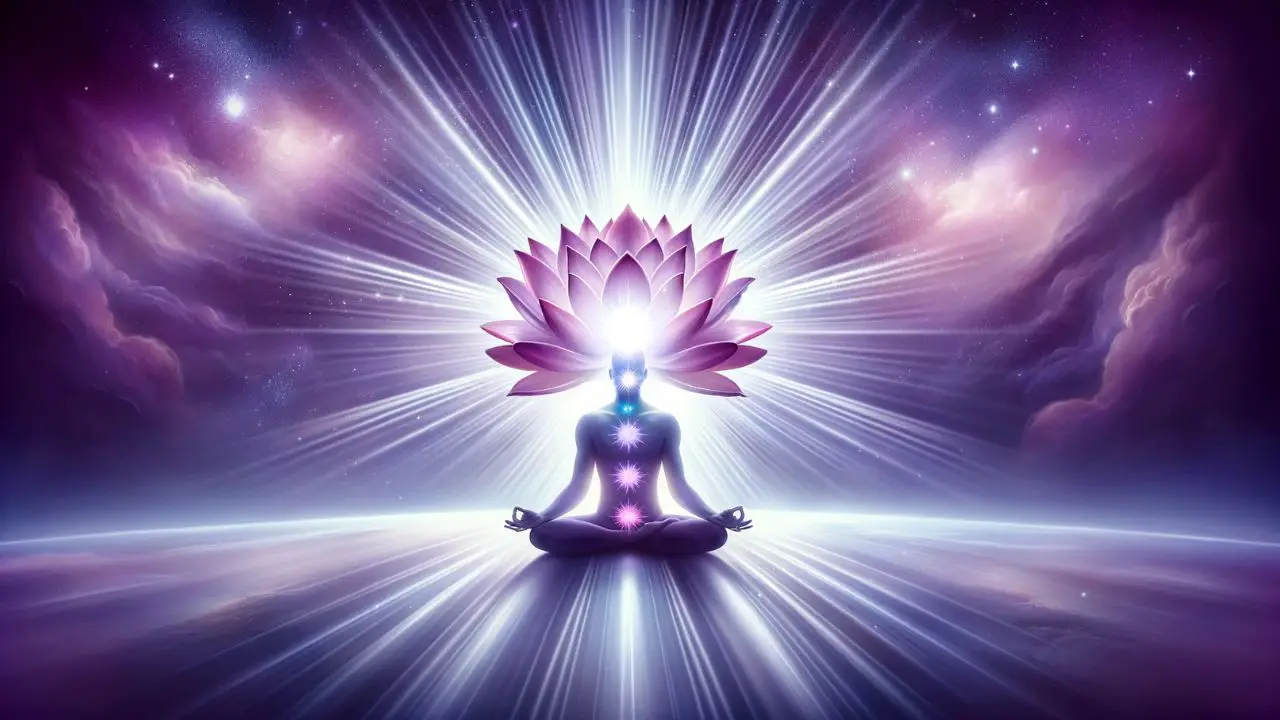
Tradition gives the crown a lotus of 1,000 petals. Some tantric texts give it no sound at all. Its mantra is silence.
Key Takeaways
The crown chakra (Sahasrara) is the highest of the seven main chakras in yogic tradition. It sits at the very top of the skull. Teachers link it to universal consciousness, a sense of connection to a higher power, and inner stillness.
It is tempting to see this center as the finish line of spiritual growth. That view causes real problems. What follows covers where the idea comes from, what an opening actually feels like, the signs of imbalance, and how to work with it without losing your footing.
What Is the Crown Chakra?
The crown chakra is the energy center said to sit at the highest point of the body. In the common seven-chakra map, it is the last stop above the third eye.
The crown is said to be the center from which the other chakras arise. In kundalini teaching, energy that rises from the base of the spine reaches its peak here. Yogis describe the result as the highest states of consciousness.

Where Does the Crown Chakra Idea Come From?
The crown chakra does not come from the Vedas, the oldest Hindu scriptures. The word chakra does appear in Vedic texts, but it means a wheel, not an energy center.
The thousand-petalled lotus at the crown shows up in medieval hatha yoga texts, including the Shiva Samhita. The sources disagree about where it sits.
The Shiva Samhita places it beyond the body. Other texts locate it at the brahmarandhra, the soft spot on the skull, described as the place where the soul leaves at death.
The seven-chakra system most people know today comes from a much later source. Sir John Woodroffe’s 1919 book The Serpent Power translated a Sanskrit text written in 1577. Woodroffe published under the pen name Arthur Avalon.
Later writers, many of them in the West, added the rainbow colors, gemstone pairings, and psychological traits now attached to each chakra.
Knowing this history changes how you read the modern charts. The violet color and the long lists of traits are recent additions. The core teaching, a lotus of awareness at the crown, is older.
Why Is the Crown a Roof, Not a Foundation?
Treating the crown as the goal is easy. It turns into a badge of honor, proof that you have risen above the messy work of being human.
I teach the opposite. The crown is a roof, not a foundation. A tree with huge branches and shallow roots falls in the first storm. Upper centers depend on lower stability.
In my own meditation and table work, I never start at the crown. I begin at the root.
I drop my awareness into the soles of my feet, the pelvic bowl, and the belly, until my body feels heavy as lead. Only then do I turn my attention upward.
If you skip that step, there is nothing underneath to hold what opens above. Our guide to the root chakra covers that base, and the article on root chakra healing practices offers ways to build it.
What Does a Crown Chakra Opening Feel Like?
The discipline with the crown is restraint. Trying to blast it open by forcing sensation upward tends to bring headaches, not clarity.
When the crown does open, the signs are subtle.
This is not an explosion of white light. It is closer to silence, which fits the traditions that give the crown no sound at all.
In Reiki, a form of energy healing, I keep my hands three to four inches above the person instead of resting them on the scalp. Contact there can feel suffocating to the person on the table. My palms stay open and neutral, without pushing any intent.
Opening is also not an on and off switch. “Cracking open” the crown sounds like a permanent achievement. I think of it more like an aperture. It widens when you feel safe and rested. It narrows under stress and fatigue.

How Is the Crown Chakra Connected to the Mind and Body?
Modern chakra charts link the crown to the pineal and pituitary glands and the upper brain. Those pairings belong to recent Western systems, not the older texts. Treat them as a way to locate the center, not as anatomy.
The older teachings focus on awareness itself. The crown is where the sense of a separate self is said to relax into something wider. That is why its themes are meaning and connection rather than any single organ.
In practice, the link to the body shows up in sensation. People feel the crown through the scalp, the temples, and the space just above the skull. Tension in those places is often the first sign that the crown is strained.
Does the Crown Appear in Other Traditions?
Other traditions describe a similar peak. In Kabbalah, the topmost point on the Tree of Life is Keter, a Hebrew word that literally means “crown.” It stands for pure consciousness and the first impulse toward creation. Keter sits above nine other spheres, much as the crown sits above six chakras.
The parallel is not exact, and the two systems grew up separately. Still, both traditions picked the same image. The highest point becomes a symbol for contact with the source of everything.
What Are the Signs of a Blocked or Overactive Crown Chakra?
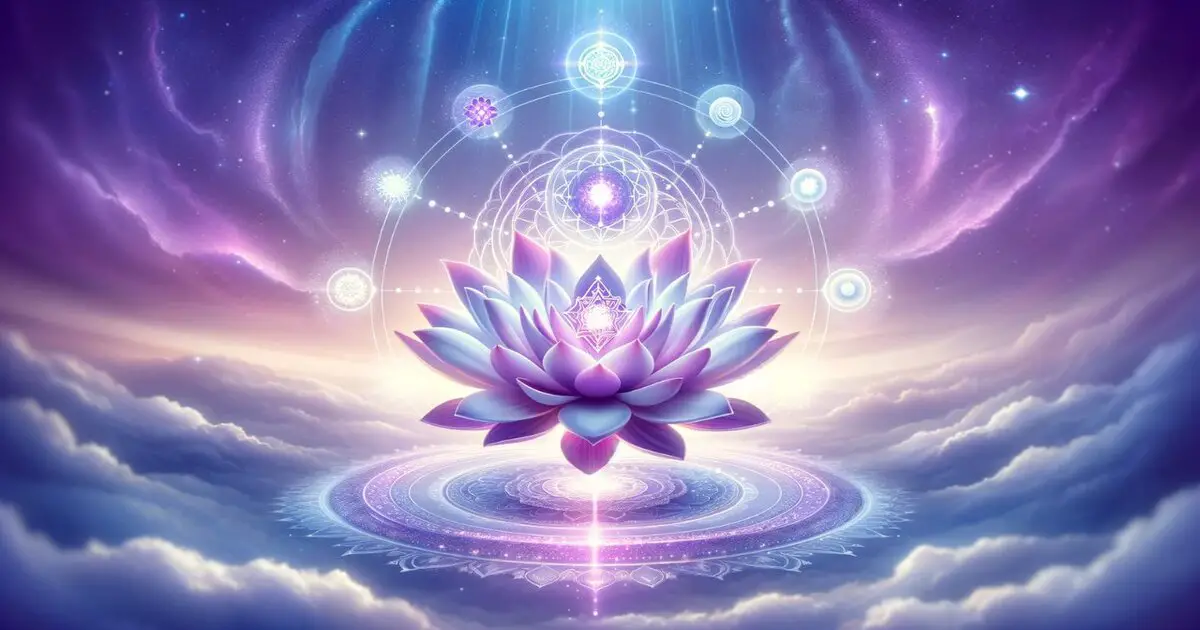
Chakra teaching describes two ways the crown can fall out of balance. Each one has its own pattern.
The overactive pattern is easy to mistake for progress. It can look like intense spiritual interest. Underneath, it is usually a crown running ahead of everything below it.
If you cannot tell which chakra is involved, our guide to identifying blocked chakras walks through a simple body scan.
What Happens When You Force the Crown Open?
Chasing high states while ignoring the lower body creates instability. I have watched it happen many times. When people skip the root and solar plexus to force a spiritual awakening, the fallout follows a pattern.
Research on meditation supports the general point that intense practice is not always gentle. A 2017 study of Western Buddhist meditators catalogued 59 kinds of challenging experiences. Some were mild and brief. Others caused severe, lasting distress.
If dizziness, insomnia, and feelings of detachment persist, talk to a doctor. A mental health professional can also help. Pause the practice in the meantime. Our guide to kundalini awakening covers similar risks in more detail.
How Do You Balance the Crown Chakra Safely?
Balancing the crown starts below it. These practices follow the order I recommend.
Keep sessions short at first. Ten calm minutes do more than an hour of straining.
The signs that it is working are ordinary. Sleep steadies. Mental chatter fades. Stress lands softer.
If you feel more scattered instead, you have gone too fast. Return to grounding for a while. The crown also works with its neighbor, the third eye chakra, and with the whole system described in our overview of the 7 chakras.
Is There Scientific Evidence for the Crown Chakra?
There is no scientific evidence that chakras exist as physical structures. Cleveland Clinic’s guide to the seven chakras puts it plainly. Practices said to balance them may still help people feel centered and at peace.
That fits how I use the idea. The crown is a map for attention, not an organ. Following the map with roots first tends to make people calmer. That is reason enough to use it carefully.
Subscribe to Create Higher Vibrations!
Get Inspiration and Practical advice straight to your inbox.
What Does an Open Crown Look Like at the Kitchen Sink?
A working crown does not take you out of your body. Real crown integration does the opposite. It brings full presence into ordinary physical life.
Someone with a healthy crown is not floating above the world. They are clearer, calmer, more practical, more capable with everyday tasks.
So test it tonight with a sink full of dishes. Wash each one slowly. Feel the water temperature. Notice the weight of each plate. If your mind goes quiet while your hands keep working, that is the crown doing its job.

