
Root Chakra (Muladhara): Meaning, Location, Symbol and Signs
It asks one plain question. Do you feel safe enough to stand where you are?
Key Takeaways
The root chakra, or Muladhara, is the first of the seven main chakras in Hindu tantra. It sits at the base of the spine. It stands for safety, stability and belonging. Its element is earth.
What Is the Root Chakra?
The Sanskrit name Muladhara is often translated “root of existence.” It is the lowest center in the energy body of yoga and tantra. Every other chakra is said to rest on it.
In daily life, Muladhara covers survival needs. Food, shelter, money, health, belonging: all of them belong here. When these feel secure, you feel calm. When they do not, you feel on edge.
The basic facts are these:
Where Is the Root Chakra Located?
The root chakra location is the bottom of the spine. The tradition places it near the tailbone, between the perineum and the coccyx.
You will not find it on an anatomy chart. It is a spiritual map of the body, not a physical organ. Teachers use the location as a place to rest attention.
What Is the Root Chakra Symbol and Color?
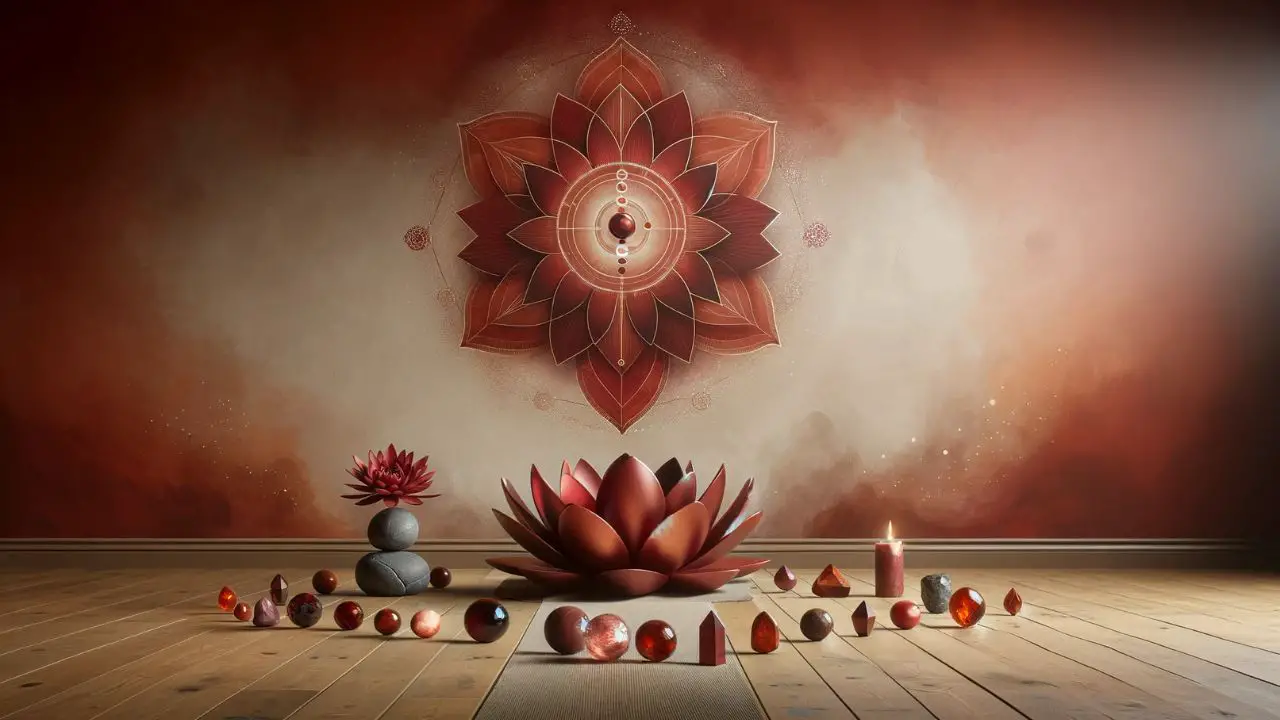
The traditional symbol is a red lotus with four petals. At its center sits a yellow square, the sign of earth. Each petal carries a Sanskrit syllable. The seed sound at the middle is laṃ.
The root chakra color most people learn today is red. Some sources add yellow or gold, which echoes the square.
The full rainbow scheme is newer. Wikipedia notes that rainbow colors and other correspondences were added later. That came after the Theosophists and Charles Leadbeater’s 1927 book The Chakras. The red you see today is an old symbol with a modern overlay.
What Does the Root Chakra Mean?
Root chakra meaning starts with ground. It stands for the sense that you are allowed to be here. Your needs will be met. Your body is a safe place to live.
The earth element carries that idea. Earth is solid, structured, supportive. A person with a steady root feels at home in their body.
The concept works as a metaphor as well as a belief. Most people can tell when a life has no ground under it. Muladhara gives that feeling a name.
Where Does the Idea Come From?
The word chakra means wheel. It appears in the Vedas, but not as an energy center. Systems of inner centers arrive later. Buddhist texts from about the eighth century, such as the Hevajra Tantra, mention four. Later Hindu texts expand the list.
The seven-chakra form most people know comes from Sir John Woodroffe’s 1919 book The Serpent Power. It translates Purnananda’s 1577 text on six chakras. Western occult writers then shaped it into today’s version.
Read this way, the chakra is an old Indian symbol system with a modern Western overlay. It is a map for meditation, not a measured structure.
What Are the Signs of a Balanced, Blocked or Overactive Root Chakra?
The tradition reads this center in three states. A blocked root chakra shows up as worry and fatigue. An overactive one shows up as control and hoarding. The table sets all three side by side.
Chakra Balance: Physical & Emotional Indicators
| State | Physical Symptoms | Emotional & Mental Indicators |
|---|---|---|
| Balanced | High physical vitality, stable energy, healthy digestion | Sense of safety, financial confidence, grounded focus |
| Underactive / Blocked | Fatigue, lower back pain, digestive or bowel issues | Anxiety, chronic fear, feeling unsettled or disconnected |
| Overactive | Restlessness, sluggishness, rigid physical posture | Greed, resistance to change, obsessive need for control |
These signs have ordinary causes too. Long-term pain, panic or low mood deserve a medical or mental health check. Our guide on how to identify blocked chakras goes further.
What Emotion Blocks the Root Chakra?
Fear is the emotion the tradition ties to Muladhara. It is fear at the level of survival: fear of not having enough, of losing shelter, of being unsafe in your own body.
Shame about having needs can add to it. So can guilt about taking up space. Both make it harder to feel that you have a right to be here.
Naming the emotion is a first step. A blocked root chakra often turns out to be an old fear that has never been named.
How Does Childhood Shape It?
Erik Erikson’s first stage of development is trust versus mistrust. It covers infancy, roughly the first year. The infant learns whether the world meets needs reliably.
Many chakra teachers link this stage to Muladhara. A child whose needs were met with care tends to grow into an adult who feels safe. A child whose needs were ignored may grow into an adult who feels on guard.
This is a frame for reflection, not a diagnosis. Early insecurity is common. Adults rebuild safety through steady relationships, therapy or body practices.
Our guide to preventing childhood trauma covers how families can build that foundation.
What Is the Root Chakra Frequency?
Many sources say the chakra matches 396 Hz. That number comes from the so-called Solfeggio frequencies. The name borrows from solfège, the do-re-mi system that began with the medieval monk Guido of Arezzo and his hymn “Ut queant laxis.”
The frequency list itself is modern. Leonard Horowitz and Joseph Puleo popularized it in the late 1990s. No traditional text assigns Hz values to the chakras. The traditional sound for Muladhara is the seed syllable laṃ.
A 396 Hz tone is safe and can be calming, like any steady sound. Treat it as a meditation aid. Our guide to spiritual frequency explains the wider claims.

How Do You Heal and Balance It?
Balance comes from daily practice, not one big ritual. These are the main routes:
The root chakra healing practices page walks through each one. It gives steps, poses and research on what works.
Subscribe to Create Higher Vibrations!
Get Inspiration and Practical advice straight to your inbox.
How Does It Connect to the Other Six Chakras?
Think of the chakras as a ladder. The first chakra is the bottom rung, and each rung leans on the one below.
The seven chakras page shows the full map. If the upper rungs feel shaky, check the bottom one first. Choose one grounding practice today and start there.

