Third Eye Opening Symptoms: Normal Signs, Warning Signs, and the Ajna Chakra

Yoga texts never placed the third eye in the pineal gland. That idea came from Victorian Theosophists.
Key Takeaways
Third eye opening symptoms are the sensations and perceptual shifts people report as Ajna, the sixth chakra between the eyebrows, becomes active in meditation. The common ones are mild pressure at the brow, a gentle pulse between the eyebrows, colored light with the eyes shut, vivid dreams, and a mind that slows down.
Some of these are passing adjustments. A few are signs to stop and ground. What follows covers the difference, how to work with the third eye without straining, and where the idea of a third eye comes from.
What Are the Most Common Third Eye Opening Symptoms?
In my own meditation and table work, third eye symptoms show up in four places: the forehead, the eyes, the mind, and what you see behind closed lids.
In the forehead:

In the eyes:
In the mind:
Behind the eyelids, and in sleep:
Which Third Eye Symptoms Mean You Should Slow Down?
A clear line separates normal adjustments from signs that you’ve gone too far, too fast. These are the warning signs I watch for:
When any of these appear, stop all work on the upper chakras right away. Bring yourself back into the body with simple, physical things.
If the symptoms persist, see a doctor. A mental health professional can help with panic, insomnia, and feelings of unreality. Paranoia that lingers after you stop practicing needs prompt professional care.
Research on meditation supports taking these signs seriously. A 2017 study of Western Buddhist meditators catalogued 59 kinds of challenging experiences. Some were brief. Others caused lasting distress.
Is It Normal to See Light With Your Eyes Closed?
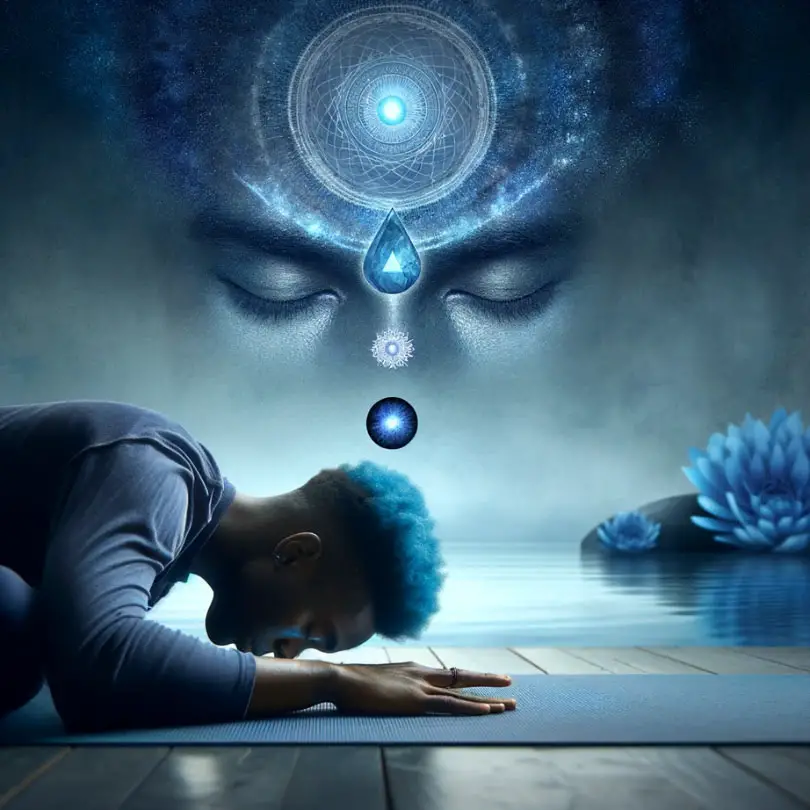
Seeing color, light, or shapes with the eyes shut is very common in meditation. Indigo and violet are the colors people name most often at the third eye. On their own, these visual effects are harmless and pass quickly.
Flashes with your eyes open are a different matter. Cleveland Clinic lists sudden vision changes, dark spots, or lots of new flashes or floaters as symptoms of retinal detachment. It advises getting treatment right away.
If new flashes or floaters appear in your normal vision, see an eye doctor that day. Don’t treat it as a spiritual sign.
Why Do You Feel Pressure Between the Eyebrows?
Working with the third eye needs no muscular effort. When people try to look hard into the brow, they squint on the inside. That creates eye strain and forehead tension rather than any opening.
The fix is to soften. In meditation, I let the eyeballs drop back into their sockets. Then I let the closed eyes gaze gently downward, toward the cheekbones. That small shift switches off the urge to focus.
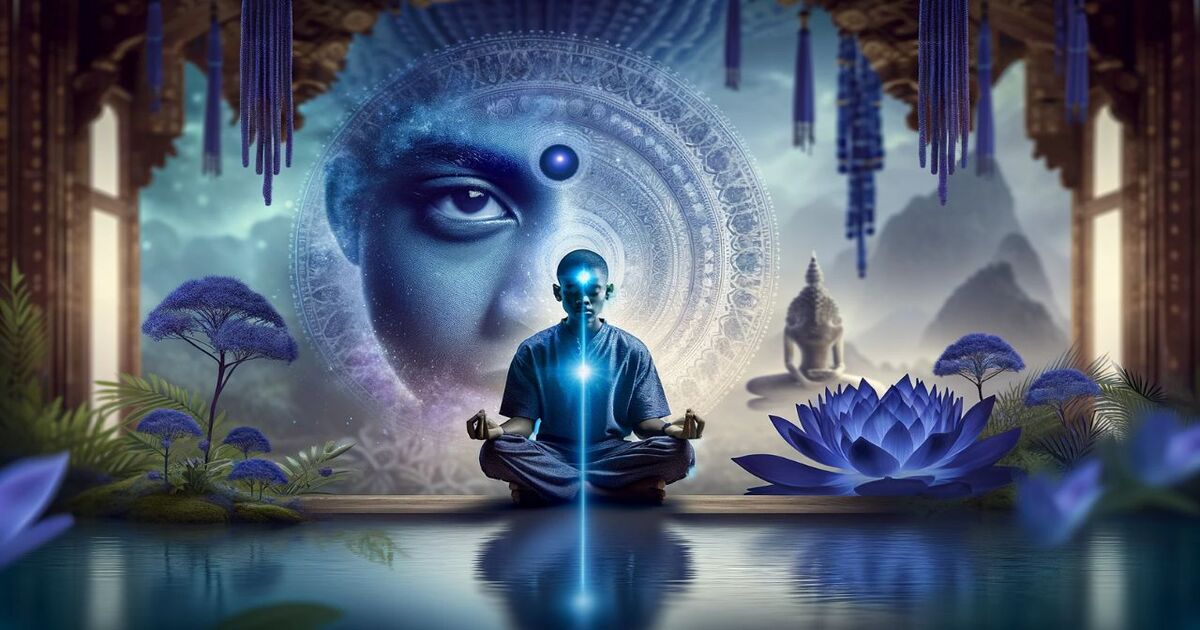
Pressure that eases within a few minutes of softening is normal. Pressure that builds, or stays after practice, is a sign you are pushing. Back off and return to grounding.
How Do You Open the Third Eye Chakra Safely?
Opening the third eye safely starts below it. The upper centers depend on a steady base, so ground first. The root chakra is that base.
Practices that force energy upward carry real risks. Our guide to kundalini awakening covers them in more detail.
How Does Reiki Work With the Third Eye?
In a Reiki session, I hover my hands two to three inches above the brow center and the temples. Another option is to cup the back of the skull lightly with one hand while the other hovers over the forehead.
Supporting the base of the skull lets the head rest completely. Most foreheads soften within a few minutes of that support.
Reiki practitioners describe this work as moving universal life force. At the third eye, the touch stays especially light.

What Is the Third Eye Chakra?
The third eye chakra is Ajna, the sixth of the 7 chakras. It sits in the center of the forehead, just above the meeting point of the eyebrows.
Yoga tradition describes Ajna as the meeting point of the side channels ida and pingala with the central channel, the sushumna. From there, energy is said to rise to the crown chakra above. The throat chakra sits just below.
The old texts treat Ajna as part of the subtle body. It belongs to the system of breath and energy, not to physical anatomy.
Is the Third Eye the Pineal Gland?
The link between the third eye and the pineal gland comes from Theosophy, the 19th-century movement led by H. P. Blavatsky. Her followers proposed that the pineal gland, a small gland deep in the brain, was a partly dormant third eye.
The idea drew on a real detail of biology. Some reptiles and amphibians have a light-sensing “parietal eye” connected to the pineal gland.
In humans, the pineal gland’s known job is more modest. It secretes melatonin, the hormone that helps set the body’s daily sleep rhythm.
Yoga texts don’t make this claim. They place Ajna in the subtle body, not in a gland.
There is also no scientific evidence that chakras exist as physical structures. Cleveland Clinic’s guide to the seven chakras says so plainly, while noting that the practices may help people feel calmer.
Where Does the Third Eye Appear in Other Traditions?
The image of an inner eye on the forehead turns up across Asia.

How Long Does It Take for the Third Eye to Open?
There is no fixed timeline. Some people notice brow sensations in their first few sessions. For others, the quiet mind takes months of regular practice.
Treat the symptoms as weather, not as a scoreboard. They come and go. The steadier signs are a calmer mind, clearer dreams, and an easier sense of knowing what you feel.
Intuition often sharpens too. Decisions arrive faster, with less inner debate. A hunch about a person or a plan turns out right more often than it used to.
If you can’t tell whether the third eye or a neighboring center needs attention, our guide to identifying blocked chakras walks through a simple check.
Subscribe to Create Higher Vibrations!
Get Inspiration and Practical advice straight to your inbox.
What Changes When the Inner Commentary Stops?
The clearest sign of an open third eye is stillness, not visions. You stop talking to yourself about what you perceive. You simply register it, with calm, detached clarity.
You can test this today. Look at something ordinary, like a tree outside a window. Notice whether your mind names it, judges it, then moves on.
Then look again without the naming. Let the shape, color, and light arrive on their own for a few breaths. That wordless seeing is what Ajna practice is for.