What Is the Law of Cause and Effect? Meaning, Examples, and How to Use It

Every result you live with started somewhere. Find the start. That is where the lever sits.
Key Takeaways
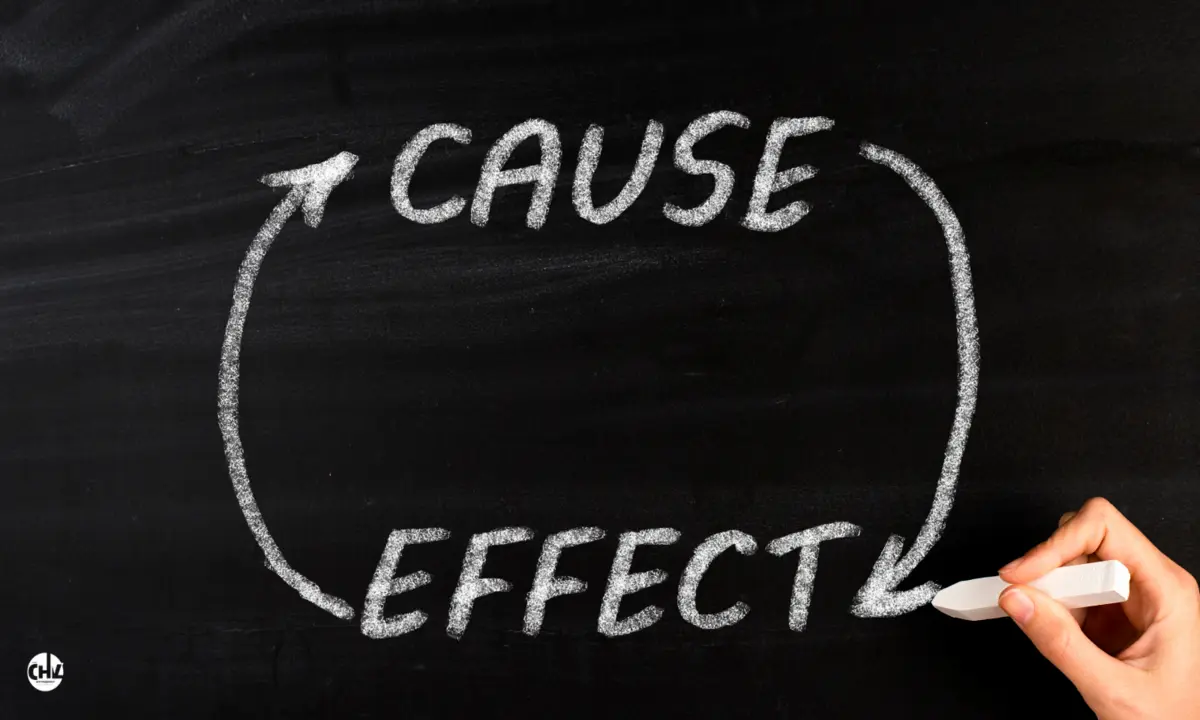
The law of cause and effect is the principle that every event has a cause. Every cause, in turn, produces an effect. Nothing happens in isolation. Your health, relationships, and work all trace back to earlier causes. Some are yours. Others are not.
That makes the law a tool for change. If you can see the causes behind a result, you can change the inputs. Then the result shifts too.
What Does the Law of Cause and Effect Mean?
The law of cause and effect means that outcomes have histories. A result you see today is the end of a chain that began earlier. Some links in the chain are choices. Others are circumstances, other people’s actions, or plain physics.
The law makes three practical claims:
People also call this the law of causality. In spiritual teaching, it often appears beside karma, though the two are not identical.
What Does The Kybalion Say About the Principle of Cause and Effect?
The principle of cause and effect is the sixth of the seven Hermetic principles in The Kybalion (1908). Its axiom reads: “Every Cause has its Effect; every Effect has its Cause; everything happens according to Law; Chance is but a name for Law not recognized; there are many planes of causation, but nothing escapes the Law.”
The book explains “chance” with a falling die. A die seems random.
Yet the throw, the hand’s force, the table, and the die’s starting position all decide the number that lands face up. Behind them sit chains of causes “running back further than the mind can follow.” You can read the full chapter in the free Project Gutenberg edition.
The book’s practical goal is ambitious. It says most people are moved “like pawns on the Chessboard of Life.” Habit, other people, and circumstance push them around. Its masters rise above that and “become Movers instead of pawns.” In plain terms, the aim is to become a cause in your own life rather than only an effect.
What are the planes of causation?
The axiom ends with a phrase most guides skip. It says there are “many planes of causation.” The book teaches that causes work on several levels at once. Physical causes sit lowest. Mental causes sit above them. Spiritual causes sit higher still.
In the book’s words, the higher planes dominate the lower ones. A person who works only on the physical level stays at the mercy of moods. A person who also works on attitude, attention, and values adds stronger causes to the chain.
You can test the idea in ordinary life. A new diet is a physical cause. A new reason for eating well is a mental one. The second often outlasts the first because it keeps producing the first.
Is the Law of Cause and Effect the Same as Karma?
The two overlap, but they come from different traditions. Karma is a teaching from Hindu, Buddhist, and Jain thought. It links actions to future results, often across many lifetimes. It also carries moral weight.
The Hermetic law is broader. It is also more neutral. It covers falling dice, rising tides, and moral choices alike. A cause does not have to be good or bad to produce an effect.
Christianity has its own version, the idea of sowing and reaping.
In the King James Version, Galatians 6:7 puts it simply. “Whatsoever a man soweth, that shall he also reap.” Ralph Waldo Emerson put the idea poetically in his essay “Compensation.” “Cause and effect, means and ends, seed and fruit, cannot be severed,” he wrote, “for the effect already blooms in the cause.”
Our guide to the law of compensation explores Emerson’s essay in depth.

Does Everything Happen for a Reason?
Many people say everything happens for a reason. It is one of the most common questions people bring to the law. The honest answer separates two ideas that are easy to blur.
The law of cause and effect says everything happens because of something. It does not say everything happens for something. A cause explains how an event came about. A reason implies a purpose or a plan behind it.
Psychology shows why the two feel the same. In a 2014 study at Yale, psychologists Konika Banerjee with Paul Bloom found that people often believe significant life events happen for a reason.
Religious believers held this view more strongly. Yet non-believers showed it too. The authors call it a teleological bias, a built-in tendency to see purpose and design in events.
That bias is human. It can also hurt. Telling someone their loss “happened for a reason” can feel like a verdict on their pain.
A kinder reading keeps both truths. Events have causes. Meaning is something you can build afterward, through what you learn. What you do next matters most.
What Do Philosophy and Science Say About Causation?
Philosophers have argued about causation for centuries. The Scottish philosopher David Hume made one of the most famous points.
According to the Stanford Encyclopedia of Philosophy, Hume identified causation with “constant conjunction.” We never see a cause directly. We see one event reliably followed by another, then expect it.
Science adds a humbling detail. In 1972, meteorologist Edward Lorenz gave a talk titled “Predictability: Does the Flap of a Butterfly’s Wings in Brazil Set Off a Tornado in Texas?” The butterfly effect describes systems where tiny differences in starting conditions lead to very different outcomes.
Both ideas support the law’s core while limiting its reach. Causes are real.
Yet in complex systems like weather, markets, or lives, you often cannot trace every link. You cannot predict every result either.
That is a reason for humility, not for giving up on causes you can see. The near links in the chain are usually clear enough to act on.

What Are Examples of Cause and Effect in Daily Life?
The law is easiest to see in ordinary patterns:
Notice that most causes are small. The effects only look large because they accumulate. A single day rarely changes a life. A thousand similar days usually do.
How Does the Law of Cause and Effect Relate to Personal Responsibility?
The law invites ownership. If your choices are causes, then you hold real influence over your results. That shift moves you from “life happens to me” toward “my choices shape what happens next.”
Responsibility works best with clear limits. Some causes are yours. Others belong to other people, to chance events, or to systems far larger than you.
A useful split is micro versus macro. At the micro level, you choose your habits, words, and responses. At the macro level, economies shift, accidents happen, and people make their own choices. Own the first fully. Hold the second with patience.
What About Trauma and Things Outside Your Control?
The law of cause and effect never means you caused your own harm. Other people’s choices are causes too. When someone hurts you, their action is the cause of that harm. It does not trace back to your thoughts, your energy, or something you “attracted.”
What the law offers is a way forward. The harm was caused by someone else. The healing can be caused, slowly, by you. Support, rest, therapy, and safer relationships are new causes. Over time, they bring new effects.
If you are working through a hard past, our guide to building emotional resilience is a gentle place to start.
How Do You Use the Law of Cause and Effect?
Use the law like a gardener reading a garden. Look at the fruit. Trace it back to the seed. Then plant differently. Try this four-step practice:
Keep it small on purpose. One changed cause, held steady, teaches more than five changes made at once.
Write the result down each week. A written record keeps the chain visible when memory blurs it.

How Does Cause and Effect Fit the Other Hermetic Principles?
Causation connects closely to its neighbors among the Hermetic principles:
The modern 12 laws of the universe also list this law, usually next to compensation. Browse the universal laws section for the full series.
Subscribe to Create Higher Vibrations!
Get Inspiration and Practical advice straight to your inbox.
Plant One Cause Before Tonight
Emerson saw the fruit already present in the seed. That image holds the whole law. What you plant today is already shaping what you will harvest.
A new life plan is optional. One cause set in motion before tonight is enough. Send the message. Take the walk. Write the first page.
Then let the law do what it has always done.