
What Is a Dark Empath? Signs of the Most Hidden Dark Triad Profile

You thought you had finally found someone who understood you. Not the surface-level understanding of a casual friend, but the kind of deep, bone-level recognition that makes you feel seen for the first time in years.
They knew what you were feeling before you said it. They anticipated your needs. They made you feel like you had finally come home.
Then something shifted. The same person who seemed to read your soul began using what they found there against you.
Your vulnerabilities became leverage. Your trust became a tool. And you were left wondering how someone who understood you so completely could hurt you so precisely.
A dark empath is a person who possesses genuine emotional understanding, the ability to read and even feel the emotions of others, while simultaneously exhibiting traits from the dark triad of personality: narcissism, Machiavellianism, and psychopathy.
Unlike a classic narcissist who lacks empathy entirely, a dark empath uses empathy as a strategic weapon. They understand your pain. They do not care about easing it.
Most people think of empaths as naturally safe, the kind of person who absorbs others’ suffering and responds with care. But research tells a more complicated story.
Dark empaths represent a small but significant subset of the population that processes emotions deeply and uses that processing for purposes that have nothing to do with healing.
This is why understanding who narcissists target and how they operate is only part of the picture. The dark empath does not lack emotional perception. They weaponize it.
Key Takeaways
- A dark empath combines genuine emotional perception with dark triad traits. This combination makes them harder to detect than a typical narcissist.
- Dark empaths possess high cognitive empathy to understand emotions. They possess low compassionate empathy and refuse to help you.
- Their developmental roots trace back to childhood trauma, emotional neglect, and attachment disruption.
- Warning signs include strategic vulnerability and empathic gaslighting. They use your emotional information to control you.
- Recovery requires you to rebuild trust in your own emotional reality. You must learn to distinguish genuine empathy from a calculated performance.
What Is a Dark Empath?
A dark empath is someone who scores high on both empathy measures and dark triad personality traits. Coined by Heym and colleagues in 2021, the term describes a person who can accurately read and understand others’ emotions while simultaneously displaying narcissism, Machiavellianism, and psychopathic tendencies. They represent approximately 13% of the general population.
The concept challenges a long-standing assumption in psychology. For years, researchers believed that people with dark triad traits lacked empathy entirely.
The dark triad- narcissism, Machiavellianism, and psychopathy- was defined by emotional coldness, an inability to connect with others’ feelings, and a fundamental disregard for anyone outside themselves.
Then the data told a different story.
In 2021, a research team led by Nadja Heym at Nottingham Trent University published a study in Personality and Individual Differences that identified a previously unrecognized personality profile.
These individuals scored high on all three dark triad measures AND high on empathy. The researchers called them dark empaths, and the findings disrupted the clean narrative that dark traits and empathy could not coexist.
To understand why this matters, you need to understand that empathy is not a single thing. Psychologists distinguish between three distinct types.
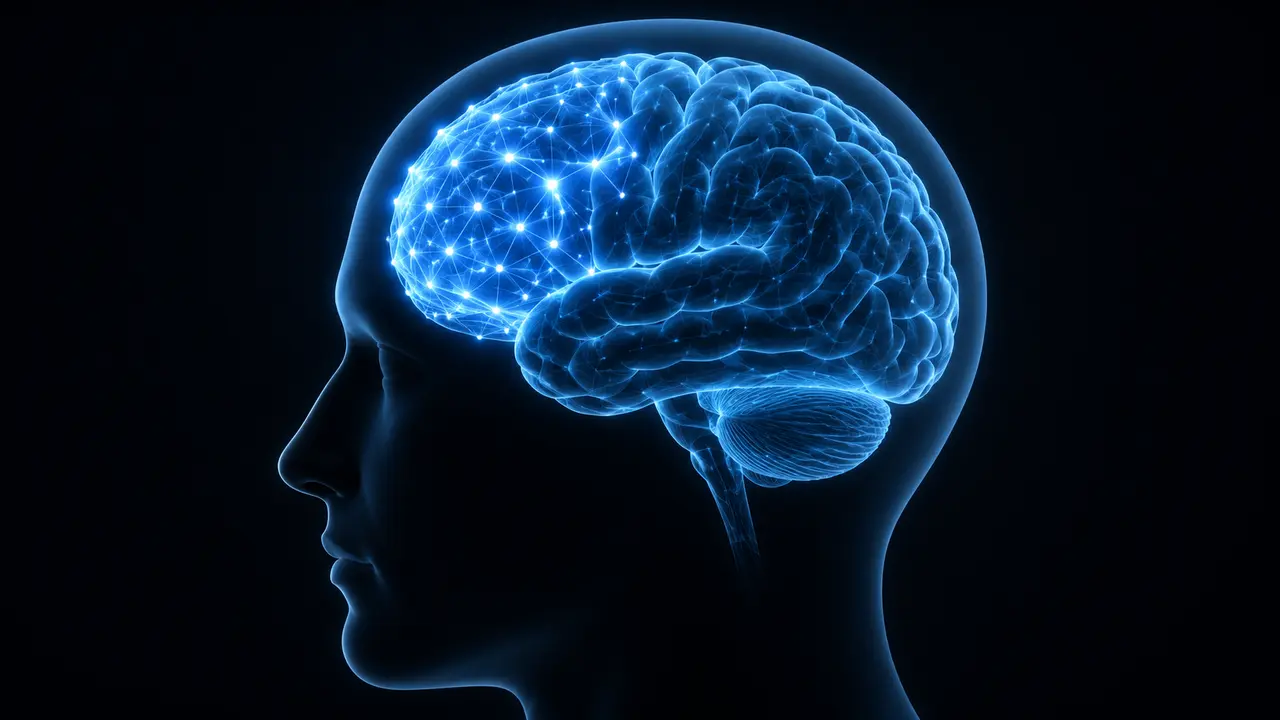
This distinction matters because dark empaths expose a truth that most people never have to confront. Empathy is not one capacity. It is at least three.
And you can have the first without the third. You can understand someone’s pain completely and still choose to use it against them.
Key insight: The dark empath is not a contradiction. They are proof that understanding someone’s emotions and caring about their well-being are two entirely different capacities.
One is a skill. The other is a choice. For a deeper look at how this profile fits among other empath types, see our guide on different types of empaths.
A 2021 study shows dark empaths make up 13 percent of the population sample. Classic dark triad individuals account for 19.3 percent. Dark empaths do not exist as a rare anomaly. You will encounter this significant minority during your lifetime.
Source Heym et al., Personality and Individual Differences, 2021
How a Dark Empath Differs from a Narcissist
The critical difference between a dark empath and a narcissist is not the presence of dark traits. It is the presence of emotional perception. A narcissist cannot see you clearly enough to target your specific wounds. A dark empath can, and that precision is what makes them so effective at manipulation.
Most content about narcissistic abuse focuses on the overtly cold, dismissive, and obviously self-centered narcissist. That person is dangerous, but they are also relatively easy to identify.
Their lack of empathy is visible. They do not pretend to care. When they hurt you, it is obvious that your feelings were never part of the equation.
A dark empath operates differently. They appear warm. They seem attuned. They ask the right questions and remember the right details. In the early stages of a relationship, they can feel like the most emotionally intelligent person you have ever met.
This is not an accident. Their emotional perception is real. They are performing a genuine skill. The problem is what they do with the information they gather.
Where a narcissist demands admiration through dominance, a dark empath earns trust through apparent understanding.
Where a narcissist dismisses your feelings as irrelevant, a dark empath validates your feelings and then uses that validation as a leash. The narcissist says, “Your feelings do not matter.” The dark empath says, “I understand exactly how you feel, and that is why you should listen to me.”
Both are manipulative. Only one makes you feel grateful for the manipulation while it is happening.
If you have experienced the particular confusion of being with a narcissist who also seemed to understand your emotional world, understanding the empath and narcissist dynamic can help you make sense of what happened.
| Dimension | Narcissist | Dark Empath | Classic Dark Triad |
|---|---|---|---|
| Emotional Perception | They show low perception. | They show high perception. | They show low perception. |
| Social Presentation | They act dominant and self-centered. | They appear warm, attuned, and charming. | They act cold and detached. |
| Manipulation Style | They use overt control and issue demands. | They use subtle influence and fake care. | They exploit you strategically. |
| Empathy Type | They lack all three empathy types. | They show high cognitive empathy but low compassionate empathy. | They lack all three empathy types. |
| Detectability | You spot them with moderate effort. | You struggle to spot them. | You spot them with moderate effort. |
| Internal Experience | They feel grandiose and entitled. | They feel self-critical, stressed, and neurotic. | They feel callous and unbothered. |
Caption: The dark empath occupies a unique position between the overt narcissist and the classic dark triad, combining emotional perception with dark traits in a way that makes them significantly harder to identify.
Key insight: If you have been in a relationship where you felt deeply understood and deeply confused at the same time, where someone seemed to see you completely but you still felt invisible, you may have been dealing with a dark empath. The understanding was real. The care was not.
What Causes Dark Empathy? The Developmental Roots
Dark empathy typically develops as a survival strategy in environments where emotional sensitivity was necessary for safety but genuine emotional connection was never modeled. It is not a choice. It is an adaptation that becomes a pattern.
No one is born a dark empath. The research on personality development suggests that this profile emerges from a specific combination of emotional sensitivity and adverse childhood experience.
The child who becomes a dark empath is often a naturally perceptive, emotionally attuned person who grew up in an environment where reading others’ emotions was essential for survival.
Childhood trauma and emotional neglect are the most commonly identified pathways. A child raised by a volatile, unpredictable, or emotionally unavailable caregiver learns to scan for emotional cues the way a sailor reads the weather.
They become expert at detecting shifts in mood, anticipating outbursts, and adjusting their behavior to maintain safety. This is not manipulation in a child. It is survival.

The problem arises when that survival strategy never gets updated. The child grows into an adult who still reads every room, still anticipates every emotional shift, still uses emotional information to navigate relationships.
But now, without the original threat, the skill has no healthy outlet. It becomes a tool for control rather than safety.
Attachment disruption plays a central role. Children who develop insecure or disorganized attachment patterns often learn that emotional connection is unreliable. They understand intimacy intellectually because they had to study it to survive.
But they never internalized what it feels like to be genuinely safe with another person. They can mimic closeness. They can perform understanding. They cannot sustain authentic vulnerability because they never learned that vulnerability does not have to be dangerous.
Neurobiological factors add another layer. Some research suggests that dark empaths may have the neural capacity for empathy, active mirror neurons, and intact emotional processing, but with reduced activity in brain regions associated with moral reasoning and genuine emotional connection.
This is not a justification for harmful behavior. It is an explanation for how someone can feel another person’s pain and still choose to cause it.
The Violence Inhibition Mechanism model, proposed by James Blair in 1995, offers a useful framework. This model suggests that most people have an automatic response to others’ distress cues, a kind of neurological brake that inhibits aggression when we perceive someone is suffering.
In dark empaths, this mechanism appears to be impaired. They perceive the distress. The brake does not engage the way it should.
Key insight: Understanding the developmental roots of dark empathy is not the same as excusing the behavior. Many people experience childhood trauma and develop empathy without becoming manipulative.
The difference is what happens when the person becomes aware of their patterns. A dark empath who refuses to examine their behavior is making a choice. A dark empath who seeks to understand and change is doing the work that healing requires.
If you are recovering from the kind of relational trauma that creates these patterns, our guide on healing from narcissistic abuse offers a starting point.
The Violence Inhibition Mechanism shows humans possess an automatic neurological response to distress. This response stops aggressive behavior. Research proves dark empaths operate with an impaired mechanism. They perceive your suffering but lack the normal emotional brake.
Source BBC Science Focus, How to Spot Dark Empaths
Warning Signs of a Dark Empath
The warning signs of a dark empath are subtle because they are embedded in behaviors that look like care. The danger is not in what they do that is obviously wrong. It is in what they do that feels right but leaves you diminished.
Identifying a dark empath is difficult precisely because their emotional perception is real. They are not faking the ability to read you. They are faking the intention behind it.
The following patterns, especially when they appear together, suggest you may be dealing with someone who uses empathy as a tool rather than a bridge.
Behavioral indicators:
Relational indicators:
The empathic gaslighting pattern:
This is perhaps the most distinctive and damaging behavior of a dark empath. Because they genuinely understand your emotional patterns, they can use that knowledge to make you doubt your own reality.
They do not deny your feelings the way a typical gaslighter does. They validate your feelings and then reinterpret them.
“You are not angry at me. You are having a trauma response because of what your mother did. I can see that you are triggered, and I want to help you work through it.”
This statement sounds compassionate. It is not. It uses your emotional history to invalidate your present experience. It positions them as the expert on your inner world. And it makes you question whether your anger is legitimate or just a symptom of your past.
Subscribe to Create Higher Vibrations!
Get Inspiration and Practical advice straight to your inbox.
Key insight: The single most reliable indicator of a dark empath is not any single behavior. It is the cumulative effect.
If you consistently feel emotionally drained, confused, and diminished after interactions with someone who seems deeply understanding, trust that feeling.
Your nervous system is reading something that your conscious mind has not caught up to yet. For more on recognizing these patterns, see our article on manipulative people and the relationship red flags that often go unnoticed.
Researchers in the Heym study found dark empaths score higher on neuroticism and self-criticism than the classic dark triad group. The person appearing to understand your pain carries more internal suffering than the person completely lacking empathy.
Source Psychology Today, The Rise of the Dark Empath
The Internal Experience: What It Feels Like to Be a Dark Empath
Being a dark empath is not a position of power. It is a prison of perception. They feel everything, understand everything, and trust nothing, including themselves.
Most content about dark empaths focuses on the people who encounter them. This is understandable. The targets of dark empathic manipulation are the ones who suffer most visibly.
But the internal experience of being a dark empath is worth understanding, both for those who recognize these patterns in themselves and for those trying to make sense of someone they care about.
Dark empaths are not the calm, calculating masterminds that pop culture suggests.
The research paints a very different picture. Heym’s study found that dark empaths scored higher on neuroticism than any other group, including the classic dark triad.
They reported higher levels of stress, more self-criticism, and greater emotional instability. The person who seems to have perfect emotional control on the surface is often in turmoil underneath.
This is one of the least discussed aspects of the dark empath profile. They are not unfeeling. They are overwhelmed. Their emotional perception is not a superpower.
It is a constant flood of input that they have learned to weaponize because they never learned to process it.
Attention-seeking and exhibitionism were also elevated in dark empath profiles. This is not the same as narcissistic grandiosity. It is the behavior of someone who learned early that being seen was the only way to be safe, but who never learned that being seen does not have to mean performing.
They crave connection. They do not know how to pursue it without strategy.
For the dark empath who becomes self-aware, the path forward is not about suppressing empathy. It is about developing the compassionate empathy that never got built.
It is about learning that emotional understanding need not be a transaction. It is about sitting with the discomfort of feeling someone’s pain without needing to use that pain for any purpose at all.
Key insight: If you recognize dark empath patterns in yourself, this is not a life sentence. It is a starting point. The same emotional perception that has been used as a weapon can become the foundation of genuine connection.
But only if you are willing to stop performing empathy and start practicing it. Exploring your shadow self and embracing your dark side is often the first step toward that transformation.
How to Protect Yourself from a Dark Empath
Protecting yourself from a dark empath does not require you to stop trusting people. It requires you to trust patterns over moments, consistency over intensity, and your own emotional reality over someone else’s interpretation of it.
The strategies for dealing with a dark empath are different from those for dealing with an overt narcissist. You cannot simply look for obvious red flags because they are hidden in behaviors that look like green ones.
The following approaches are grounded in both the research on dark empathy and the clinical understanding of relational trauma.
Key insight: The goal is not to become someone who trusts no one. The goal is to become someone who can tell the difference between a person who understands you and a person who is using that understanding.
That discernment is not cynicism. It is the foundation of every healthy relationship you will ever have.
Frequently Asked Questions
A dark empath combines high emotional perception with dark triad personality traits. They read and understand your emotions accurately. They use this understanding for manipulation, control, or personal gain instead of genuine care.
No. Both act manipulative. A narcissist typically lacks empathy entirely. A dark empath possesses genuine emotional perception but lacks the compassionate motivation to use it for good. This makes them harder to detect and confusing to handle.
Change requires significant self-awareness and a willingness to engage in deep therapeutic work. The emotional perception making them effective manipulators becomes the foundation of genuine empathy only when they stop using it as a weapon and start practicing it as a skill.
A regular empath possesses high cognitive, affective, and compassionate empathy. They feel the emotions of others and feel moved to help. A dark empath possesses high cognitive empathy, variable affective empathy, and low compassionate empathy. They understand your pain but refuse to ease it.
This confusion serves as a data point. Dark empaths create cognitive dissonance by combining genuine emotional perception with manipulative intent. You must trust the unsettled feeling when you feel deeply seen and deeply unsettled at the same time. Your nervous system detects danger before your conscious mind names it.
Focus on observable patterns instead of trying to diagnose them. Notice how they respond to your boundaries and how they handle disagreement. Watch to see if their empathy is consistent or conditional. Set clear limits. Trust your emotional responses. Seek support from a therapist experienced in relational trauma.
Yes. Many dark empaths operate without conscious awareness of their patterns. They genuinely believe they are caring and sensitive people. The willingness to ask this question is a sign you do not operate from the same place as someone consciously manipulative. Self-reflection and therapy clarify your patterns.
No. Dark empathy is a descriptive term from personality psychology. It is not a formal diagnosis in the DSM 5. Researchers identified this pattern of traits. It is not a mental health condition. (Source MentalHealth.com, What is Dark Empath)
Conclusion
A dark empath is not a monster. They are a person who developed a genuine skill, the ability to read and understand others’ emotions, in an environment that never taught them to use that skill with care.
The result is someone who can see you more clearly than most people ever will and still choose to use that clarity as a weapon.
That is the part that hurts the most. Not that they do not understand you. That they do.
If this article brought something up for you, whether you recognize these patterns in someone else or in yourself, exploring these dynamics with a therapist who understands relational trauma may be the most meaningful next step.
You deserve relationships where understanding leads to care, not control. And you deserve to trust your own emotional reality, even when someone who seems to know you better tells you that you are wrong.
Namaste.