In 2003, a bestselling spiritual author told parents that their quiet, late-talking, unusually gentle toddlers were the first wave of a new generation. She later turned her back on her own teachings. The children she described are now adults, still deciding what the label means to them.
Key Takeaways
Crystal children are a generation of children described in New Age teaching as unusually calm, empathic, and spiritually aware. Believers say they began arriving in the 1990s, after the more rebellious indigo children.
Their gift is said to be harmony. They soothe others, forgive easily, and feel everything.
The idea has comforted many parents of sensitive kids. It has also worried doctors. Both sides belong in an honest picture.
What Is the Crystal Child Meaning?
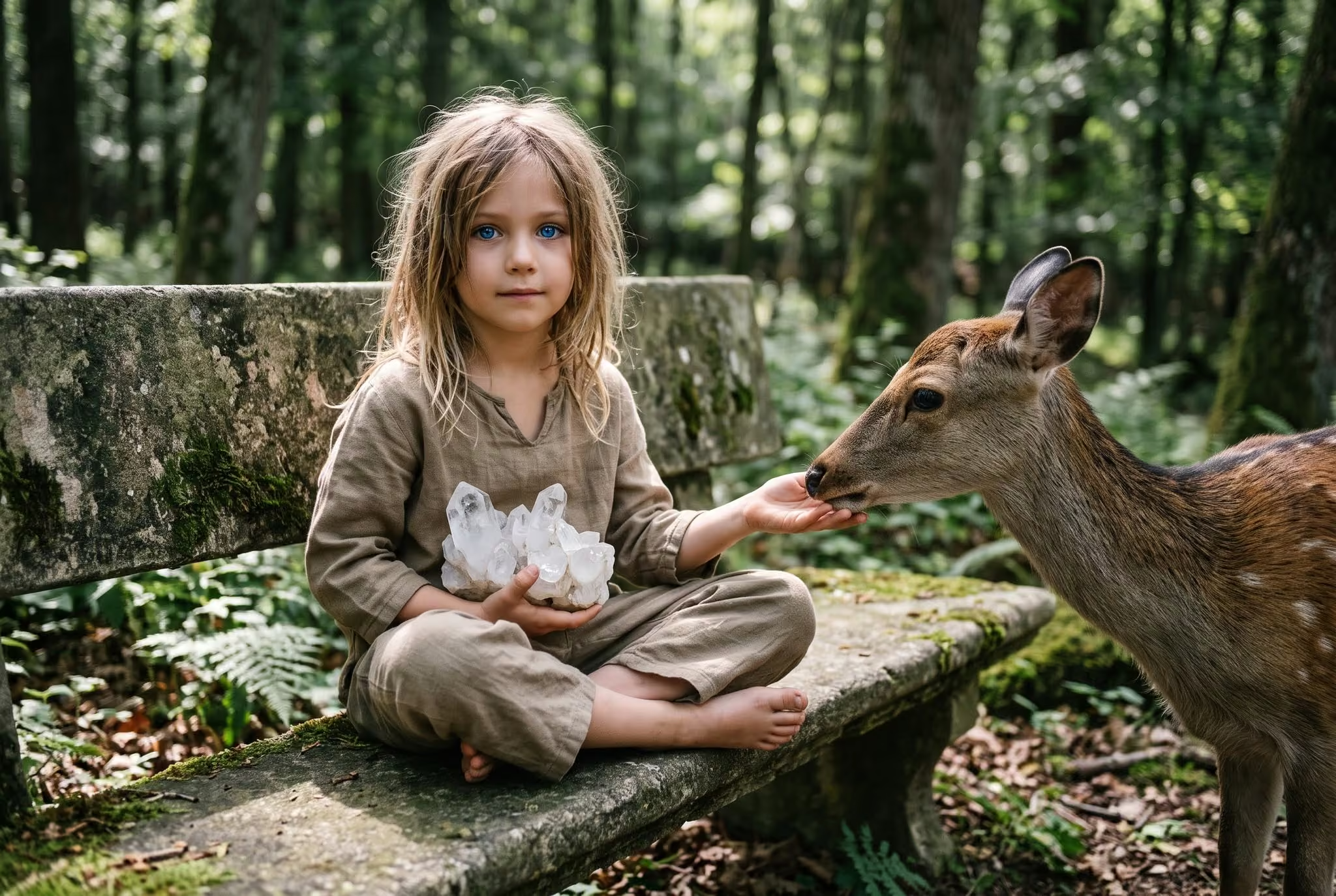
A crystal child is a child believed to carry a high, clear spiritual energy, like a crystal holding and reflecting light. The name refers to the opalescent, many-colored aura that teachers say surrounds these children.
They are pictured as old souls, wise beyond their years. Teachers call them telepathic, intuitive, loving. Many accounts place them in the “star children” family. The indigo children belong to it too. So do the rainbow children.
People also use related terms. “Crystal generation” and “crystal kids” refer to the same idea. Some adults who grew up hearing the label now call themselves crystal adults.
Where Did the Idea of Crystal Children Come From?
The story begins with indigo children. In the 1970s, Nancy Ann Tappe, a self-described psychic, developed a system of “life colors.” She said she began seeing children with an indigo aura.
Lee Carroll and Jan Tober later brought the indigo idea to a wide audience. Their book The Indigo Children came out at the end of the 1990s.
The crystal label came next. Doreen Virtue, a bestselling author on angels and spirituality, popularized it. Her book The Crystal Children was published by Hay House in 2003.
The book presented these children as the generation after the indigos. In Virtue’s telling, they were highly psychic but free of the indigo anger.
An earlier version of this page credited the crystal concept to Tappe. That was wrong. Tappe’s work centered on indigo children. The crystal label owes its popularity to Virtue.
The history took one more turn. In 2017, Virtue announced she had become a born-again Christian. She renounced her New Age work, including the teachings that made her famous.
By then, the idea had spread far beyond her. It lives on in books, online groups, and conversations between parents.
What Years Were Crystal Children Born?
No official birth range exists. Virtue’s 2003 book described crystal children as roughly ages 0 to 5, with some of the first wave as old as 7. That places the first of them in the mid-to-late 1990s and early 2000s.
Later writers stretched the window. Many now give a range from about 1995 into the 2010s, overlapping with the first rainbow children. In practice, the label follows temperament, not a birth certificate.
What Are Crystal Children Traits?
These are the traits named most often, drawn largely from Virtue’s book and the writers who followed her.
Many of these traits also describe highly sensitive children. Our guide to the types of empaths covers the same temperament from another angle.
What Abilities Are Crystal Children Said to Have?
Spiritual writers credit this generation with gifts that go beyond temperament. These are beliefs, not tested abilities, but they are central to the idea.
Parents who hold these beliefs often describe a child who seems to know what others feel. Whatever the source, that sensitivity is real to the child. It deserves respect, even from adults who doubt the spiritual explanation.
How Are Crystal Children Different From Indigo and Rainbow Children?
Spiritual teachers describe three waves of “star children.” Each is said to have its own job.
A common way to put it: indigos clear the path, crystals heal what is left, and rainbows build on that healed ground. Many people say they recognize a mix of two waves in themselves.
What Is the Spiritual Purpose of Crystal Children?
Believers say this generation came to help humanity move toward peace. Their purpose is described in three parts.
Modeling unity. These children are said to sense the connection between all living things. Their natural forgiveness shows others how to let go of old resentment. Teachers call this unconditional love in action.
Healing through presence. Teachers say their calm energy settles tense homes and classrooms. They soothe without trying.
Raising sensitivity. In this view, their gentleness challenges a culture that rewards toughness. They remind adults that feeling deeply is a strength.
The mission is often linked to lightworkers, adults who see their own lives as service to a gentler world.
Can the Crystal Label Get in the Way of Real Help?
It can. This is the one place where the idea needs care. No test can show that a child is a crystal child. The traits are broad enough to fit many children.
Some of those traits also overlap with developmental differences. Late talking, strong reactions to noise, and deep focus on objects can all be signs of autism. Restlessness and intensity can point toward ADHD.
Researchers who study autism have warned about recasting symptoms as spiritual gifts. That reframing can lead parents to delay support.
The label is not all harm, though. In one study, parents of children with ADHD who also saw the behavior as a sign of positive qualities reported fewer negative experiences with their child (Journal of Attention Disorders). They also expected a brighter future for the child.
A loving frame can soften family life. The safe path holds both. Honor your child’s sensitivity, and keep tracking their development.
The CDC program called “Learn the Signs. Act Early.” offers free milestone checklists from 2 months through 5 years (CDC). If anything on that list concerns you, talk with your child’s doctor. An evaluation does not erase a child’s gifts. It gives them support.

How Can You Support a Sensitive or Crystal Child?
Whatever you believe about their origins, sensitive children thrive on the same things.
Simple practices like mindfulness meditation can be adapted for children in a few minutes a day. Breathing with a stuffed animal resting on the belly is a favorite starting point.
What If You Were Called a Crystal Child Growing Up?
The first members of this generation are now adults, many in their late twenties. Some found the label affirming. It gave them language for a sensitivity that school and family did not understand.
Others feel more mixed. Being told you are special can carry pressure. Some adults later learned that the traits behind the label had a clinical name, such as autism, ADHD, or high sensitivity. They found that diagnosis more useful.
Both responses are valid. You can keep what helps from the crystal story, like permission to be gentle.
You can set aside what does not. If you are exploring your own spiritual identity, the broader starseed idea offers another lens that many crystal adults find familiar.
What Would You Hear if You Asked Instead of Labeled?
Labels describe a child from the outside. Questions let the child describe themselves.
Tonight at bedtime, try one question: “What was the loudest part of your day?” Then listen without fixing anything. A sensitive child often answers with something adults missed: a sharp voice, a bright light, a friend who seemed sad.
Ask the same question for a week. Write down the answers. By the end, you will know more about what your child needs than any label could tell you.