
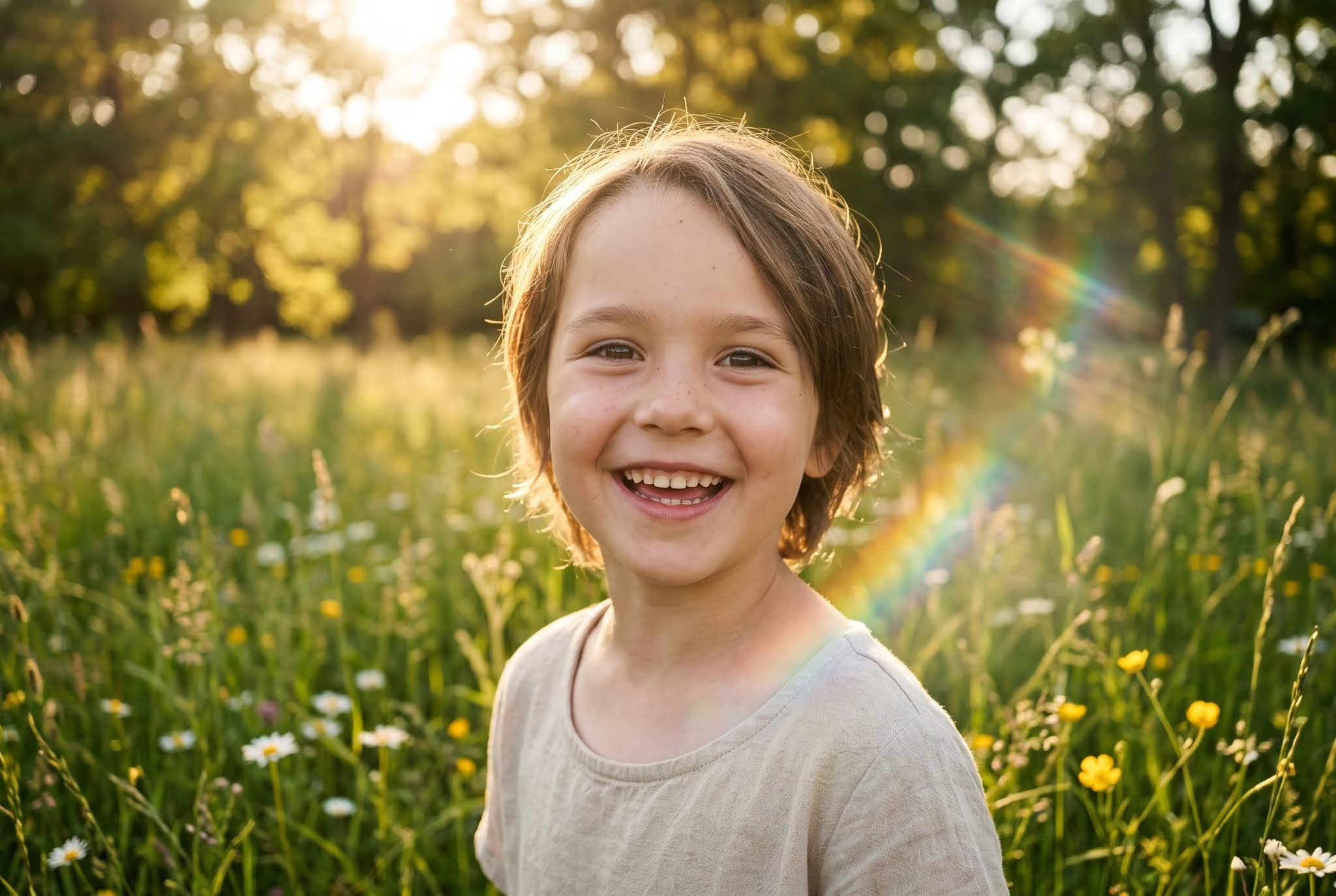
If your child was born after 2000 and forgives faster than you do, New Age writers have a name for them. Rainbow children are said to arrive with no karma to repay, usually to parents who were once called indigo or crystal. That leaves the hard spiritual work to the grown-ups.
Key Takeaways
Rainbow children are a generation of children described in New Age belief as joyful, fearless, and spiritually advanced.
The rainbow children traits people name first are an open heart and high energy. A strong will comes close behind. Believers say these children began arriving around 2000, after the indigo and crystal children.
Many accounts describe them as souls with nothing to heal from past lives. That idea shapes almost everything else people say about them.
What Are Rainbow Children?
A rainbow child is a child believed to carry the full spectrum of spiritual energy, the way a rainbow holds every color of light. That is the core of the rainbow children’s meaning. Teachers call them highly evolved souls, the most advanced of the star children.

These children are pictured as natural lightworkers. They bring love, play, and healing wherever they go. Many accounts say they choose loving, stable families, often parents who were once indigo children or crystal children themselves. Crystal parents are named most often.
The core belief is simple. Indigos broke old systems. Crystals healed what was left. Rainbows build the new world on that cleared ground.
Where Did the Idea of Rainbow Children Come From?
The rainbow label grew out of the indigo idea. In the 1970s, Nancy Ann Tappe described children with an indigo aura. Lee Carroll and Jan Tober later spread the indigo concept through their books in the late 1990s.
Doreen Virtue then popularized crystal children in 2003. She went on to describe all three waves together. Her Hay House audio program Indigo, Crystal, and Rainbow Children came out in 2005.
In 2017, Virtue renounced her New Age teachings after becoming a born-again Christian. By then, the rainbow idea had its own life in books, blogs, and parent groups.
The phrase has an older cousin in music. Prince released a concept album called The Rainbow Children in November 2001.
The album’s songs deal with spirituality, love, and racism. It has no link to the New Age idea. Still, the two often turn up side by side in search results.
When Were Rainbow Children Born?
Most accounts say rainbow children began arriving around 2000. Some place the first ones in the late 1990s. Others say the wave continues today.
That puts the usual rainbow children ages between newborn and the mid-twenties. The oldest of them are now young adults. Some already have children of their own.
Like the earlier waves, the rainbow label follows temperament more than a birth year. A child born in 2015 is not automatically a rainbow child. A joyful, fearless child born earlier may fit the description better.
What Are the Traits of Rainbow Children?
These are the traits named most often in rainbow child writing.
Many of these traits also describe healthy, securely loved children in general. That overlap matters. The section on calling a child special explains why.

What Is the Rainbow Child Spiritual Meaning?
The name carries the meaning. A rainbow holds every color of light in one arc.
In chakra teaching, the seven energy centers are linked with the colors of the rainbow, from red at the root to violet at the crown. A rainbow child is said to have all of them open and balanced. Our guide to the 7 chakras explains that color system.
The rainbow is also an old symbol of a bridge or a promise. In Genesis, God says, “I do set my bow in the cloud, and it shall be for a token of a covenant between me and the earth” (Project Gutenberg).
In Norse myth, the rainbow bridge Bifrost links the world of humans to the home of the gods. Both images fit how these children are pictured: a promise after a storm, and a bridge between worlds.
How Are Rainbow Children Different From Indigo and Crystal Children?
Teachers describe the three waves as one long project.
The biggest difference lies in karma. Indigos and crystals are said to carry past-life lessons. Rainbows are said to arrive without any. That leaves them free to give rather than heal.
What Is the Role of Rainbow Children in the New Earth?
In New Age philosophy, the “New Earth” represents a future era of heightened awareness, unity, and deep compassion. Within this vision, rainbow children are believed to fulfill three primary roles.
Bridge builders. They link the old world to the new one by living higher values in ordinary life.
Vibration raisers. Their joy is said to lift the emotional tone of families, classrooms, and communities.
Keepers of harmony. Where conflict appears, they settle it through forgiveness rather than force.
This role overlaps with the adult idea of lightworkers, people who see their lives as service to a gentler world. It also ties into the wider belief in spiritual ascension.
Are Rainbow Children Starseeds?
Not by definition, though the two ideas overlap. A starseed is a soul believed to come from another star system. A rainbow child is defined by generation and temperament, not by a cosmic origin.
Some accounts combine the two. They describe rainbow children as starseeds in their first Earth life, after many lifetimes elsewhere. Others keep them separate.
One useful way to hold both is to picture starseeds carrying a vision from elsewhere. Rainbow children make that vision livable here through daily kindness.
Is a Rainbow Child the Same as a Rainbow Baby?
No. The terms sound alike but mean very different things.
A rainbow baby is a child born after a miscarriage, stillbirth, or infant loss. The name evokes a rainbow after a storm. Cleveland Clinic notes that the phrase comforts many parents, but no one has to use it (Cleveland Clinic).
“Rainbow child” describes the spiritual concept discussed here. Although a rainbow baby may also be called a rainbow child depending on a family’s beliefs, keeping these definitions distinct helps clarify both concepts.
Most of the time, though, the terms point in separate directions. Search results mix them often. That confuses grieving parents and spiritual seekers alike.
How Do You Know If Your Child Is a Rainbow Child?
No test exists. These questions can help you notice whether the description fits.
Several yes answers suggest the rainbow description may fit. One or two may point toward the indigo or crystal waves instead.
Can Calling a Child Special Backfire?
It can, depending on how it is done. This is the one place where the rainbow idea meets research.
A study in the Proceedings of the National Academy of Sciences looked at how narcissism develops in children. Parents who saw their child as more special and more entitled than others tended to raise children higher in narcissism. Parental warmth, meaning affection plus appreciation, was linked to healthy self-esteem instead (PNAS).
The lesson for parents who love the rainbow idea is useful. Celebrating a child’s joy helps. Ranking them above other children does not.
No test can show that a child is a rainbow child. The traits describe many happy, loved kids. If something about your child’s development worries you, talk with their doctor, whatever label you use at home.
How Can You Raise a Rainbow Child?
Whatever you believe about their origins, rainbow kids thrive on the same things as any joyful, strong-willed, curious child.
Where Does a Rainbow Actually Live?
A rainbow is not an object in the sky. It appears only where sunlight, raindrops, and a watcher line up. Two people standing apart each see a slightly different rainbow.
A child’s gifts work the same way. They show up in the space between the child and the people who notice them.
So try this today. Catch your child doing one kind thing, one brave thing, or one patient thing. Name the action out loud. Then watch what grows from being seen.