Starseed Birthmarks: What They Mean, Their Shapes, and How to Find Yours
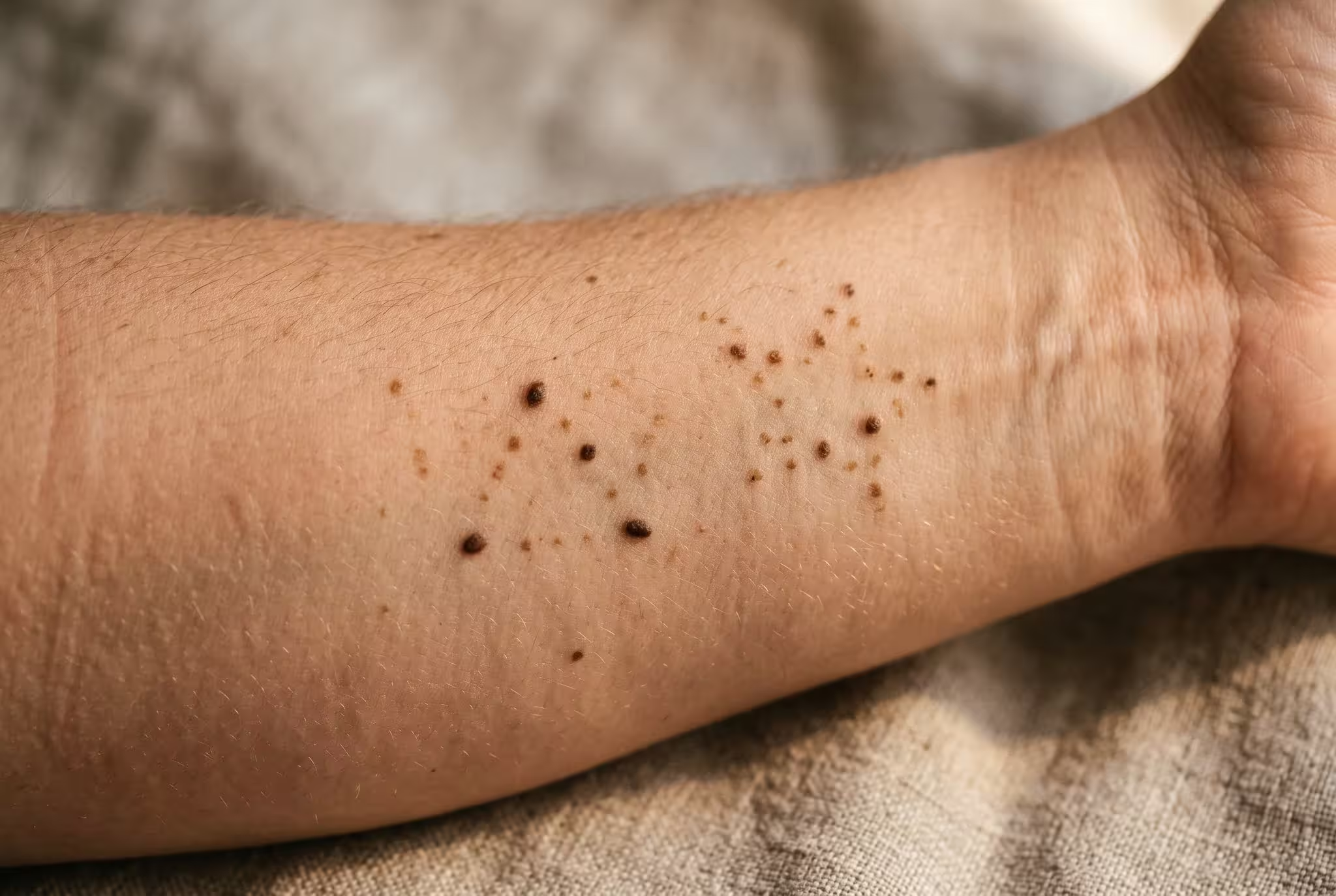

About one baby in ten has a red birthmark by age one. Yours may be the reason you are reading this.
Key Takeaways
Starseed birthmarks are moles, freckles, and skin patterns that some people believe point to their soul’s origin in another star system. In starseed teaching, certain shapes link to the Pleiades, Sirius, Arcturus, Orion, Lyra, and Andromeda. Some teachers also read the birth chart for star alignments.
Many people find these marks meaningful. Each shape carries its own reading. You can also learn to look for your own.
What Are Starseed Birthmarks?
A starseed is someone whose soul is said to have lived in another star system before this life. The guide to what a starseed is covers the wider idea.
Starseed birthmarks are the physical side of that belief. Teachers describe them as cosmic fingerprints. They are small signs on the body that echo where a soul began. Other names include starseed markings and starseed body markings.
Most people who explore this topic are not looking for proof. They are looking for a symbol that makes their own sense of difference easier to name.
What Is the Difference Between Origin Marks and Incarnation Marks?
Starseed teachers usually sort marks into two groups.
A person can carry both. In this view, one mark tells you where you came from. Another tells you what you have already learned.
Which Birthmarks Are Linked to Each Starseed Type?
Each star lineage has its own set of associated marks. These links come from modern starseed writers. Treat them like a shared vocabulary.
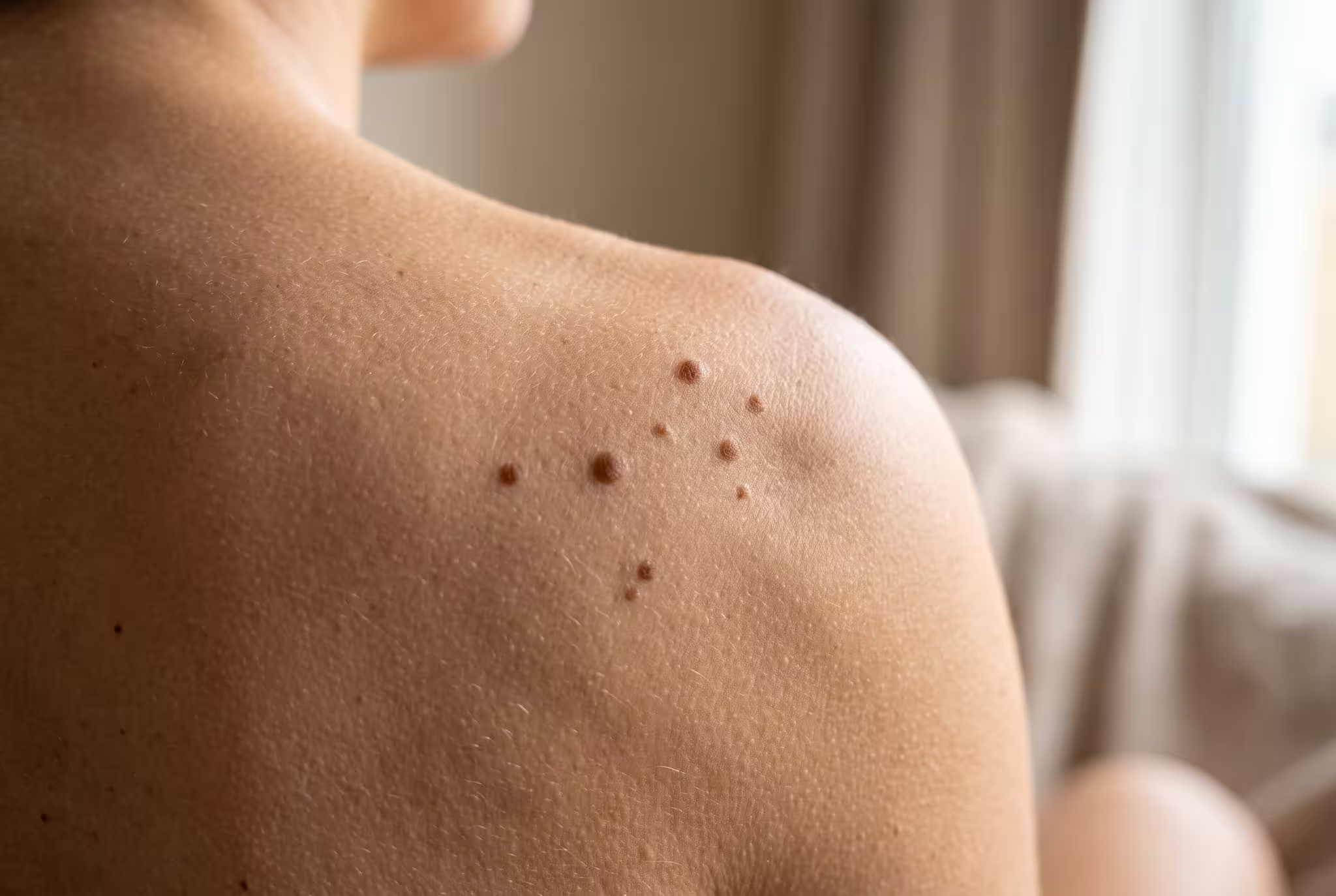
Pleiadian starseed birthmarks are the most searched of these. The Seven Sisters cluster is easy to imagine in a group of freckles.
What Shapes Do Starseed Birthmarks Take?
Beyond lineage, teachers name a handful of common shapes.
Shape matters less than meaning. A mark that stops you in the mirror is worth noticing, whatever it looks like.
Where on the Body Do Starseed Markings Appear?
Location is said to matter just like shape. Many teachers link a mark’s position to the energy center beneath it.
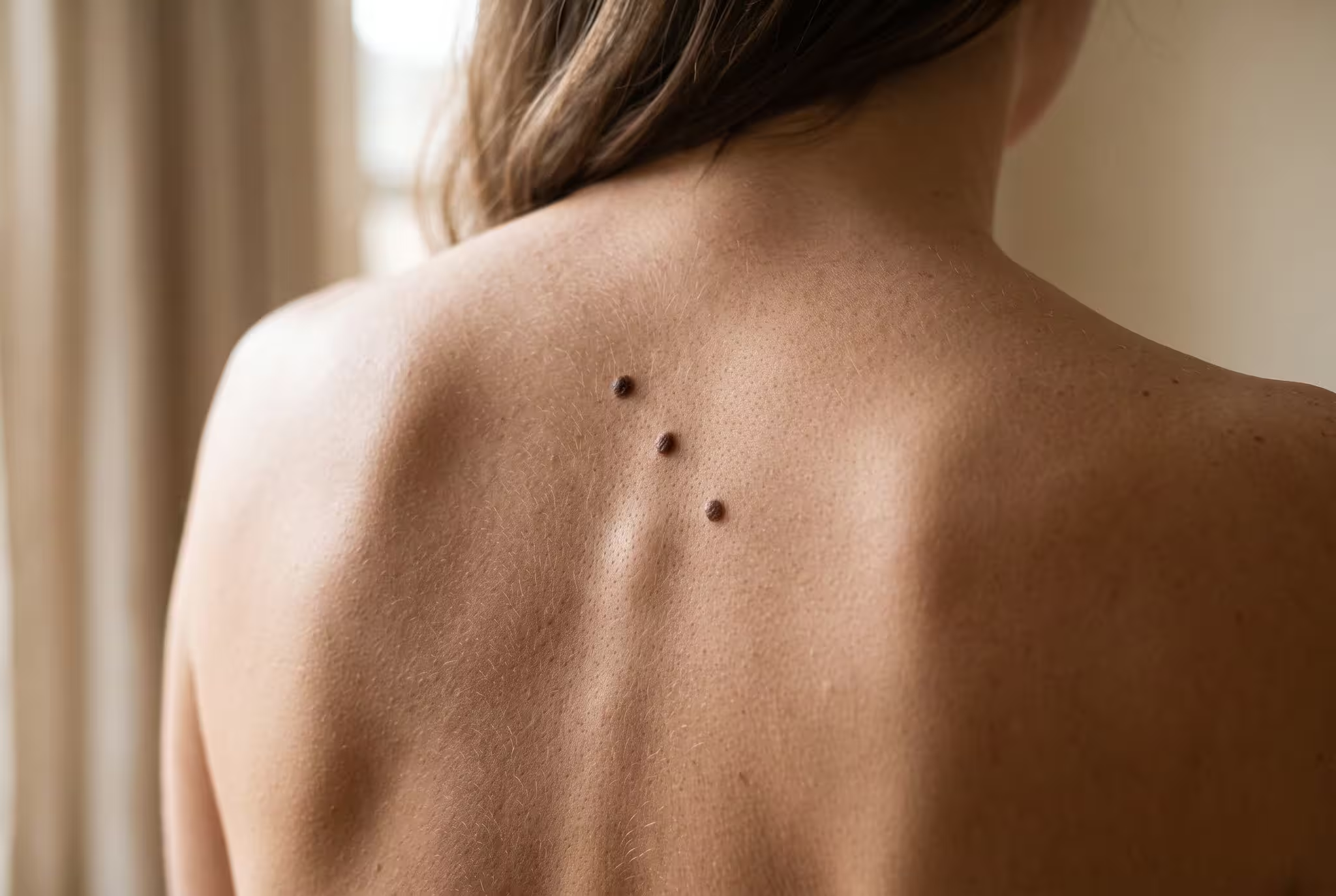
If a mark sits over an energy center, a guide to that center can help. The throat chakra guide is one example.
What Does a Starseed Birth Chart Show?
Some astrologers look for starseed “birthmarks” in the birth chart instead of on the skin. The main tool is the fixed star, a bright star whose position barely moves against the zodiac.
A planet that sits on a bright fixed star at birth suggests a link to that star. Fixed stars are the oldest tool here. A few classic pairings follow.
Astrologers also look at placements near the Galactic Center, plus unusual chart shapes. These suggest a soul with a mission beyond the personal.
Calculating a chart needs your exact birth time. You also need the date plus the place. Many free chart tools will list your planets by degree.
How Do You Find Your Own Starseed Birthmark?
Follow these steps slowly. The process matters more than the answer.
A photo of each mark is useful here. It also helps with the health check described below.
What Do Doctors Say About Birthmarks?
Medicine explains birthmarks in physical terms. A birthmark is a harmless skin difference present at birth or shortly after. Dermatologists sort them into two groups (Wikipedia: Birthmark).
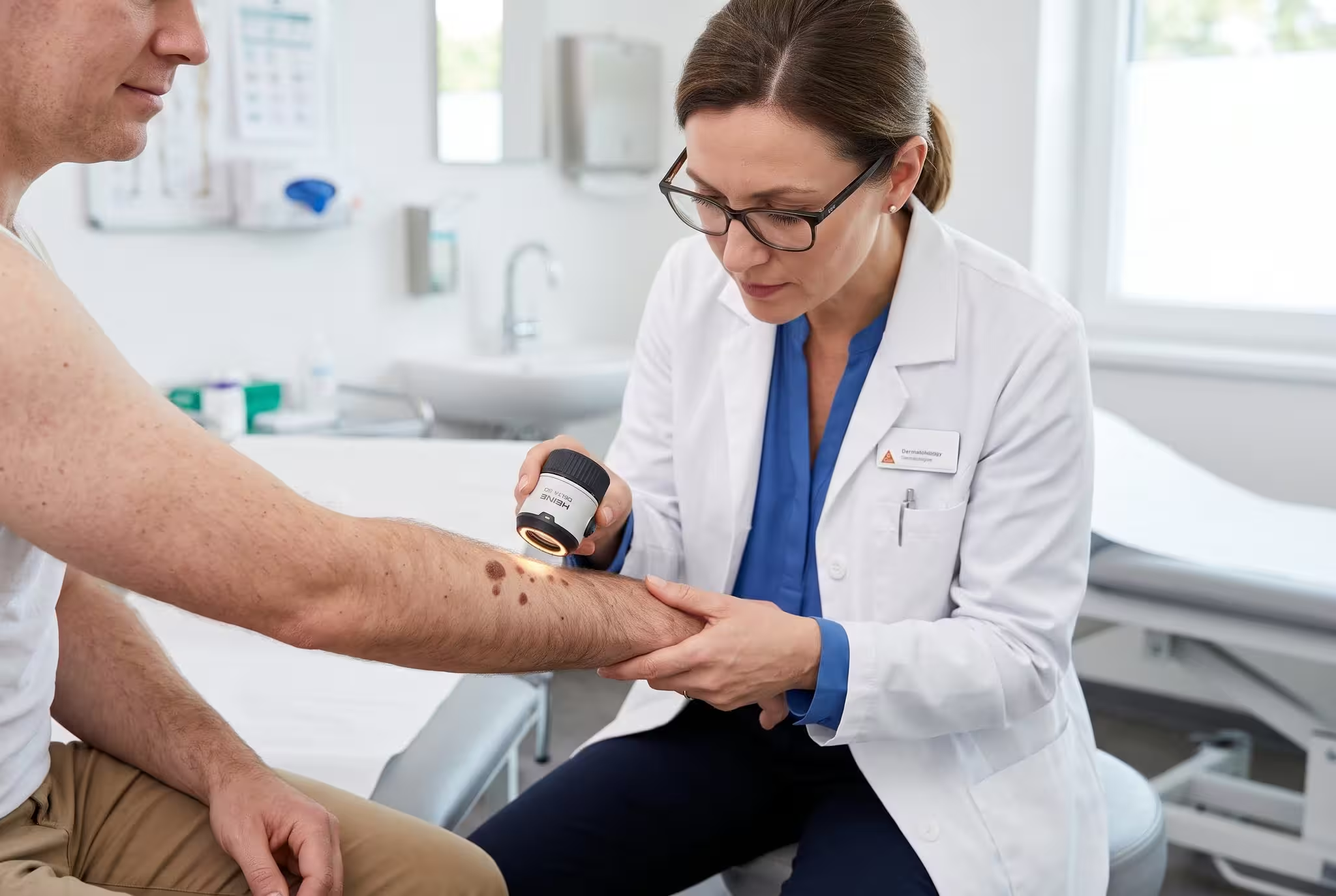
A little over one baby in ten has a vascular birthmark by age one. Moles are common in adults too. Their shapes come from how skin cells grow and move, so any pattern among them is a matter of chance.
None of that rules out personal meaning. A coincidence can still carry a message for the person who notices it. Science cannot confirm that a mark points to a star.
How Do You Tell a Starseed Mark From an Ordinary Mole?
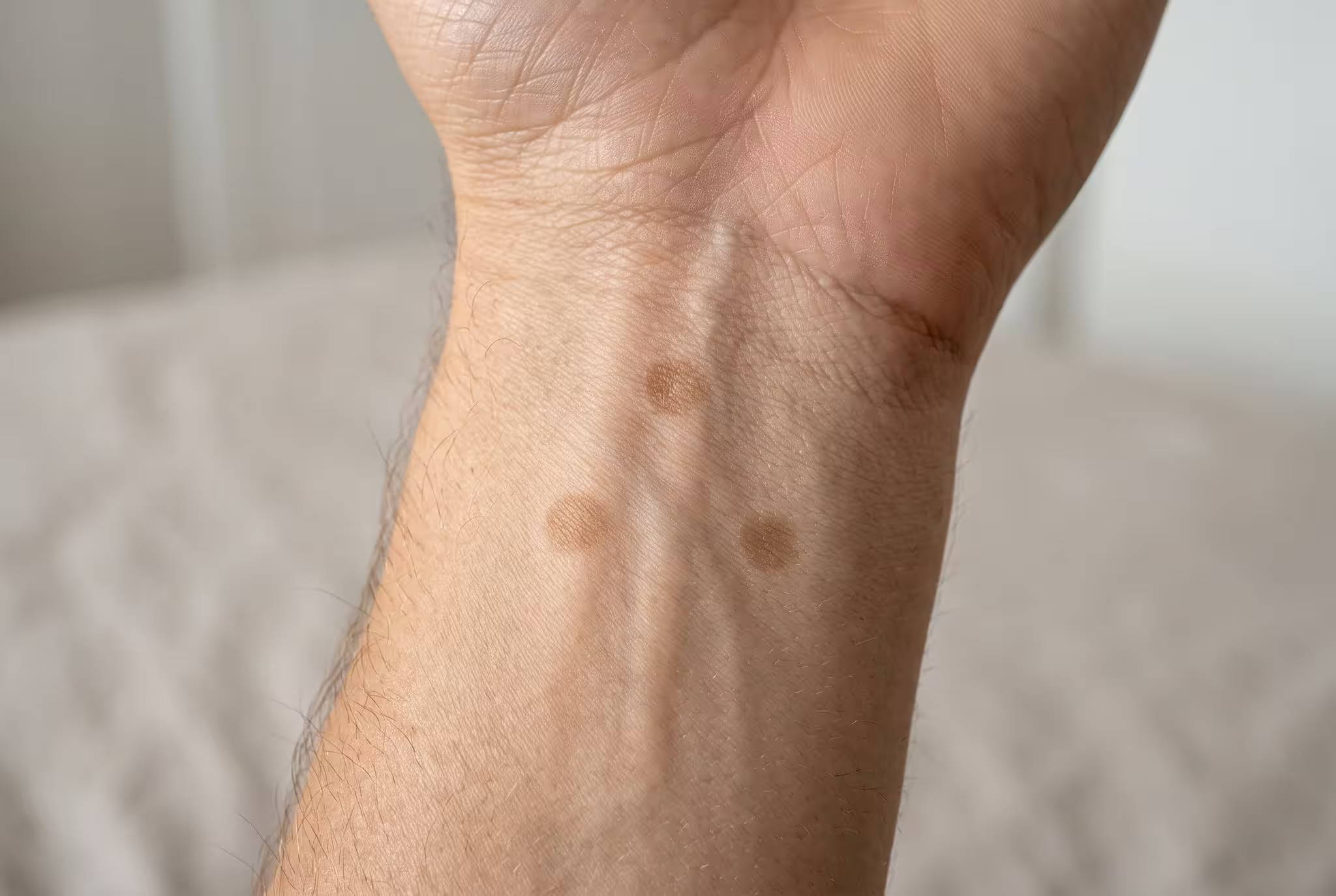
There is no physical test. A starseed mark looks like any other mole, freckle, or birthmark under a microscope. The difference lives in meaning, not in the skin.
Teachers use three rough checks. First, does the shape match a lineage pattern? Second, does it sit over an energy center? Third, and most important, does it give you a feeling of recognition when you look at it?
A mark that passes all three is the one to write about. A mark that passes none is simply a mole, which is fine too. Most of your body is ordinary, and that is part of being human.
When Should a Birthmark or Mole Be Checked?
A spiritual reading should never replace a health check. Doctors use the ABCDE guide to spot moles that need attention (Wikipedia: Melanoma).
Also watch for itching, bleeding, and any new mark that looks different from the rest. See a doctor promptly if you notice any of these. A meaningful mark deserves care, not neglect.
Is There Research on Birthmarks and Past Lives?
The idea that marks carry past-life memories has one well-known researcher behind it. Ian Stevenson, a psychiatrist at the University of Virginia, spent decades collecting cases of children who said they remembered a previous life.
His 1997 book Reincarnation and Biology examined 200 cases of birthmarks plus birth defects in such children. In some, a mark matched a wound of the person the child described.
One boy had marks resembling entry and exit wounds. He spoke of a man who had been shot (Wikipedia: Ian Stevenson).
Critics, led by the philosopher Paul Edwards, argued that the interviews were flawed and relied on anecdotes. Stevenson’s work remains the main source behind the “incarnation mark” idea.
Can Starseed Markings Appear Later in Life?
Yes. Only about one baby in a hundred is born with a mole. Most moles appear later. They tend to show up in childhood, then keep arriving through the first 30 years of life.
Starseed teachers sometimes read a new mark during a spiritual awakening as a fresh sign. Medicine reads it as a normal skin change. Both views agree on one thing. A new mark is worth watching closely.
Do All Starseeds Have Birthmarks?
No. Most starseed teachers say markings are one possible sign among many. Plenty of people who identify as starseeds have no special marks at all.
The stronger signs are inner ones. These include a lifelong sense of not belonging, vivid dreams, and a pull toward the stars. The guide to a starseed awakening describes them.
If you have no marks, nothing is missing. Your traits and your life tell the story better than your skin does.
Subscribe to Create Higher Vibrations!
Get Inspiration and Practical advice straight to your inbox.
What Is Your Skin Really Telling You?
Here is the quiet paradox of starseed birthmarks. A mark means something because you chose to look at it closely. That attention is the real practice.
So give your skin that attention once a year. Photograph your marks on your birthday. Compare them with last year’s pictures. Note which ones still feel meaningful, and have any changing ones checked.
That single habit honors both sides of you: the soul that wonders and the body that carries it. Your starseed family has a page for every lineage your marks may point to.