The Buddha named the body first among the four frames of mindfulness. Most of us were taught to meditate from the neck up.
Key Takeaways
- Somatic meditation starts from felt sensation. You rest in the weight, breath, and pulse of the body instead of steering attention with thought.
- The idea is old, and the name is new. Body mindfulness opens the Buddha's Satipatthana Sutta, and the modern term comes through Reginald Ray's Tibetan lineage.
- It differs from a body scan. A scan moves attention part by part on a plan, while somatic meditation lets sensation lead.
- Strong sensations and emotions can surface. Shorter sessions and open eyes help, and trauma symptoms call for a trained guide.
Somatic meditation is a way of meditating that begins with the body's physical sensations instead of with thought or a mental technique. You rest attention in weight, breath, warmth, and pulse. Awareness grows out of what the body already feels.
The word comes from soma, Greek for the body.
If you've sat for years watching your breath from somewhere behind your eyes, this moves the sitting lower. The practice has roots in the Buddha's teaching on the body. It comes down through a Tibetan lineage to something you can try tonight.
What Is Somatic Meditation?
Most meditation instructions are written for the thinking mind. Count the breaths, label the thought, and return to the anchor.
Those instructions work. The one carrying them out is still the planner in your head, though.
Somatic meditation turns the direction around. Dharma Ocean, the community that made the term widely known, calls it a bottom-up process. Its teachers say wakefulness is already present in the body itself. In their account, most contemporary methods work top-down through intention and conceptual instructions.
In plain words, you stop running the meditation. You feel the seat pressing back against you. You notice the belly moving without being told to move.
Attention settles into those sensations and stays there. That resting is the practice.
Here's what it can look like on an ordinary evening. You sit down tired and wired. Instead of fixing your posture, you notice where your body touches the chair. Your shoulders drop a little on their own.
Ten minutes later, you haven't reached a special state. You've arrived somewhere you were the whole time. Somatic meditation has no goal beyond being where the body already is, and that includes tension, restlessness, and boredom.
Where Does Somatic Meditation Come From?
The name is modern. The practice behind it goes back to the Buddha's own teaching on the body.
In the Satipatthana Sutta (MN 10), the Buddha lists four frames of reference for mindfulness. The body comes first. A meditator knows a long breath as long and a short breath as short. Each posture gets the same plain attention: "When walking, the monk discerns, 'I am walking.'"
A whole discourse is given to mindfulness of the body. In the Kayagatasati Sutta (MN 119), that practice is said to encompass "whatever skillful qualities are on the side of clear knowing."
The Buddha compares it to a person whose awareness takes in the great ocean. That person also takes in every small river that flows into it.
The modern term comes from the Tibetan side. Reginald Ray met Chögyam Trungpa Rinpoche in May 1970 and became one of his first American students. He later taught at Naropa University. In 2005, he co-founded Dharma Ocean in Crestone, Colorado.
Ray's books on meditating with the body include Touching Enlightenment, The Awakening Body, and Somatic Descent. Dharma Ocean teaches that the body is the ground, the path, and the fruition of practice. In that view, even the trikaya, the three bodies of a buddha, are discovered in this ordinary human body.
How Is Somatic Meditation Different From Mindfulness and Somatic Therapy?
The four practices below share words like awareness, body, and presence. They don't share the same job.
| Practice | Where attention goes | What it's for | Where it happens |
|---|---|---|---|
| Mindfulness meditation | An anchor like the breath, plus noticing thoughts | Present-moment awareness without judgment | Classes, apps, retreats |
| Body scan | Each part of the body in turn, head to toe | Systematic noticing | Guided recordings, MBSR courses |
| Somatic meditation | The felt body as a whole, led by sensation | Awakening through the body | Sitting practice, sometimes with small movement |
| Somatic therapy | Sensations linked to stress and trauma | Clinical treatment | Sessions with a trained therapist |
The body scan is the closest cousin. The difference is who's steering. In a scan, you move attention from part to part on a schedule. In somatic meditation, attention goes to wherever sensation is already loudest, then rests there.
Mindfulness meditation usually keeps one anchor, often the breath at the nostrils. You notice when the mind wanders and come back. Somatic meditation uses the same return, but the anchor is the whole felt body. Vipassana courses sit closer to it, since students sweep attention through bodily sensations for days.
Somatic therapy borrows the vocabulary for a different purpose. It treats trauma and anxiety, with a professional tracking how your nervous system responds.
Somatic meditation is a spiritual practice. It can sit next to therapy, but it can't replace it. Our beginner's guide to somatic practices covers the clinical side.
How Do You Practice Somatic Meditation?
I do body-first sitting meditation most mornings. It helps me feel grounded before the day starts.
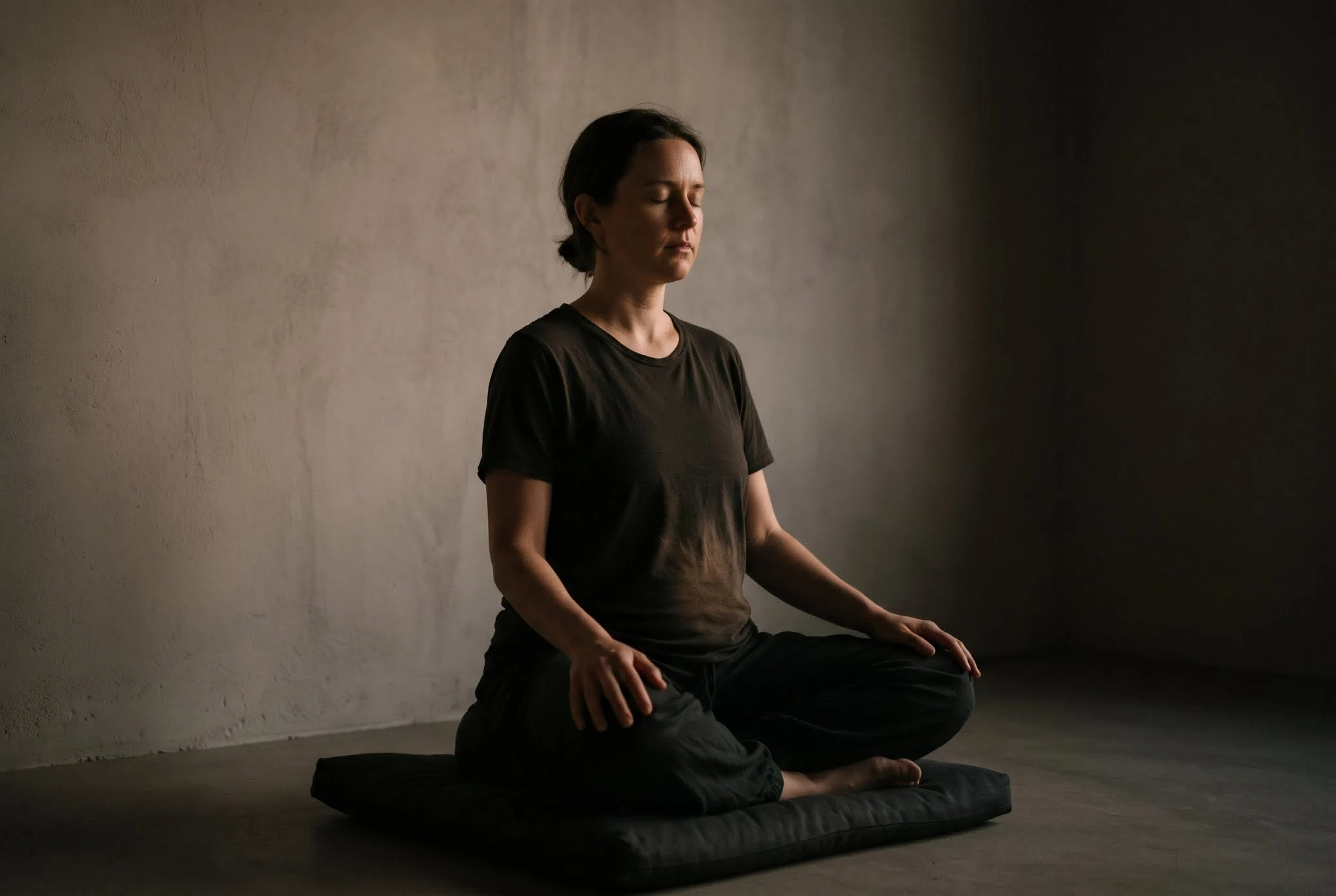
Give it 15 to 20 minutes. Sit on a chair or cushion with your spine upright but not stiff. Lying down works too, though sleep comes easily that way.
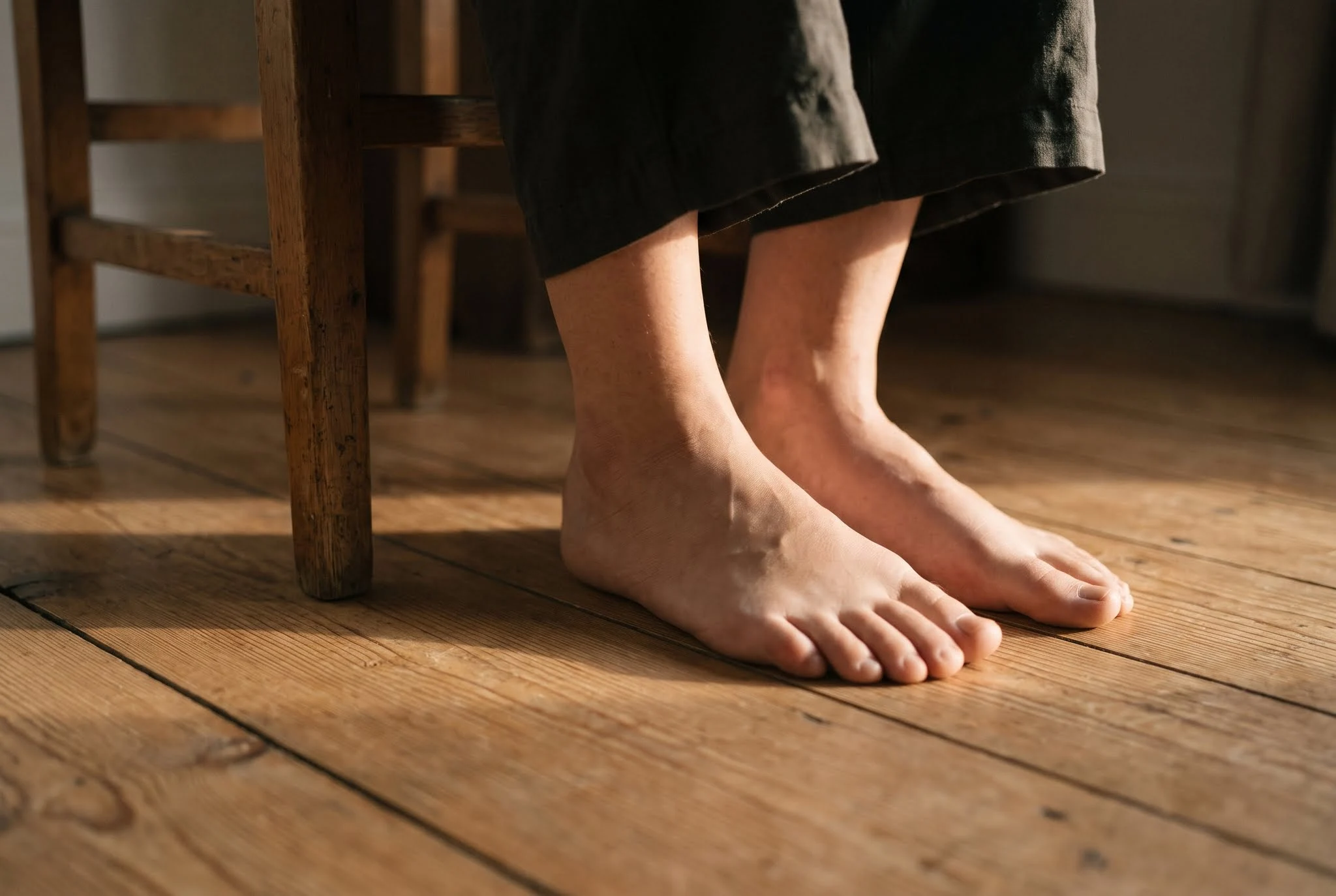
- Feel the ground first. Notice the weight of your body on the seat and the floor. This grounding lets the floor hold you up for a while.
- Let the breath breathe itself. Don't count it or deepen it. Feel where it moves, maybe the belly, maybe the ribs.
- Feel from the inside. Picturing your hands is thinking about them. Feeling them means noticing tingling, warmth, pulse, or nothing at all.
- Go where sensation is loudest. A tight jaw gets your attention exactly the way it is. You don't need to loosen it.
- Come back through the body. Thoughts will pull you away. Return by feeling one plain sensation, like your hands resting on your thighs.
- Allow small movement. A sway, a stretch, or a long sigh may happen on its own. Let it finish, then settle again.
- Close with the whole body. Before you open your eyes, feel the body as one field of sensation for a few breaths.
Expect the thinking mind to try to run this too. You'll catch yourself checking whether it's working. That check is only another thought. Feel the chair again and carry on.
Some days nothing much happens. You feel heavy, a little bored, and slightly itchy.
That counts. A practice built on what the body is doing can't fail on a dull day. A dull day still gives you a body to feel.
I'd suggest this style to anyone who finds breath counting turns into one more job for an overthinking mind. It asks for less effort. Feeling is something the body does without help.
What Comes Up When You Practice Somatic Meditation?
People who meditate this way describe heat, tingling, trembling, heaviness, and waves of feeling with no story attached. Some find numbness where they expected sensation. Old grief can surface while you're only feeling your chest.
None of this is unusual. A 2017 PLOS ONE study interviewed Western Buddhist meditators and teachers. It mapped 59 kinds of meditation-related experience across seven domains, and the body was one of those domains.
The responses ranged from very positive to very negative. Distress could pass quickly or last a long time. The same experience meant different things to different people.
When something strong arrives, make the practice smaller. Open your eyes and feel your feet on the floor.
Shorten the session to five minutes. Leave the intense sensation alone for a while and rest on a neutral one, like your hands.
Stop and get support if sitting brings panic, flashbacks, or the feeling that you're leaving your body. That's the time for a teacher who knows this ground, or a therapist trained in trauma. Waves of energy up the spine are a separate subject, covered in our guide to kundalini awakening.
Does Somatic Meditation Work?
The answer depends on what you're measuring. The Buddhist texts measure it by clear knowing. Science measures something narrower, like whether practice changes how well you sense your own insides.
A 2015 review in Frontiers in Psychology looked at interoception, the sense of signals from inside the body. Mindfulness didn't generally improve how well people sensed their heartbeat in the lab. It did seem to sharpen sensing in the areas people practiced, like the breath.
The same review notes that even brief body scans reduced errors on a subtle body-signal task. The authors were careful, though. They wrote that more research is needed to show that practice changes body awareness in daily life.
So treat somatic meditation as a spiritual practice with modest research behind it. It costs nothing to try. It doesn't promise to cure anything, and nobody should sell it to you as therapy.
There's an irony in all this. Measuring the body from the outside is the habit this practice asks you to set down for twenty minutes.
What Changes When You Let the Body Lead?
You've probably been told your whole life to get your head straight. Somatic meditation suggests the head was never the place to start. Your body was breathing, balancing, and digesting long before you had words for any of it.
No teacher can feel your body for you. Nobody else can tell you what it's holding, either. That part belongs to you. You can begin with less than you think.
Try this
Tonight, sit on the edge of your bed for five minutes. Feel your feet on the floor and the weight of your hands in your lap. Don't try to meditate. Then lie down and notice the bed take your weight.
Once sitting this way feels familiar, take it into motion with walking meditation. The body is the one place you've never left. It may also be the place you've visited least.