
Loving-Kindness Meditation: How to Practice Metta, With Phrases and a Script

A short Buddhist poem asks you to love all beings the way a mother protects her only child. The practice itself starts much smaller, with you.
Key Takeaways
Loving-kindness meditation, called metta in Pali, is the practice of silently repeating phrases of goodwill toward yourself and others. A typical phrase is “May I be happy.” You begin with yourself, then extend the same wish to someone you love, a stranger, someone difficult, and all beings.
It is one of the oldest meditations in Buddhism. It is also one of the most studied in modern psychology.
What Is Loving-Kindness Meditation?
Loving-kindness meditation trains a feeling as well as attention. Most meditation asks you to notice what is already here. Metta asks you to grow something new, which is warmth toward people, including yourself.
The method is simple. You hold someone in mind and silently offer them a few short wishes for their well-being. When your mind wanders, you return to the phrases.
The point is not to force a feeling. Some days warmth comes easily. Other days, the phrases feel flat.
Practice still counts on those days. You are planting an intention that grows with repetition.
What Does Metta Mean?
The Pali word mettā comes from the Sanskrit maitrī. Both trace to mitra, meaning “friend.” So metta is closer to friendliness than to romantic love. It is the goodwill of a good friend, offered widely.
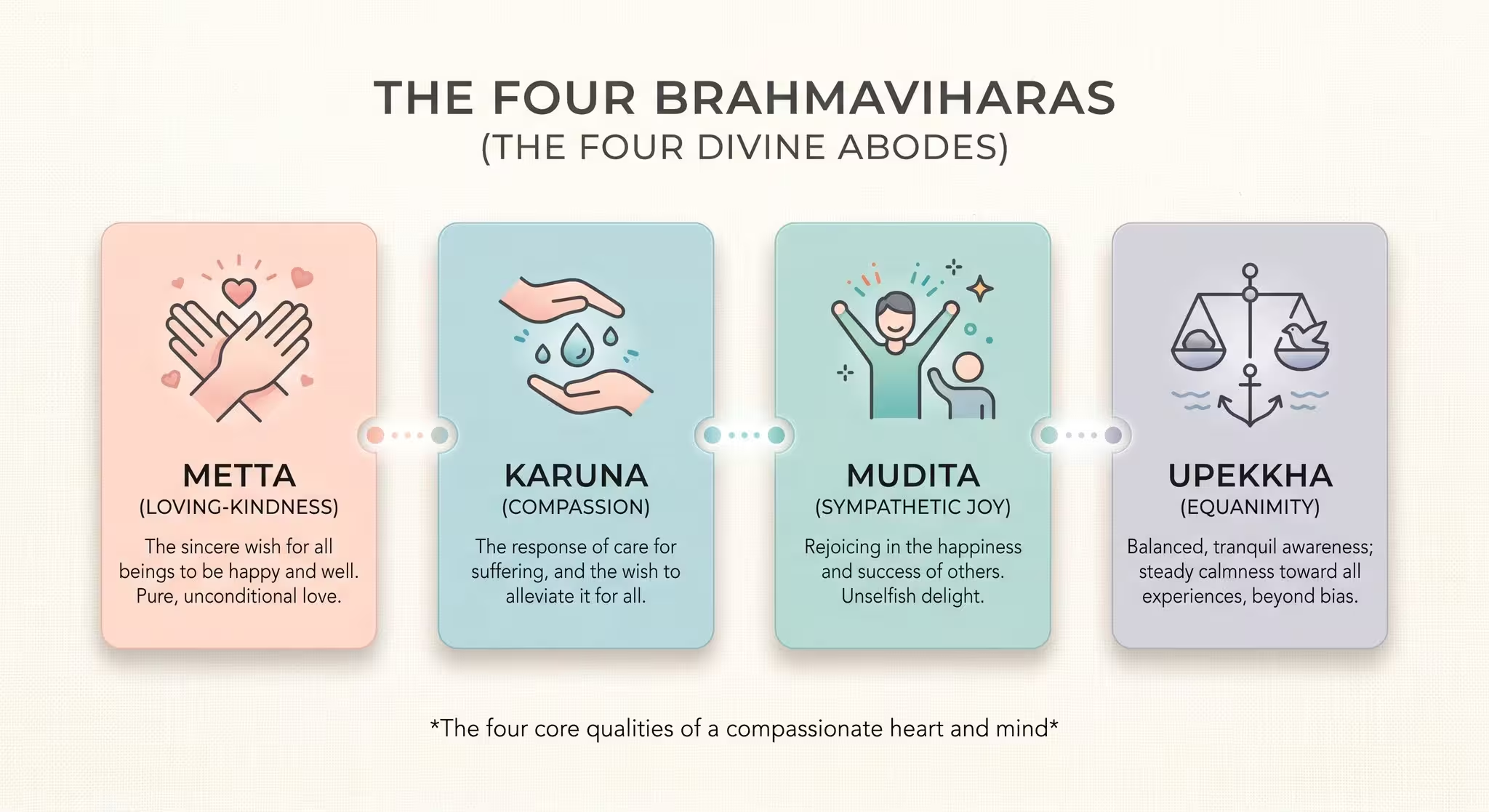
In Buddhism, metta is the first of four qualities called the brahmaviharas, or “divine abodes.”
These ideas are older than Buddhism. The word maitrī already appears in the Vedas and early Upanishads. Jain texts also name it as one of four right sentiments. Our article on what compassion is explains how these qualities connect.
Where Does Loving-Kindness Meditation Come From?
The practice comes from early Buddhist teaching. Its best-known text is the Karaniya Metta Sutta, a short discourse often chanted by Theravada monks.
Bhikkhu Sujato’s translation gives the core image of the practice. “Even as a mother would protect with her life her child, her only child, so too for all creatures unfold a boundless heart.”
The sutta adds that this attitude should be kept in mind when standing, walking, sitting, and lying down. Metta was never meant only for the cushion.
A later text, the 5th-century Visuddhimagga, gave the step-by-step method most teachers still use. It also named two traps.
That second trap is worth knowing. Real metta wishes someone well whether they ever return the favor.
What Are the Benefits According to the Buddha?
The early Buddhist texts give a surprisingly practical list. In the Anguttara Nikaya (AN 11.15), the Buddha names eleven benefits of loving-kindness.
Some of these are spiritual claims, best read on their own terms. Others, like sleeping well and a calmer mind, are things modern practitioners often report.
How Do You Do Loving-Kindness Meditation?
Set aside ten to fifteen minutes. Sit comfortably with your eyes closed. Take a few slow breaths.
Then move through five stages. Spend two to three minutes on each.
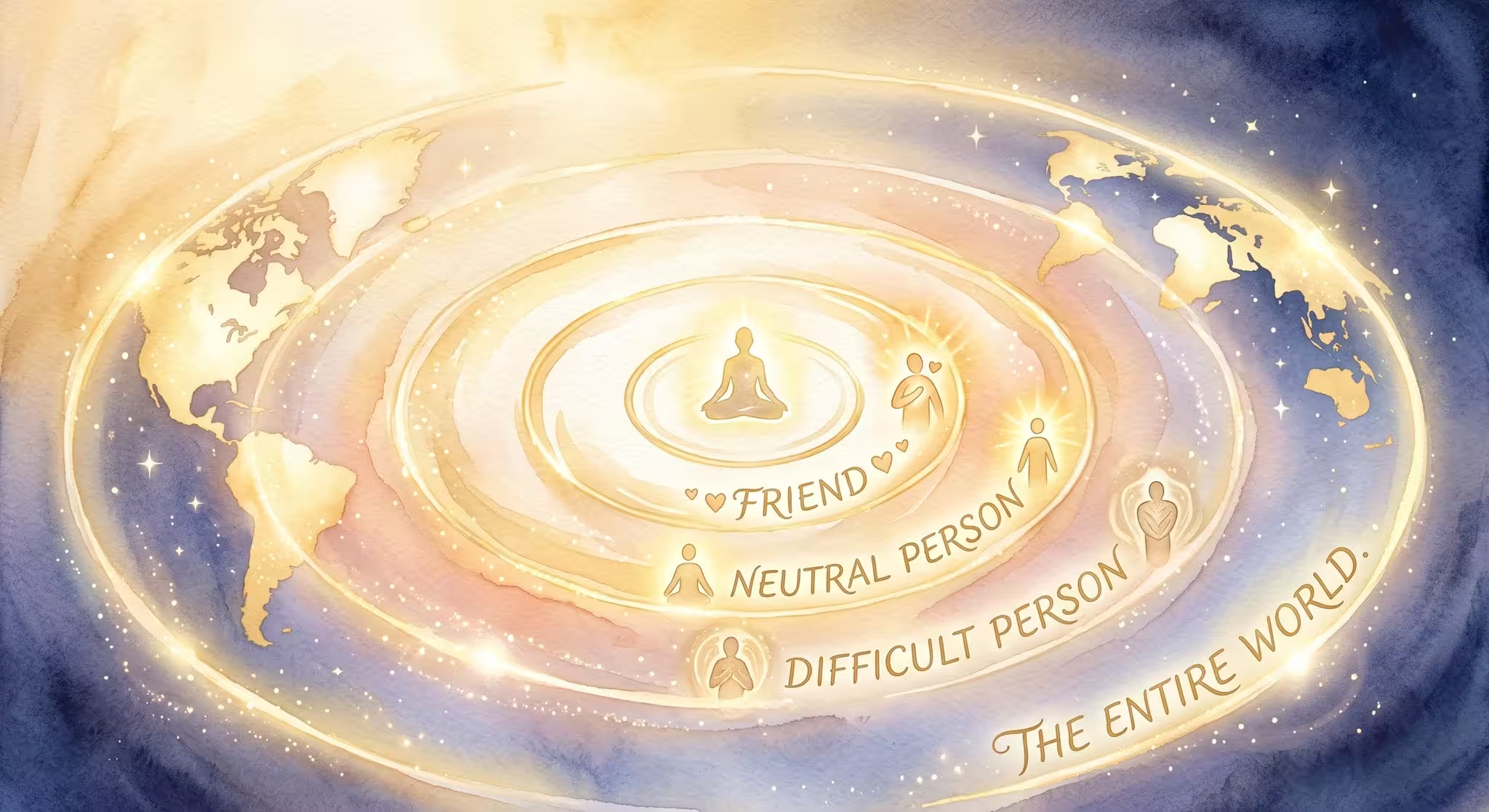
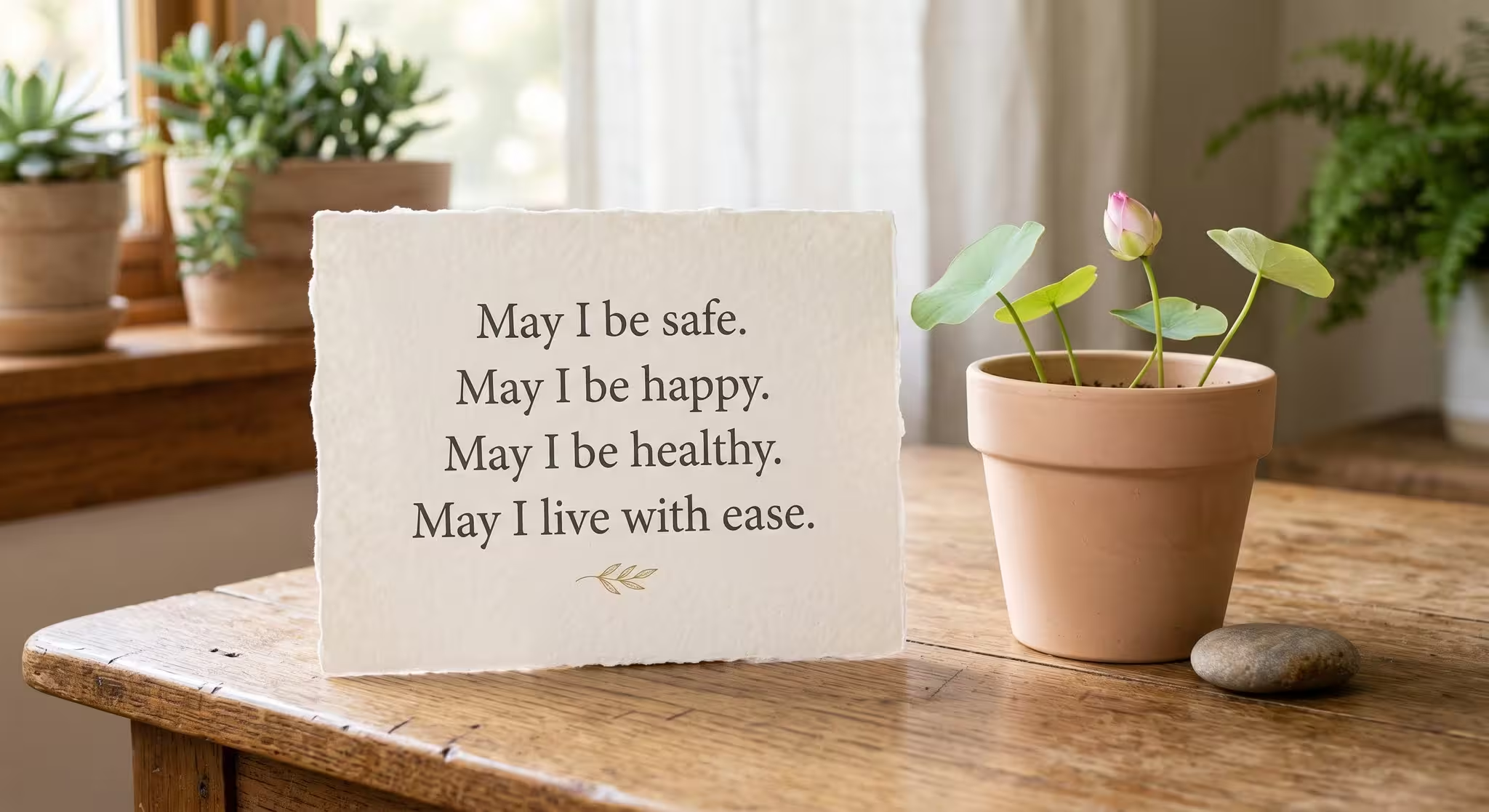
1. Yourself: Picture yourself, perhaps as a child. Silently repeat four wishes. May I be safe. May I be happy. May I be healthy. May I live with ease.
2. A friend: Bring to mind someone you care about easily, like a close friend. Offer them the same four wishes, changing “I” to “you.”
3. A neutral person: Picture someone you see but barely know, like a cashier. Offer them the same wishes.
4. A difficult person: Bring to mind someone who frustrates you. Start with a mild case, not the person who hurt you most. For lingering anger and resentment, pair this stage with slow breathing and labeling.
5. All beings: Widen the circle to everyone, everywhere, without exception.
Finish by sitting quietly for a minute. Notice how you feel without judging it.
What Phrases Do You Use in Metta Meditation?
There is no single correct set of loving-kindness phrases. Most teachers use three to four short wishes. Common choices include these.
Pick phrases that feel natural in your own language. The Karaniya Metta Sutta’s own wish is the simplest of all. “May all beings be happy!”
Keep the same phrases for a few weeks. Repetition lets them sink in, much like a mantra.
What Is a Short Loving-Kindness Meditation Script?
Here is a five-minute script. Read it slowly, then record it in your own voice if that helps.
Sit comfortably. Let your breath settle.
Bring yourself to mind. Silently offer your four wishes, one at a time.
Now picture a friend. Offer the same wishes to them, slowly.
Next, picture someone you barely know. Give them the same wishes.
Let your awareness widen to everyone on earth. Wish them all safety, happiness, health, and ease.
Rest for a few breaths. Then open your eyes.
Leave out the difficult person until the practice feels steady. You can add that stage later.
Should You Visualize the Person?
It depends on the tradition. Some teachers ask you to picture each person clearly. Others ask you to simply hold them in mind, with no image at all.
Try both. If a clear picture helps you feel warmth, use it. If visualizing feels like effort, let the name and a sense of the person be enough.
The feeling matters more than the image. Even a vague sense of the person is enough to begin.
What Does Research Show About Loving-Kindness Meditation?
Modern research is encouraging, with caveats.
The Galante review rated overall study quality as low to moderate. Most trials were small. The benefits look real, but larger, well-controlled studies are still needed.

Why Does Loving-Kindness Meditation Feel Hard?
Many people expect warmth and find resistance. That is normal. The 2014 Galante review notes that the practice may feel challenging for some people at first.
Metta is not a demand to excuse harm. Wishing someone well does not mean trusting them, nor staying close to them. Boundaries still matter.
How Is Loving-Kindness Different From Compassion and Self-Compassion?
These practices overlap, but each has its own focus.
Metta offers goodwill to everyone, whether they are suffering. Compassion responds to pain when it appears.
If you are hard on yourself, metta’s first stage is a gentle way in. For a broader practice of self-kindness, see our guide on how to love yourself.
How Is Metta Different From Mindfulness Meditation?
Mindfulness meditation trains you to notice whatever is happening, without trying to change it. Metta deliberately cultivates one quality: goodwill.
The two work well together. Many teachers open with a few minutes of mindfulness meditation to settle the mind, then move into the metta phrases. Mindfulness steadies attention. Metta warms it.
How Long Before You Notice a Difference?
Some people feel softer after a single session. The Stanford study found a shift in feelings toward strangers after only a few minutes.
Deeper change builds slowly. In the Fredrickson study, positive emotions rose gradually over time, not all at once. The personal resources that followed, like purpose and social support, grew out of that steady build.
So judge the practice by weeks, not by sittings. A flat session is not a failed one. It is part of the slow accumulation that makes metta work.
How Often Should You Practice Loving-Kindness Meditation?
Short, regular sessions work better than rare long ones. Ten to fifteen minutes a day is a good start.
You can also practice informally. Silently wish a stranger well on the bus. Offer “may you be happy” to the person ahead of you in line. These brief moments carry the practice into daily life, the way the Karaniya Metta Sutta describes.
If low mood is part of why you are here, our guide to meditation for depression covers how metta fits with other support. For an overview of other styles, see what meditation is.
Subscribe to Create Higher Vibrations!
Get Inspiration and Practical advice straight to your inbox.
Who Will You Wish Well Today?
Think of one person you will see today. It does not have to be someone you like.
Before you meet them, silently offer one phrase. “May you be happy.” Notice what happens in your body as you say it, then notice how the meeting goes.
That small experiment is metta in the wild. Try it once today. Tomorrow, give the full practice a quiet slot of its own, beginning with yourself.