
Meditation for Depression: What Helps, What Doesn’t, and How to Start
If depression makes it hard to start anything, you are not lazy. Your first session only needs to last two minutes.
Key Takeaways
Meditation for depression means using practices like mindfulness, loving-kindness, or mantra meditation to ease depressive symptoms and reduce the chance of relapse. Most approaches train you to notice negative thoughts without getting pulled into them. The research supports it as a helpful addition to treatment, not as a cure on its own.
If you are in crisis: If you are thinking about suicide, get help now. In the US, the 988 Suicide & Crisis Lifeline answers calls and texts to 988 at any hour.
Elsewhere, contact your local emergency number. Meditation is not the right tool for a crisis.
Can Meditation Help Depression?
Yes, for many people, though less dramatically than headlines suggest.
The most careful review comes from Johns Hopkins researchers in JAMA Internal Medicine in 2014. Madhav Goyal and colleagues analyzed 47 randomized trials with 3,515 participants. They found moderate evidence that mindfulness meditation programs improved depression. Anxiety and pain improved too.
The size of the effect was small to moderate. The review also found no evidence that meditation worked better than active treatments like medication or exercise.
In England, the national clinical body NICE recommends mindfulness-based therapies as one option for less severe depression. That is a meaningful endorsement. It also tells you where meditation fits best.
How Does Meditation Help With Depression?
Depression often runs on rumination. That is the habit of circling the same painful thoughts: what went wrong, what is wrong with you, what will go wrong next.
Meditation trains a different response. You notice a thought, label it as thinking, and return to the breath. Over time, the thought “I always fail” starts to look like a passing mental event instead of the truth about your life.
Psychologists call this shift decentering. It does not remove painful thoughts. It loosens their grip on what you do next.
The effect on rumination is measurable. A 2017 meta-analysis led by Lilisbeth Perestelo-Perez found that mindfulness-based cognitive therapy produced a moderate reduction in ruminative thinking compared with usual care.
Meditation also builds one small, repeatable success into the day. On low-motivation days, a five-minute practice is something you can still finish.
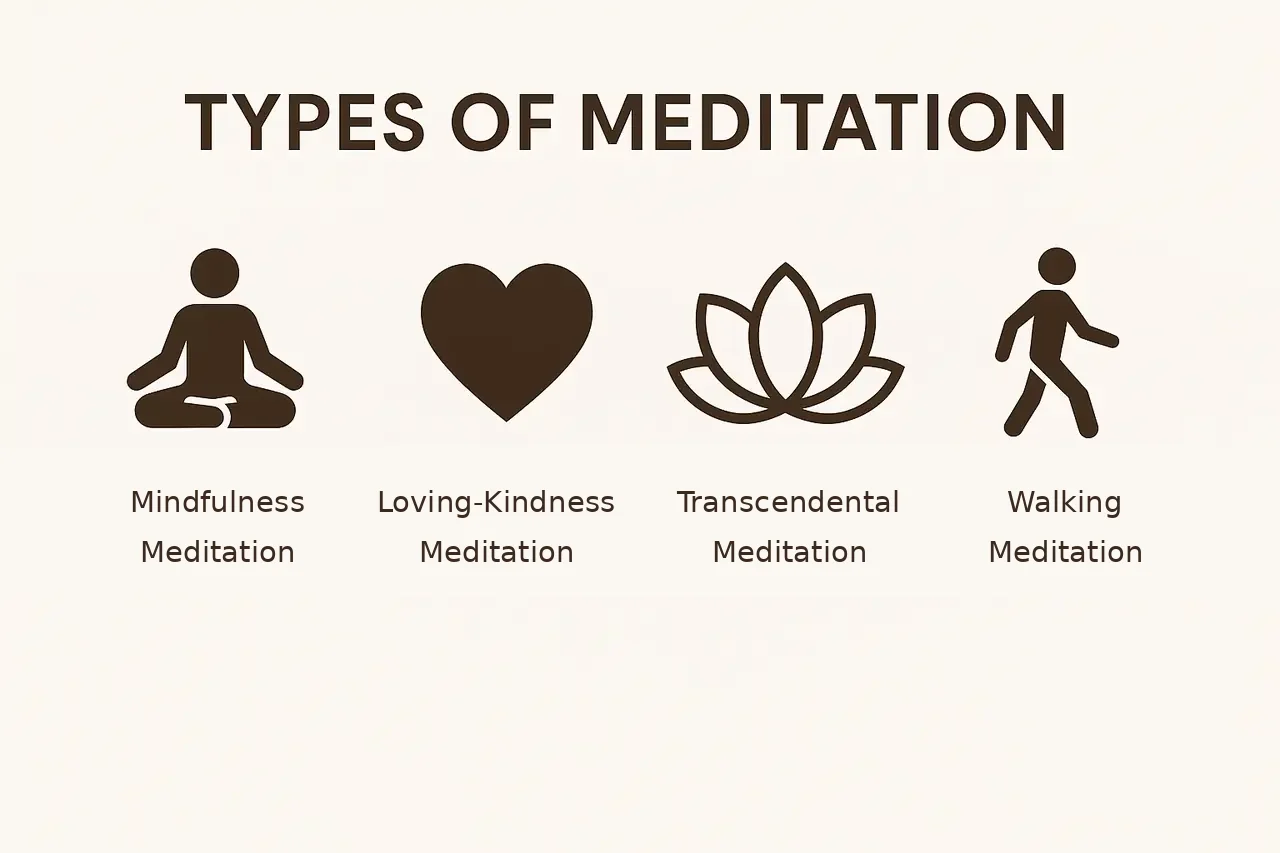
Which Types of Meditation Help With Depression?
There is no single best meditation for depression. These types have the most support:
If you are new to all of this, start with the overview of what meditation is.
What Is Mindfulness-Based Cognitive Therapy?
Mindfulness-based cognitive therapy (MBCT) is an eight-week group program. It combines mindfulness meditation with tools from cognitive behavioral therapy. It was designed for one job: keeping depression from coming back.
The evidence for that job is solid. A 2016 analysis in JAMA Psychiatry pooled individual data from 1,258 patients across nine trials.
That is the best evidence for mindfulness for depression. People who received MBCT had a lower risk of depressive relapse over 60 weeks than those who did not. It also compared favorably with other active treatments.
Mindfulness-based stress reduction (MBSR) is the older, more general eight-week course that MBCT grew out of. For the details of the program, see our full guide to mindfulness-based cognitive therapy.
How Does Depression Affect the Mind?
Depression is more than sadness. It changes how you think, sleep, move, and feel pleasure.
Common effects include:
That last effect is where meditation has the most to offer. It does not argue with the inner critic. It teaches you to hear it without obeying it.
How Do You Meditate When You Are Depressed?
Depression drains the very things meditation seems to need: energy, focus, and hope. So adjust the practice to fit.
For a full first session, see our guide on how to meditate.
What If You Feel Too Low to Meditate?
Some days, even two minutes feels impossible. On those days, shrink the practice further.
Take three breaths before you get out of bed. Feel the water on your hands while you wash them. Notice one sound outside the window.
These tiny moments still train the same skill. They keep the habit alive until a better day returns. Missing a session is not failure. Coming back the next day is the practice.
What Is a Simple Meditation for Depressive Thoughts?
Try this three-step practice when a heavy thought takes over. It takes about three minutes.
1. Notice: Sit down and feel your feet on the floor. Ask yourself what thought is here right now.
2. Name it: Silently add a label in front of it: “I am having the thought that I am a failure.” The thought stays. Your position toward it changes.
3. Return: Take five slow breaths, feeling each exhale. Then get up and do one small thing.
The labeling step is the heart of it. It turns a verdict into an event in the mind.
Can Meditation Make Depression Worse?
Sometimes, yes. This is rarely mentioned in the cheerful articles, but it matters.
A 2020 systematic review led by Miguel Farias analyzed 83 studies. About 8% of people experienced an adverse effect during or after meditation. Anxiety and depression were the most common. Some people had no prior history of mental health problems.
Stop or scale back if you notice:
In that case, switch to shorter, eyes-open practice. Talk to a clinician before continuing. People with severe depression or a history of trauma do best with a trained teacher.
How Long Does Meditation Take to Help Depression?
Expect weeks, not days. Most clinical programs, including MBCT and MBSR, run for eight weeks.
In the Goyal review, the benefit for depression showed up at the end of eight-week programs. It was still present, though smaller, three to six months later. That pattern suggests the skill fades without practice.
A single session can still help in the moment. It can soften a spiral or settle a restless morning. Lasting change comes from repetition.
Can Self-Compassion Practice Help Depression?
Often, yes. Depression tends to come with a harsh inner critic, and self-compassion practice works directly on that voice.
Loving-kindness meditation is the most common form. Try it for three minutes:
Expect resistance at first. The 2014 Galante meta-analysis noted that kindness-based meditation can feel challenging for some people early on. If the phrases feel false, start with someone else and come back to yourself later.
Is Guided Meditation Good for Depression?
For many people, it is the easiest way in. A recorded voice holds the structure when your own focus feels out of reach.
Look for guided sessions that are:
Avoid sessions that promise to cure depression. A good guide treats your low mood as something to notice, not something to fix by force.
Can Meditation Help With Depression and Anxiety Together?
Yes. Depression and anxiety often travel together, and the same practices help both. The Goyal review found improvements in both conditions.
If anxiety is your main struggle, our guide to meditation for anxiety covers techniques suited to an anxious, racing mind.
Should You Meditate Instead of Taking Medication?
No. Meditation can work alongside medication and therapy. It should not replace them without your doctor’s guidance.
Never stop an antidepressant suddenly. The NHS warns that coming off can cause withdrawal symptoms, so your doctor will plan a gradual reduction. If you would like to use MBCT as part of tapering, plan it with your prescriber.
Many people use meditation alongside antidepressants. For mild depression, meditation may be one of several reasonable first steps. For moderate or severe depression, it is a support for professional care.
Subscribe to Create Higher Vibrations!
Get Inspiration and Practical advice straight to your inbox.
What Does Progress Look Like?
Progress rarely feels like happiness arriving. It looks smaller than that.
You catch a spiral two thoughts in, instead of twenty. You notice “I am worthless” and recognize it as the depression talking. A bad morning stays a bad morning, instead of becoming a bad week.
Those are real gains. Start with two minutes today. Keep your treatment in place. Then let the practice do its slow, quiet work.

