
Crow Symbolism: What It Means When You See a Black Crow
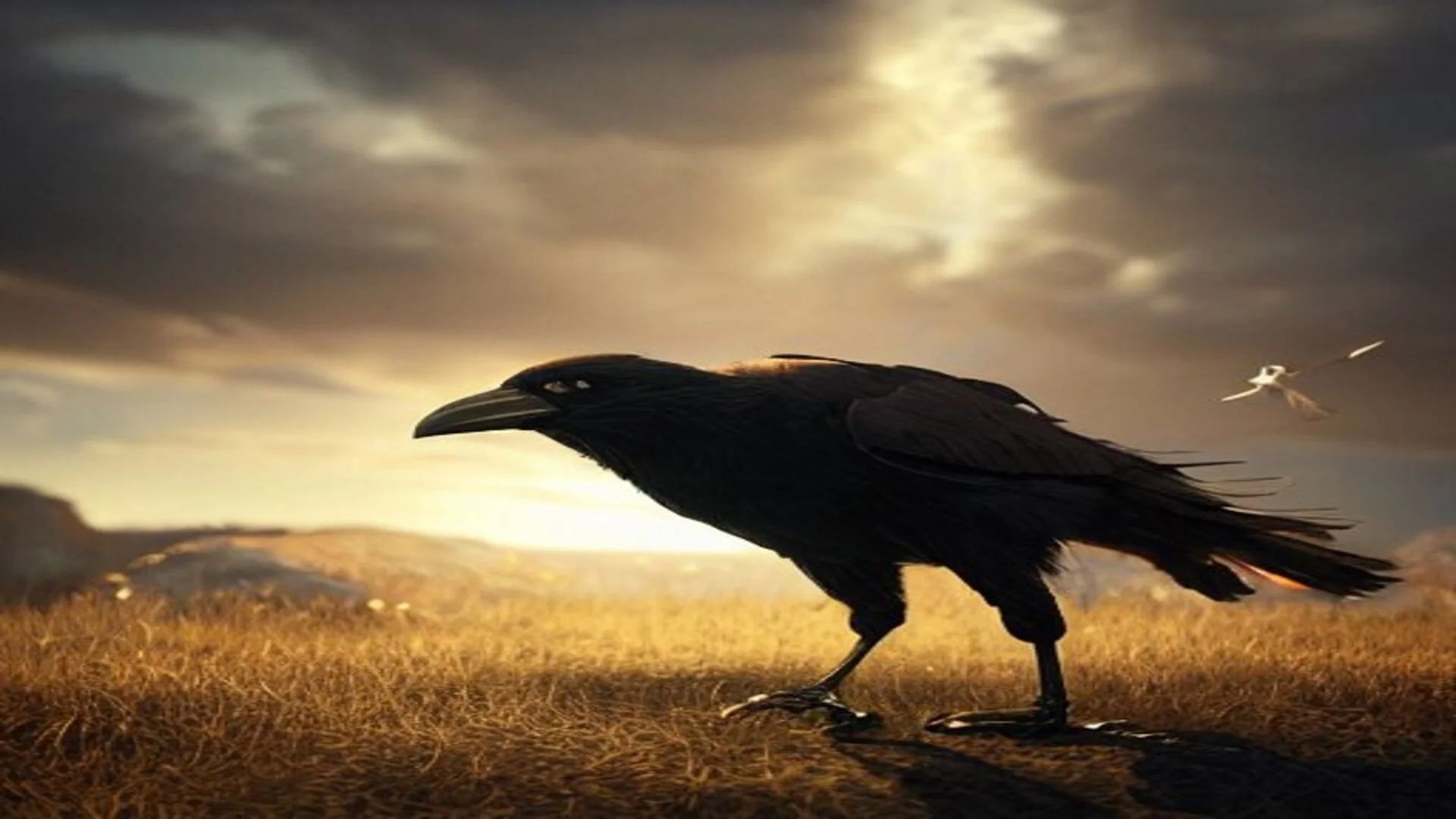
The crow on your fence has probably already learned your face.
Key Takeaways
Crow symbolism centers on change, intelligence and the link between the seen and unseen worlds. The most common black crow meaning is a messenger. It signals transformation, a call to trust your instincts, or a warning to pay closer attention.
The crow has a darker side in folklore too. Its black feathers and scavenging habits tied it to death in many cultures.
Yet the same bird was honored as a carrier of ancestors’ spirits and a symbol of wisdom. Both readings help explain what a crow may mean when it lands in your path.
What Does a Crow Symbolize?
Five meanings show up again and again in crow lore.
Taken together, crow symbolism is less about doom than about noticing. Its real message is to see clearly what is changing around you.
What Does a Single Black Crow Mean?
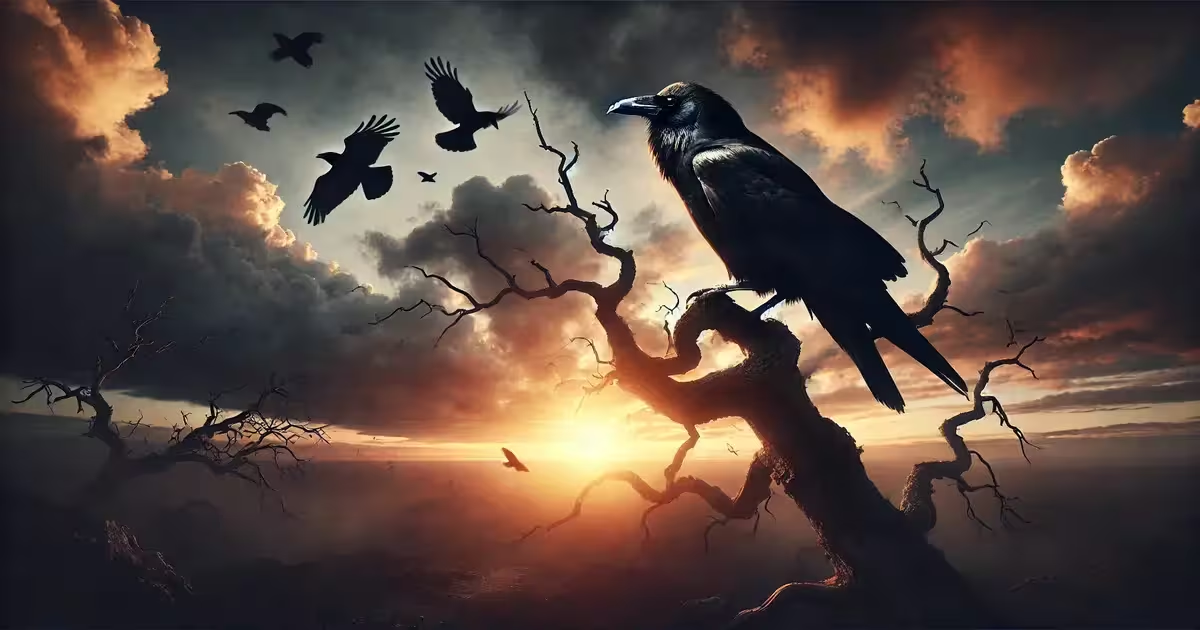
A lone crow stands out because crows are social birds. Seeing just one often feels like a personal message. Four readings are common.
So is a single crow a good omen? For most people, it is a neutral one. It says “look closer” more than “beware.”
What Does the Number of Crows Mean?
Many people count crows because of an old rhyme. That rhyme, however, began with magpies.
Wikipedia’s history of “One for Sorrow” traces the earliest recorded version to 1780. It notes that crows and other corvids took the magpie’s place in some versions, especially in America, where magpies are less common.
A widely used modern form of the rhyme runs like this:
Treat the rhyme as folklore, not a forecast. Like angel numbers, the count matters less than what was on your mind when you saw the birds.
Is Seeing a Black Crow an Omen?
It can be read as one. Whether it is good or bad depends on the tradition.
The dark reading is old. In Irish myth, the war goddess the Morrígan often takes the form of a crow.
According to Wikipedia’s summary of the Morrígan, the hero Cú Chulainn’s enemies only believed he was dead when a crow landed on his shoulder. Crows also fed on the dead after battles, which fixed their link to death in European memory.
The bright reading is just as strong. In Hindu practice, crows are welcomed as carriers of the ancestors. Other traditions honor them as wise messengers and teachers.
Crows are not harbingers of bad luck. Their reputation grew from where they were seen, not from anything they caused. A crow is better read as a sign that something is ending or being revealed.
What Is a Crow Trying to Tell Me?
The setting shapes the message. These are the moments people ask about most.
How do crows warn you?
Crows really do give warnings, to each other and sometimes to people. They call loudly and mob threats together.
They also remember who threatened them. In a 2010 study in Animal Behaviour, John Marzluff and colleagues found that wild American crows recognized a mask worn by the people who had trapped them, even years later. The birds scolded that face whenever they saw it again.
So a crow that scolds you may not be sending a spiritual message at all. It may simply remember you.
Why Are Crows Seen as Wise?
Crows have been called wise, prophetic and uncanny for thousands of years. Modern research suggests that reputation is earned.
They remember faces. The Marzluff study showed that crow face recognition lasts for years. A crow can hold a grudge against one person that long.
They study their dead. In a 2015 study, Kaeli Swift and John Marzluff found that wild crows gather around a dead crow. The authors concluded the birds do this to learn about danger. What folklore called a “crow funeral” has a practical purpose.
They solve puzzles. Aesop’s fable “The Crow and the Pitcher” tells of a thirsty crow dropping stones into a jar to raise the water. In 2014, a team led by Sarah Jelbert tested New Caledonian crows on that very task in PLoS ONE. The birds dropped objects into water to bring food within reach.
A bird that remembers, learns from death and solves problems naturally became a symbol of wisdom. The myth grew out of the animal.
What Do Crows Mean Across Cultures?
Crow symbolism varies widely around the world.
A note on Norse myth: the birds that serve Odin are ravens, not crows. Their names are Huginn and Muninn, Thought and Memory. The guide to raven symbolism covers them in full, along with how to tell the two birds apart.
What Does the Bible Say About Crows?
The crow as a bird does not appear in the King James Bible. Every use of the word “crow” there refers to a rooster crowing, as in Jesus’s warning that Peter will deny him “before the cock crow.”
The corvid that does appear in scripture is the raven. Ravens feed the prophet Elijah and fly from Noah’s ark. Jesus also tells his listeners to “consider the ravens,” which God feeds without barns or storehouses.
People searching for crow meanings in the Bible usually mean these raven passages. For Christians who see crows often, the same comfort applies. God’s care reaches even the birds most people overlook.
What Does the Crow Mean as a Spirit Animal?
As a spirit animal, the crow belongs to observant, adaptable people. They notice patterns others miss. They often feel at home in change.
A crow guide brings a few lessons:
If the crow keeps appearing to you, the guide to finding your spirit animal explains how to read a repeating animal. For a bird with the opposite energy, compare the gentle red cardinal, which many see as a sign of comfort.
The crow is also a natural companion for shadow work. It is at ease with the parts of life most people avoid.
What Does It Mean to Dream About a Crow?
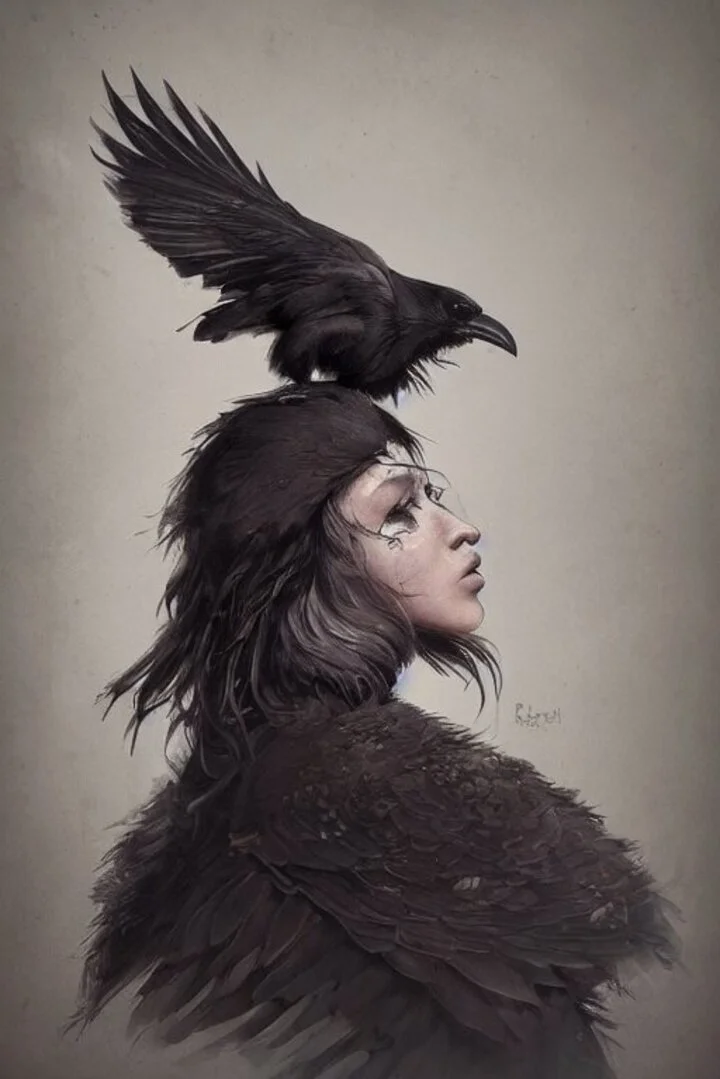
Crow dreams are personal, but some patterns come up often.
Write the dream down when you wake. Note the crow’s behavior and your feeling. A crow that returns across several dreams usually points to the same unfinished business.
Subscribe to Create Higher Vibrations!
Get Inspiration and Practical advice straight to your inbox.
Try the Crow Test
The crows near your home already know more about you than you think. You can test that yourself over a few weeks.
Step 1: Learn the local crows. Notice where they gather, how many there are and when they come.
Step 2: Stay the same. Walk the same route at the same time. Move calmly. Never chase or threaten them.
Step 3: Watch their response. Over time, many people find the crows grow easier around them. Some follow at a distance. A few start waiting nearby.
If the crows relax, you have learned something useful. You are being watched, remembered and judged by how you behave. That is the crow’s oldest message, and it applies well beyond birds. People remember too.
For more birds and animals with a message, visit the symbolism hub.

