
Blocked Chakras: The Signs of Each and How to Tell Which One Is Blocked
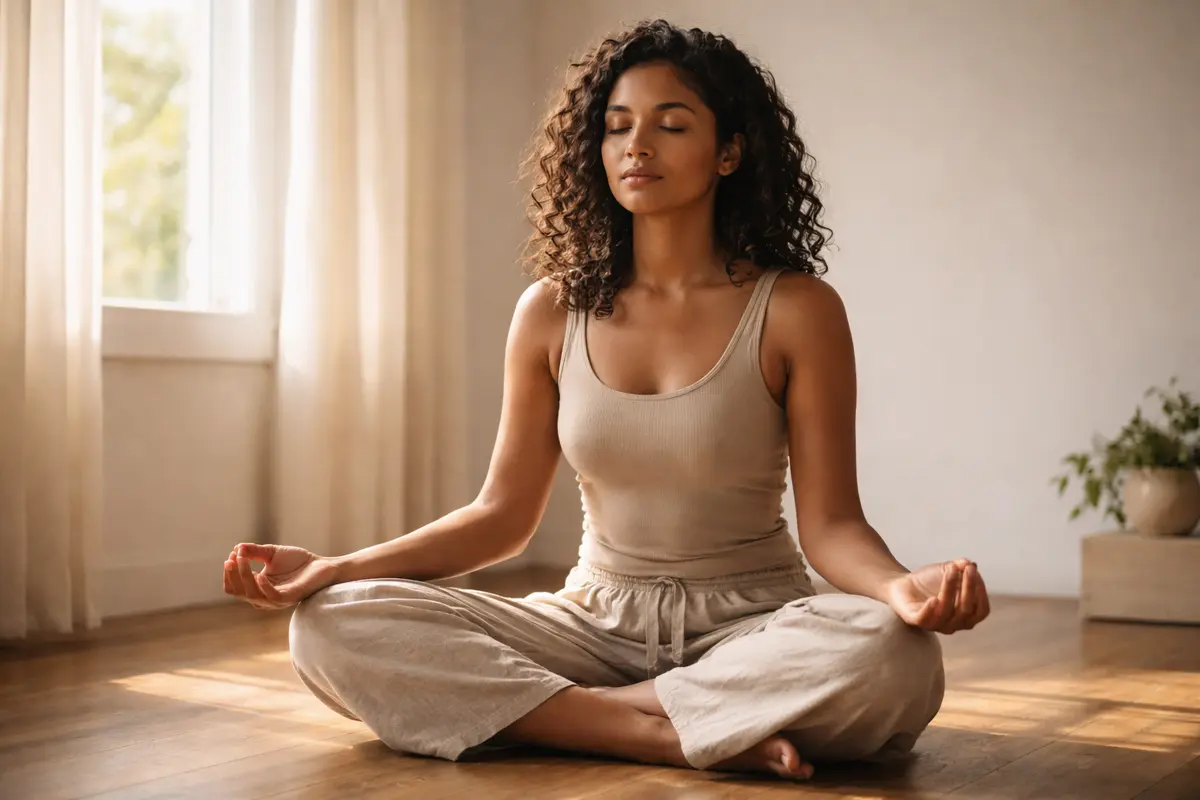
The seven-chakra map most people use traces back to a Sanskrit text written in 1577. The rainbow colors came much later, from the West.
Key Takeaways
Blocked chakras are energy centers where the flow of life force, called prana in yoga, is said to be restricted. In chakra teaching, a blockage shows up as a cluster of signs. Look for recurring tension in one body area, an emotional theme that keeps returning, and habits that feel stuck on repeat.
Most people sense blocked chakras before they have a name for the pattern. A tight chest that stretching never releases. A creative drought that rest does not fix. The chakra map gives those signals an address.
What Is a Blocked Chakra?
A blocked chakra is an energy center where the flow of energy has fallen out of balance. Teachers describe two directions of imbalance. Telling them apart changes how you read your own signals.
Both count as blocked. An overactive chakra needs balancing just as much as a quiet one.
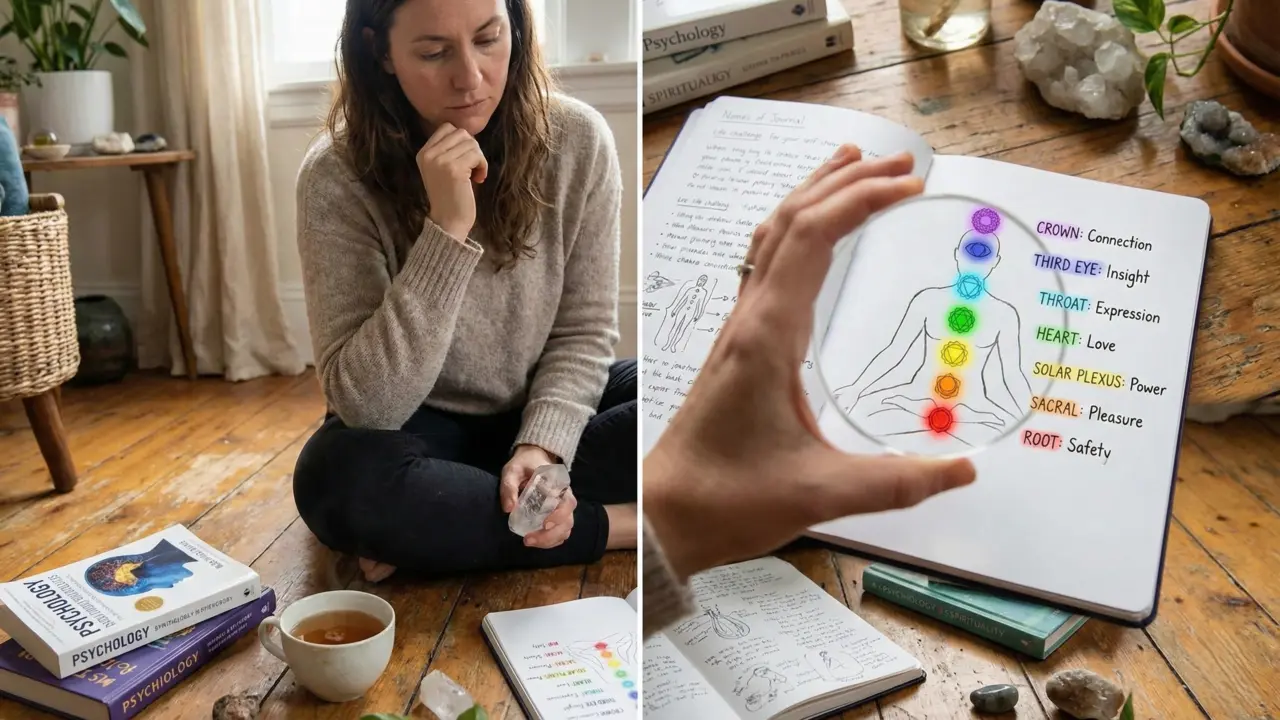
A person with an underactive solar plexus may never speak up. A person with an overactive one may dominate every meeting. The theme is the same, which is personal power. The direction is opposite.
Energy workers often call these patterns energy blocks.
What Causes Blocked Chakras?
Chakra teaching names a handful of common causes. Most of them are ordinary experiences that were never fully processed.
None of these causes are moral failings. They are the body doing its job of protection for longer than it needed to.
Where Does the Seven-Chakra Map Come From?
The word chakra comes from the Sanskrit cakra, meaning “wheel” or “circle.” Chakras appear in Hindu and Buddhist tantric meditation as points of focus in the subtle body (Wikipedia).
Early sources did not agree on a number. Medieval Buddhist texts from the 8th century mention four or five chakras. Hindu sources give various counts.
The chakra system most people know, with its seven chakras, comes from a 1577 text by Pūrṇānanda Yati, the Ṣaṭ-Cakra-Nirūpaṇa (Sat-Chakra-Nirupana). The title means “Explanation of the Six Chakras.” It describes six chakras plus the crown point above them. Sir John Woodroffe brought it to English readers in his 1919 book The Serpent Power.

Much of what modern charts add came later. The rainbow colors, gemstones, and many psychological traits were attached later, mostly in the West. No ancient Indian system used the rainbow colors.
There is no scientific evidence that chakras exist as physical structures.
That does not make the map useless. It works best as a guide for attention. It helps you notice where tension sits in your body and which part of your life it may be tied to.
What Are the Signs of Each Blocked Chakra?
Blocked chakra symptoms come in three layers. Each chakra has its own body area, emotional theme, and behavior pattern. Read the signs as a cluster. One symptom alone means little. Three that line up with the same chakra are worth attention.
Root Chakra (Muladhara): Safety
The root chakra lives at the base of the spine and governs safety, belonging, and basic security.
Sacral Chakra (Svadhisthana): Feeling and Creativity
Just below the navel, the sacral chakra covers the lower belly and pelvis. It rules emotion, pleasure, and creative flow.
Solar Plexus Chakra (Manipura): Personal Power
The solar plexus chakra is found in the upper abdomen. Its themes are confidence, will, and self-worth.

Heart Chakra (Anahata): Love and Connection
Centered in the chest, the heart chakra links the three lower chakras with the three upper ones.
Throat Chakra (Vishuddha): Expression
The throat chakra is the center of truth, voice, and self-expression.
Third Eye Chakra (Ajna): Intuition and Clarity
Between the eyebrows lies the third eye chakra. It governs insight, intuition, and clear thinking.
Crown Chakra (Sahasrara): Meaning
At the top of the head, the crown chakra governs meaning, purpose, and connection to something larger than you.
A blocked crown rarely stands alone. Teachers often trace it back to unresolved patterns lower down, which is why many start their healing work at the root.

Can More Than One Chakra Be Blocked at Once?
Yes. Several chakras often fall out of balance together. Long periods of stress tend to affect the whole system, not one center.
Patterns also travel in pairs. A blocked root, which carries constant alarm, often brings a tight solar plexus with it. Power feels risky when safety is missing. A guarded heart often comes with a silent throat.
When several areas show up in your scan, start with the lowest one. Most teachers work from the root upward, since every center above it rests on feeling safe.
Which Chakra Is Blocked by Anxiety or Trauma?
In chakra teaching, anxiety is most often linked to the root chakra, the center of safety. A racing mind can also point to the third eye. A knotted stomach before stressful events points to the solar plexus.
Trauma is usually described as affecting several chakras at once. The root holds the loss of safety. Words that could not be spoken tend to settle in the throat. The heart carries the guarded trust that follows betrayal.
Physical symptoms deserve medical attention first. A recurring sore throat, chest pain, or digestive trouble can have causes a doctor should rule out.
Anxiety and trauma also respond well to support from a mental health professional. The chakra map can sit alongside that care. It should never replace it.
How Can You Tell Which Chakra Is Blocked?
The simplest method is a body scan. Body scanning is one of the three core practices in mindfulness-based stress reduction (MBSR), the eight-week program Jon Kabat-Zinn developed in the late 1970s (Wikipedia).

The skill a body scan trains is interoception, the sense of what is happening inside your body. A 2023 study by Tan and colleagues found that people who paid more attention to body signals used emotion regulation strategies more often. Emotional awareness explained much of that link (Tan et al., 2023).
Try this five-step chakra scan:
The areas that keep showing up, scan after scan, are the ones to work with.
What Journal Prompts Help You Find a Blocked Chakra?
Writing confirms what the body scan suggests. Pick the chakra your scan pointed to, then answer its two prompts.

How Do You Unblock a Chakra Yourself?
Start with the chakra that shows up most often. Small, steady practice works better than one dramatic session.
How long it takes varies. Some people feel a shift after one session. Deeper patterns can take months.
People often describe a chakra opening as a release. Breath drops lower into the belly. Tears or laughter arrive without warning.
A familiar tightness softens. Old feelings can also surface for a while before they settle, so go gently and get support if they become too heavy. For an overview of how all seven centers work together, see our guide to the 7 chakras.
Subscribe to Create Higher Vibrations!
Get Inspiration and Practical advice straight to your inbox.
What Will Your Body Show You in Seven Days?
Run a one-week experiment. Each night, do the five-step scan. Then write down the single area that felt most tight, numb, or heavy.
At the end of the week, count. Most people find that one or two areas appear again and again. That count is more reliable than any quiz.
Then go to the guide for that chakra and choose one practice from it. Keep the scan going for a second week, and watch whether the tally changes.

