How Quantum Healing Practitioners Diagnose and Treat Patients: A Plain-Language Guide

What if the ache you carry, the one that doesn’t show up on blood tests or scans, is trying to tell you something your doctor’s chart can’t capture?
What if your body isn’t just a collection of symptoms to be managed, but an intelligent, interconnected system of energy that knows how to heal itself, given the right support?
These are the questions that draw millions of people toward quantum healing every year. Not because they’ve given up on conventional medicine, but because they’re looking for something that speaks to the whole of them, body, mind, and spirit together.
This guide walks you through exactly how quantum healing practitioners diagnose and treat patients. From how they assess what’s out of balance, to the techniques they use in a session, to what the science actually says, you’ll leave with a clear, grounded picture of this world.
- Practitioners work with your energy field instead of diagnosing disease.
- Choose methods like Reiki, Quantum-Touch, and meditation for your path.
- Use quantum healing to complement your medical care.
- Address your body, mind, and spirit together through this whole-person approach.
What is quantum healing, and how does it work?
Quantum healing is a holistic approach drawing on ideas from quantum physics and mind-body medicine. Practitioners believe the body, mind, and spirit are all forms of energy, and that restoring balance to that energy supports natural healing.
It is not a replacement for conventional medical care, but a complementary path.
Think of it this way. You know the difference between walking into a room where something feels “off” and walking into a space that feels calm and welcoming?
Practitioners of quantum healing would say that difference is energy, and that the human body works the same way. When something disrupts that energy, physically, emotionally, or spiritually, the whole system can feel it.
The foundational idea is that everything in the universe, including you, is fundamentally energy. The body, the mind, and the spirit are not separate systems; they are interconnected fields that constantly influence one another.
Quantum healing works by attempting to restore coherence to those fields.
It’s worth being clear about something, though. Quantum healing borrows language from quantum physics, the branch of science that studies subatomic particles, but it operates primarily as a spiritual and wellness practice.
It uses terms like “energy fields” and “quantum coherence” more as metaphors than as literal scientific claims. This distinction matters, and we’ll come back to it.
Deepak Chopra popularized the term itself in his 1989 book of the same name, where he blended principles of Ayurvedic medicine (an ancient Indian wellness tradition), consciousness studies, and concepts from modern physics into a new way of thinking about healing.
Where conventional medicine tends to focus on diagnosing and treating specific symptoms, quantum healing focuses on the energetic root of why those symptoms might have appeared in the first place.
As someone who first encountered quantum healing while searching for something to complement my own recovery process, I remember how strange and unfamiliar the language felt. But also, somehow, how right the underlying idea felt: that we are more than our diagnoses.
The core insight: you are an interconnected system of energy, and quantum healing works by addressing that system as a whole.

How do quantum healing practitioners diagnose patients?
Quantum healing practitioners do not diagnose in the clinical medical sense.
They assess “energetic imbalances” using methods such as biofield reading, muscle testing, quantum resonance analysis, intuitive scanning, and deep-trance hypnosis. The goal is to identify what may be blocking the body’s natural ability to heal.
This is one of the most important things to understand before your first session. When you visit a conventional doctor, they look for measurable biological markers. Think blood pressure, inflammation levels, or structural abnormalities visible on a scan.
A quantum healing practitioner does something fundamentally different. They look at the energetic patterns that may be creating, or contributing to, those physical realities.
Here are the most common assessment methods you might encounter:
Biofield assessment
The biofield is the subtle energy field that practitioners believe surrounds and permeates the physical body.
During a session, a practitioner might move their hands slowly through this field, sensing areas that feel dense, cold, scattered, or blocked.
Some practitioners use biofeedback monitors or quantum resonance analyzers (electronic devices that measure subtle physiological responses) to add a more measurable layer to this process.
Muscle testing (applied kinesiology)
This method uses the body’s own physical responses as a kind of feedback system. The practitioner applies gentle pressure to the client’s arm or hand.
They do this while asking questions or introducing specific intentions. A strong muscular response signals alignment; a weak one suggests a potential imbalance.
A strong muscular response is interpreted as alignment; a weak one signals a potential area of imbalance. It sounds unusual if you’ve never seen it, but many clients find it surprisingly accurate.
Quantum Healing Hypnosis Technique (QHHT)
Developed by researcher and author Dolores Cannon, QHHT guides a client into a deep hypnotic trance state, sometimes described as the theta brainwave state, where the practitioner can access what Cannon called the “subconscious” or “higher self.”
In this state, clients often report vivid imagery, emotional release, and insights into the root causes of physical or emotional patterns they’ve been carrying for years.
Intuitive scanning
Some practitioners combine the above with intuitive awareness, sensing energetic information through focused attention, intention, and experience.
This is the most subjective of the methods, and its effectiveness varies widely depending on the practitioner’s training and depth of practice.
It’s important to say this plainly: none of these methods constitutes a medical diagnosis. They are energetic assessments. If you have any physical concerns, please also see a licensed healthcare provider.
I’ve seen clients come into sessions carrying years of unexplained fatigue, long after their doctors had cleared them. What an energetic assessment sometimes uncovered wasn’t a disease, but a pattern of stored emotional stress that had never been fully addressed. That’s the gap quantum healing is often trying to fill.
Quantum healing assessment is about reading energetic patterns, not diagnosing pathology.
Discover Your Inner Self. Join Our Self-Mastery Program.
Self-Mastery Coaching gives you the space, tools, and guidance to grow, reflect and discover your values and inner strength.
What treatment methods do quantum healing practitioners use?
Treatment in quantum healing involves energy-based techniques designed to clear blockages and restore balance across the body, mind, and spirit.
Common methods include Reiki, Quantum-Touch, meditation, visualization, sound therapy, acupressure, and QHHT sessions. Practitioners may also assign personal healing codes or breathwork practices for clients to use between sessions.
Let’s break down the most widely used approaches:
Reiki. One of the most recognized forms of energy medicine, Reiki involves a practitioner channeling what they describe as “universal life energy” through their hands, using either light physical touch or holding their hands just above the body.
The goal is to promote deep relaxation, reduce pain, and support the body’s natural healing mechanisms. Many hospitals now offer Reiki as a complementary service alongside conventional care.
Quantum-Touch. A technique built on three core elements: light physical contact, specific breathing patterns (the practitioner breathes in a way that amplifies their own life-force energy), and focused attention on the sensations shifting within the body.
Clients often report warmth, tingling, or a release of tension in the areas being worked on.
QHHT sessions. As both a diagnostic and treatment tool, QHHT uses a deep hypnotic state to help clients access and release emotional and energetic patterns held in the unconscious.
Sessions can last several hours and often include extended conversations between the client, the practitioner, and what Cannon described as the client’s “higher self.”
Meditation and visualization. Guided meditation during a session helps shift the client’s nervous system out of a stress response and into a more receptive, healing state.
Visualization, imagining healthy cells, open energy pathways, or a specific outcome, is used to engage the mind-body connection directly.
Sound therapy and acupressure. Vibration, produced by tuning forks, singing bowls, or the human voice, is used to shift the frequency of specific energy centers in the body.
Acupressure (applying gentle pressure to meridian points, the energy pathways mapped in traditional Chinese medicine) is often layered in alongside other techniques.
After a session, most practitioners provide a personalized plan: a healing code, a set of affirmations, a breathing exercise, or a short daily meditation to continue the work at home.
I’ve sat with clients who arrived skeptical and left the session saying, quietly, “I haven’t felt this calm in years.” That kind of response isn’t proof of anything medical. But it matters. Deeply.
Whatever the modality, the shared intention across all quantum healing treatments is this: support the body’s own intelligence to do what it already knows how to do.

What happens during a typical quantum healing session?
A typical session begins with a consultation where the practitioner learns about the client’s physical, emotional, and spiritual concerns.
The practitioner then uses energy scanning, Reiki, or guided hypnosis to identify and address energetic imbalances. Sessions generally last 60 to 90 minutes and close with a debrief and at-home practices.
Here’s what you can generally expect, step by step:
1. Intake conversation.
Before any hands-on work begins, the practitioner will ask about your physical symptoms, emotional state, stress levels, sleep patterns, relationships, and life circumstances.
Unlike a medical intake form focused on diagnoses, this conversation is wide-ranging. They’re building a picture of you as a whole person, not just a set of symptoms.
2. Energetic assessment.
Using their preferred method (biofield scanning, muscle testing, intuitive reading, or a combination), the practitioner maps where the energy feels clear and where it feels blocked, scattered, or depleted.
Some practitioners narrate what they’re noticing as they work; others observe quietly and share their findings afterward.
3. The treatment phase.
This is where the active work happens: Reiki, Quantum-Touch, guided visualization, sound therapy, acupressure, or a QHHT trance session.
Most clients describe feeling deeply relaxed, sometimes surprisingly emotional, and often report sensations of warmth, lightness, or release.
4. Debrief and personal healing plan.
At the close of the session, the practitioner shares their observations and may provide a personalized practice to take home, a healing code, a breathing technique, a specific meditation, or a gentle lifestyle suggestion.
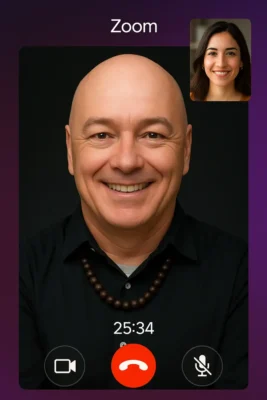
One thing that surprises many first-timers: remote sessions are entirely normal in this field. Many quantum healing practitioners work by phone or video call, and their clients report outcomes just as meaningful as in-person sessions.
The belief behind this is that energy, by its nature, is not limited by physical distance.
My own first session felt oddly like being listened to at a level I hadn’t experienced before, not just my words, but the tension I didn’t even know I was carrying in my shoulders and chest. That kind of presence, even over a video call, is part of what makes this work feel different.
A quantum healing session isn’t just a treatment. It’s a conversation between you and your own body’s deeper intelligence.
- Dolores Cannon developed the Quantum Healing Hypnosis Technique to explore the roots of your emotional issues through trance.
- Reiki practitioners channel energy through touch or intention to support your relaxation.
- Quantum-Touch requires three steps including physical contact, specific breathing, and focused attention on your body.
- Biofield therapy involves mapping the subtle energy field around your body.
- Practitioners use biofeedback devices to measure your physiological responses during sessions.
- Deepak Chopra popularized the term in 1989 by blending Ayurveda and consciousness studies.
- Evidence supports the role of meditation and mindfulness in your stress reduction.
- Mainstream science classifies these methods as metaphorical uses of physics terminology.
- Many practitioners work remotely to conduct sessions with you by phone or video.
- Sessions often integrate energy medicine like acupuncture and sound therapy with intention-based techniques.
Does science back quantum healing?
Quantum healing is not recognized as evidence-based medicine and is widely described by scientists as pseudoscience.
That said, several of its component practices, including meditation, mindfulness, and acupuncture, have a growing body of peer-reviewed research supporting real benefits for stress, pain, and emotional health.
This is the part of the conversation that deserves honesty, not defensiveness.
Legitimate quantum physics operates at the subatomic level, studying the behavior of particles so small they make atoms look enormous.
These quantum phenomena do not scale up to explain how a practitioner’s hands can clear a blocked chakra or why a hypnosis session might resolve chronic back pain. Scientists are right to push back on that framing.
And yet, something is happening in these sessions that clinical dismissal alone doesn’t fully explain.
This is real science, peer-reviewed and published in respected journals. It does not validate every quantum healing claim. It does suggest the body’s energy fields are not simply poetic metaphor.
Meanwhile, meditation and mindfulness, both central to quantum healing practice, have accumulated substantial peer-reviewed research support.
Multiple well-designed studies have found that regular meditation measurably reduces cortisol, the body’s primary stress hormone. It also supports immune function and may produce structural changes in the brain over time. These effects are real, documented, and clinically meaningful.
The stress reduction that a good quantum healing session reliably produces, whether through Reiki, QHHT, or guided visualization, has measurable physiological downstream effects.
A calmer nervous system heals more efficiently. That’s not mysticism. That’s biology.
The honest position is this: quantum healing is not medicine. It cannot diagnose, treat, or cure disease in the clinical sense.
But when used thoughtfully alongside conventional care, it may support the conditions in which genuine healing becomes more possible.
As someone who takes both scientific integrity and lived experience seriously, I’ve learned to hold this tension without needing to resolve it. The science isn’t there yet for every claim. The experiences of thousands of people are real. Both things can be true at once.

Who should consider quantum healing, and who should be cautious?
Quantum healing may appeal to people dealing with chronic stress, emotional trauma, unexplained fatigue, or conditions that have not fully responded to conventional care. It is generally considered safe as a complementary practice.
Those with serious medical diagnoses should always work with a licensed healthcare provider alongside any complementary approach.
If you’re someone who feels like something conventional medicine hasn’t reached, you are not alone, and you are not imagining it. Quantum healing was, in many ways, built for that gap.
People who often find real value in quantum healing:
Where to be thoughtful and careful:
The space of complementary and alternative medicine (CAM), which includes quantum healing, is largely unregulated.
That creates genuine risk, not from the modalities themselves, which are generally gentle and non-invasive, but from the occasional practitioner who oversteps.
Watch for these red flags:
Responsible quantum healing practitioners are transparent about their credentials, clear about what they can and cannot do, and deeply supportive of your relationship with your healthcare team.
I’ve helped clients navigate this boundary many times. The most meaningful sessions I’ve been part of were always ones where the client remained actively engaged with their doctor, their therapist, and their own discernment, and used quantum healing as one thread in a larger tapestry of care.
The safest, most effective path is one where quantum healing complements, never replaces, the care of trained medical professionals.
A Final Word
Quantum healing offers something many people quietly hunger for: a path that sees them as a whole person, not just a patient file. It won't replace your doctor, and no responsible practitioner will ever suggest it should.
But for the exhaustion that doesn't show up on a test, the grief that sits somewhere beyond language, and the sense that your body knows something it hasn't been given space to say, this work can open doors that conventional care sometimes leaves closed.
If you're curious about where to start, you might want to explore how Reiki works for emotional release or learn how to build a daily energy practice at home. Both are gentle, accessible entry points that can deepen whatever healing you're already doing.
You don't have to choose between science and soul. The wisest healing usually finds a way to honor both.