
Quantum Reiki: What It Is, How a Session Works, and What the Research Shows
Mikao Usui fasted for 21 days on Mount Kurama before he opened his Reiki school in Tokyo. The word quantum arrived decades later.
Key Takeaways
Quantum Reiki is a style of energy healing that combines Usui Reiki with ideas borrowed from quantum physics and consciousness teaching. Practitioners work with intention, focused awareness, and what they call the quantum field. They put less weight on fixed hand positions.
Most practitioners also offer distance sessions as a core part of the work. That leaves two questions. What does quantum add to a practice born in 1920s Japan? Does any of it hold up?
Where Did Reiki Come From?
Reiki began with Mikao Usui, a Japanese teacher born in 1865. In the early 1920s, Usui completed a 21-day practice of prayer and fasting on Mount Kurama.
In April 1922, he settled in Tokyo. There he founded a society to teach Reiki Ryoho and give treatments.
His memorial stone says he taught more than 2,000 people before his death in 1926. His students received five principles to live by. Many Reiki schools still teach them today.
One of Usui’s students, Chujiro Hayashi, trained Hawayo Takata, a Japanese American woman born in Hawaii. Takata became a Reiki Master by 1940. She helped bring the practice to the West. In 1970, she opened the first Reiki clinic in the United States.
How Reiki Training Is Structured
Classic Usui Reiki is taught in levels. Each level comes with an attunement, a ritual transmission from teacher to student.
Quantum teachers build on this structure in different ways. Some keep the attunements. Others drop them. They build their own frameworks around intention and visualization.
How Is Quantum Reiki Different From Traditional Reiki?
Traditional Reiki and its quantum offshoot share a root. The differences show up in language, structure, and emphasis.
The word quantum is not a protected title. Courses, books, and branded systems all use it. An online course, a trademarked “Quantum ReiQi,” and several self-published guides appear side by side in search results. Each defines the practice its own way.
What Do Practitioners Mean by the Quantum Field?
In this style of Reiki healing, the quantum field is a name for a shared space of potential. Some teachers call what moves through it quantum energy.
Practitioners describe every person as connected within it. Healing intention is said to move through this field the way life energy moves through the hands in classic Reiki.
Three ideas recur throughout the teaching:
Read these as a map for the inner side of the work. They give both people in the room a shared vocabulary for attention and change. Related ideas about mind and matter appear in the article on the quantum mind hypothesis.
Is Reiki Quantum Physics, and Does It Work?
Reiki is not quantum physics. In physics, terms like nonlocality describe the behavior of particles at very small scales. Quantum Reiki borrows those words as metaphors for consciousness.
The research on Reiki itself is limited. The US National Center for Complementary and Integrative Health (NCCIH) says Reiki “hasn’t been clearly shown to be effective for any health-related purpose.”
NCCIH adds there is “no scientific evidence supporting the existence of the energy field” Reiki is based on. It also reports that Reiki “hasn’t been shown to have any harmful effects.”
A Cochrane review by Joyce and Herbison in 2015 found only three small trials on anxiety or depression. Its authors concluded there was “insufficient evidence to say whether or not Reiki is useful” for those conditions.
A 2025 meta-analysis in Systematic Reviews pooled randomized trials with 661 participants. It found a small improvement in quality of life after Reiki.
Programs of eight or more sessions lasting at least 60 minutes did best. Short sessions of 20 minutes or less also stood out.
No trials have tested quantum Reiki as a named practice. Use it alongside medical care, never in place of it.
What Happens in a Quantum Reiki Session?
A session usually moves through a few stages. The order varies by teacher.
What a Session Feels Like From the Table
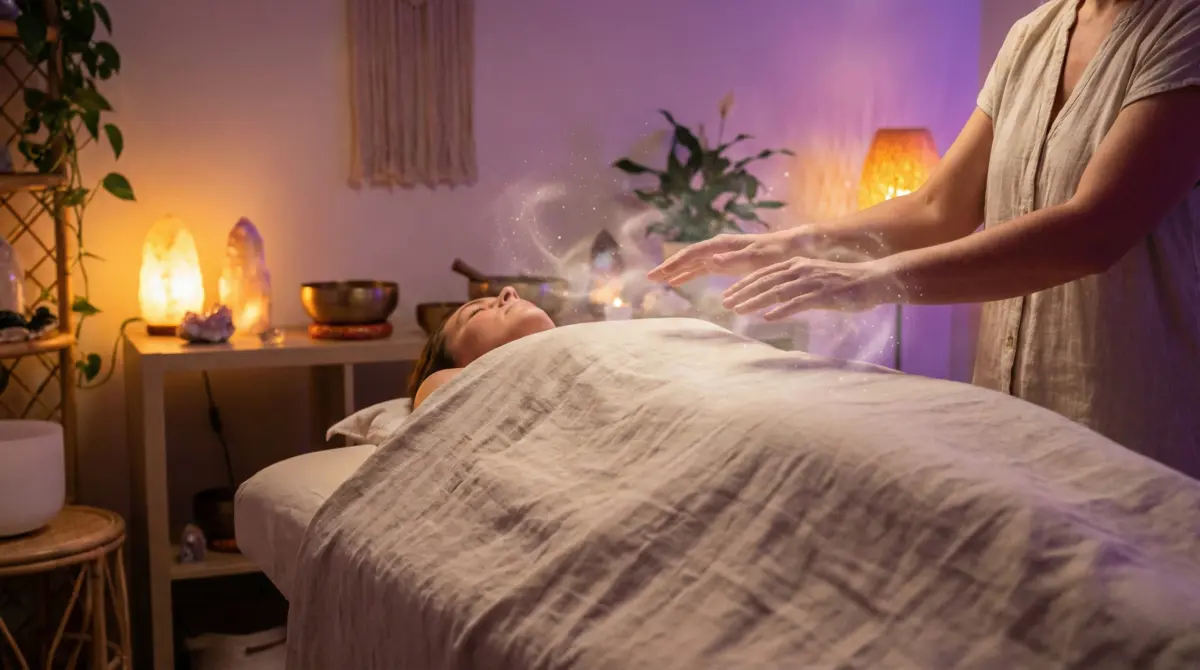
In my own sessions as a Reiki Master, the work starts with grounding. I settle my weight into my feet. My attention drops into my belly before my hands move at all.
Contact stays light. Over tense areas, my hands hover a few inches above the body. Each position lasts a few minutes. A full session runs close to an hour.
The signs that someone has settled are ordinary ones. A long sigh. Stomach gurgles. Breathing that slows down.
People who expect visions are often surprised. They feel heavy, calm, a little sleepy, then assume nothing happened. That heavy calm is usually the point. A fuller walk-through of hand positions and sensations appears in the guide to universal life force.
How Does Distance Reiki Work?
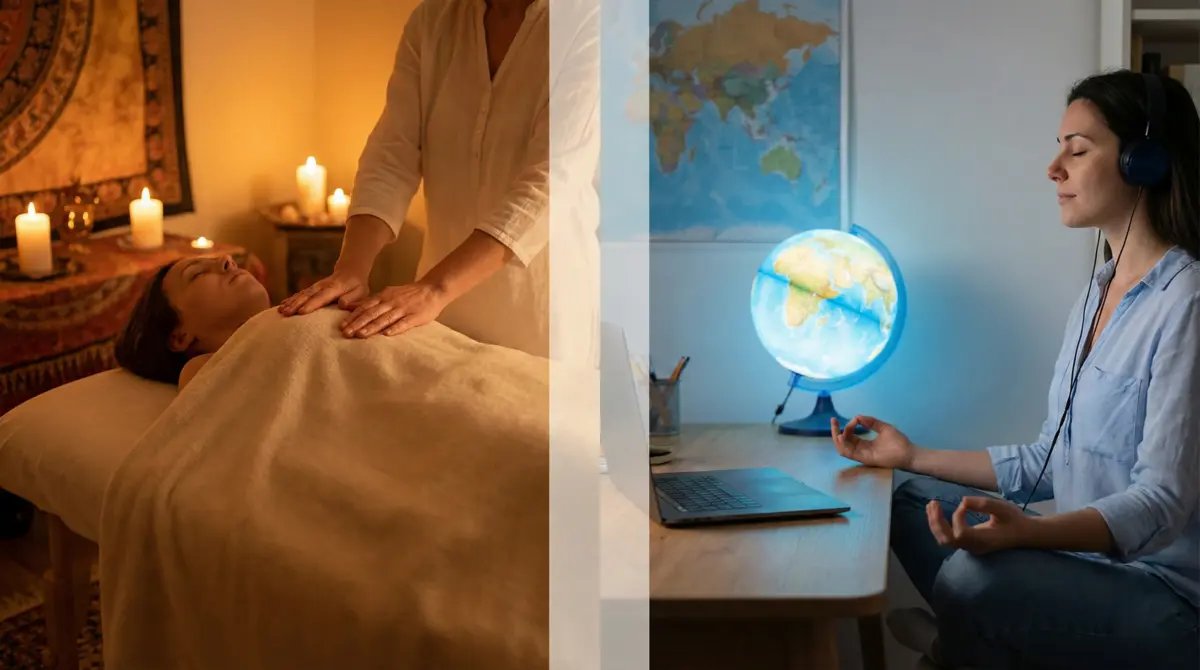
Distance work is part of traditional Reiki from Level 2 onward. Quantum practitioners make it central. Many offer remote sessions by video call, by phone, or at an agreed time with no call at all.
In a typical distance session, the client lies down somewhere still at the set time. The practitioner focuses on the client by name, often with a photo or a written intention. Many use the same stages they use in person, with visualization in place of touch.
Clients often describe the same warmth and heaviness they feel in person. No controlled trials have tested distance sessions on their own. If you try one, treat it as a structured hour of rest. Notice what you feel.
How Does Quantum Reiki Compare With Quantum-Touch and Quantum Healing?
Three practices share the word quantum. They are easy to mix up.
Quantum-Touch
Quantum-Touch is a separate method developed by Richard Gordon. His book Quantum-Touch: The Power to Heal is published by North Atlantic Books. The publisher describes it as a touch-based technique that uses the chi of both practitioner and client.
Quantum-Touch centers on breathing and body-focusing exercises. The practitioner uses them to raise their own energy before working. It does not come from the Usui lineage. It has no Reiki attunements.
Quantum Healing
Quantum healing is a broad umbrella term. It covers many approaches that link consciousness with physical well-being. Quantum Reiki is one narrow branch, rooted in the Reiki tradition. The page on quantum healing covers the wider field.
What Is a Quantum Reiki Master, and How Do You Choose a Practitioner?
A quantum Reiki master is a practitioner who has completed the top level of a quantum course. They can teach it. What that level requires depends entirely on the course.
Reiki has no central authority. No one controls the use of the words Reiki or Reiki master. In the United States, practitioners are not regulated. Some courses offer master level in two weekends.
That makes your own questions the best filter. Ask any Reiki practitioner these before you book:
A good practitioner answers clearly, makes no promises of cures, and never asks you to stop medical treatment.
What Pairs Well With Quantum Reiki?
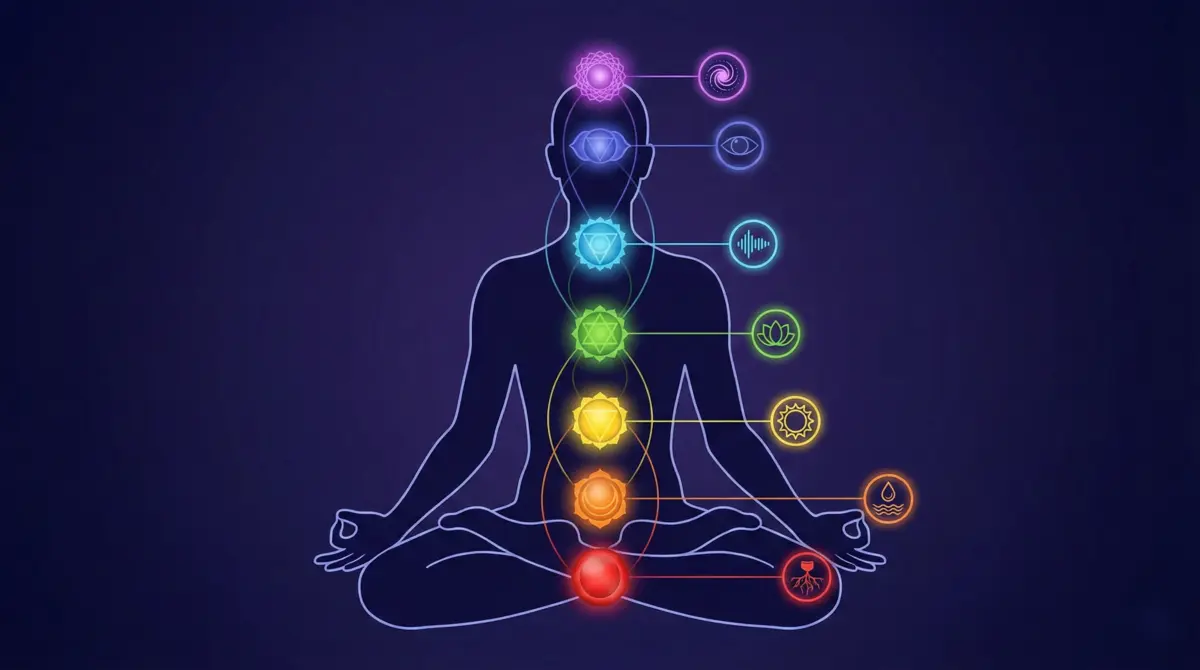
Many practitioners use the chakra system as a map during sessions. They scan the seven energy centers along the spine. They spend more time where a center feels tense or dull.
For background, the 7 chakras explains each center. The signs people look for appear in how to identify blocked chakras.
A few practices fit well around sessions:
Two or three steady practices do more than a crowded routine.
Subscribe to Create Higher Vibrations!
Get Inspiration and Practical advice straight to your inbox.
What Would One Calm Hour Tell You?
You can test this style of Reiki without believing anything about the quantum field. Book one session with a practitioner who answers your questions well. Before it starts, rate your tension, your breathing, and your mood from one to ten.
Rate them again right after the session. Then rate them the next morning. The numbers will not prove how Reiki works. They will tell you whether it works for you.

