
What Are Narcissistic Personality Indicators?

It is 11:47 p.m. on a Tuesday. You are sitting on the edge of your bed, phone in hand. Your mother’s text says, “I just think you are being too sensitive about this.” You have had this conversation fourteen times this month. You are not crazy. You are not too sensitive.
Narcissistic personality indicators are not just a clinical checklist. They are a pattern of relational dynamics that millions of people recognize but struggle to name.
This article gives you specific, grounded indicators. What they look like in real life. Why they happen. And what they do to the people around them.
Narcissistic personality indicators extend beyond the DSM checklist. The traits exist on a spectrum. You will encounter two distinct presentations. A narcissist acts grandiose or vulnerable. Both presentations share the exact same mechanism. They possess a deficit in self-structure. They require constant external validation.
What Are the Core Narcissistic Personality Indicators?
The core indicators include a grandiose sense of self-importance, a preoccupation with fantasies of unlimited success, and a belief that they are special or unique.
They also include a need for excessive admiration, a sense of entitlement, interpersonal exploitation, a lack of empathy, and arrogant behaviors. These nine criteria form the clinical definition.
In life, they manifest as a recognizable pattern of relational behavior that erodes the people around them.

The DSM-5 organizes these into a diagnostic framework. The lived reality is messier than any checklist. Grandiosity does not always look like confidence. Sometimes it looks like a quiet certainty that they are the smartest person in the room.
They are the one who truly understands. They are the one whose feelings matter more because they feel things more deeply than you do.
Entitlement shows up in small ways first. They expect you to adjust your schedule. They expect their needs to come first. Not because they demand it. Because it genuinely does not occur to them that your needs might be equally valid.
The lack of empathy is the indicator most people misunderstand. It is not that they cannot recognize what you are feeling. It is that your feeling does not register as real in the same way theirs does.
You can be crying in front of them, and they will ask why you are making them uncomfortable. That is not a failure of perception. It is a failure of priority.
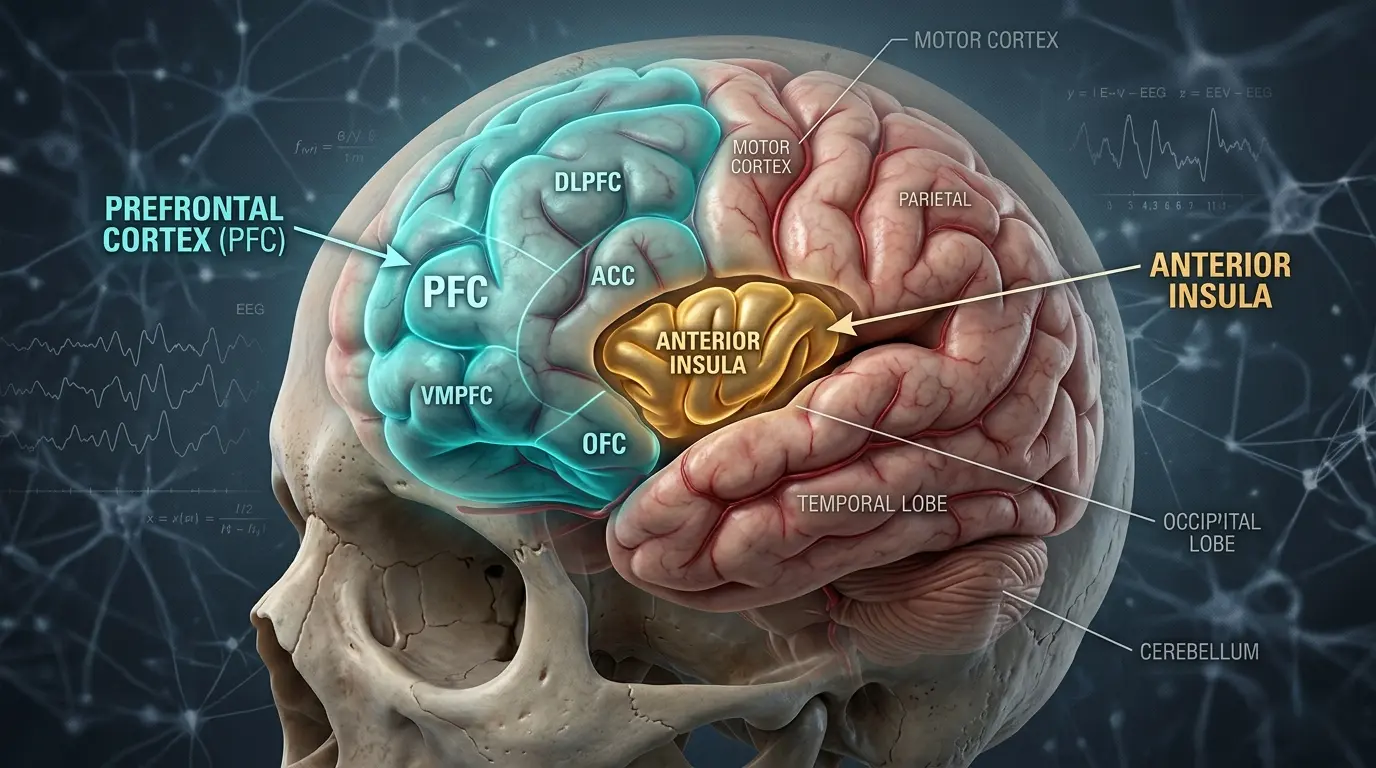
Researchers conducted a meta analysis of 181 studies. They examined people diagnosed with narcissistic personality disorder. The results show consistent structural deficits in the anterior insula. This specific brain region controls empathy and interoception.
Source National Library of Medicine
The belief in specialness and the need for admiration are not the same thing, though they travel together. The belief is internal: “I am fundamentally different from other people.”
The need is external: “And I need you to confirm that constantly.” When the confirmation stops, the relationship becomes a problem.
Interpersonal exploitation sounds dramatic. In practice, it looks like this. They borrow your emotional energy and do not return it. They take your ideas and present them as their own.
They use your vulnerability as currency in conversations with other people. When you notice, you are told you are being “transactional” for expecting reciprocity.
Grandiose Indicators vs. Vulnerable Indicators:
| Indicator | Grandiose Presentation | Vulnerable Presentation |
|---|---|---|
| Self-Importance | They openly boast. They dominate conversations. | They quietly believe they are misunderstood geniuses. |
| Need for Admiration | They seek praise publicly. They perform for an audience. | They seek reassurance privately. They fish for compliments. |
| Lack of Empathy | They dismiss your feelings as irrelevant. | They absorb your feelings. They make the situation about their own pain. |
| Entitlement | They demand special treatment. | They expect you to anticipate their needs without asking. |
| Response to Criticism | They react with rage. They counterattack. | They enter a shame spiral. They withdraw. They act passive-aggressive. |
| Exploitation | They take the credit. They use people openly. | They use guilt. They play the victim to get their needs met. |
Caption: The same core indicators manifest in nearly opposite ways depending on whether the person presents as grandiose or vulnerable.
How Do Grandiose and Vulnerable Narcissism Differ?
Grandiose narcissism presents as overt confidence, dominance, and attention-seeking. The person appears charismatic and self-assured.
Vulnerable narcissism presents as hypersensitivity to criticism, chronic shame, and passive-aggressive behavior. They share the same core deficit: a fragile self-structure that cannot self-soothe.
This distinction matters. Most people expect the grandiose version. They do not expect the quiet one who seems fragile. But the mechanism is the same. The impact on you is the same.
The grandiose type handles criticism by attacking. The vulnerable type handles criticism by collapsing. You say something honest, and they go silent for three days. When they finally respond, you are comforting them for the pain your “harshness” caused.
Both types engage in self-regulatory strategies. The grandiose type regulates by seeking admiration. The vulnerable type regulates by seeking reassurance and avoiding exposure.
One moves toward the spotlight. The other moves away from it. Both are running from the same thing: the internal experience of not being enough.
Researchers did not formally recognize vulnerable narcissism until the 1990s. They studied grandiose narcissism decades earlier. Many older screening tools still miss the vulnerable presentation entirely.
Source National Library of Medicine
You can be dealing with both types in the same person. The grandiose presentation is what they show the world. The vulnerable presentation is what they show you in private.
The charming partner who lights up a room is the same person who falls apart when you try to talk about your needs. That is not a contradiction. That is the disorder.
Why does this happen? The grandiose facade is exhausting to maintain. It requires constant performance. In private, when the audience is gone, the facade drops.
What is left is the raw deficit. The shame. The fragility. The desperate need for someone to tell them they are enough.

What Is the Mechanism Behind Narcissistic Indicators?
The underlying mechanism is a deficit in self-structure. This is the internal sense of who you are, what you feel, and whether you are enough.
This deficit means the person cannot self-soothe. They cannot generate a stable sense of self-worth from within. They require external validation to maintain their self-image. Clinicians call this narcissistic supply.
Neuroimaging research reveals structural differences in two key brain regions. The anterior insula processes interoception, your sense of your body’s internal state.
The anterior cingulate cortex handles error detection and emotional regulation. In people with narcissistic traits, both regions show reduced structural integrity.
The anterior insula processes interoception. This creates your sense of internal body states. People with narcissistic traits show structural variations in this brain region. This physical difference explains the disconnect between knowing a person hurts and caring about their pain.
Source National Library of Medicine
Think of it this way. Most people have an internal thermostat. When they feel bad, internal processes bring them back to baseline. Self-soothing. Perspective-taking.
Memory of being loved. A person with narcissistic indicators does not have a functioning thermostat. They need you to be their thermostat. Your admiration and attention are what keep them stable. When you stop providing it, they feel like they are disintegrating.
The dopamine connection matters too. Researchers have proposed that the reward system in narcissistic individuals is wired differently. Social validation may trigger a stronger dopamine response than it does in the general population.
This would explain the addiction-like quality of narcissistic supply. It is not just that they want admiration. It is that admiration may be the only thing that makes them feel real.
Do Narcissistic Traits Equal Narcissistic Personality Disorder?
No. Narcissistic traits exist on a spectrum. Many people display some traits without meeting the full diagnostic criteria for NPD. The presence of traits does not equal the presence of the disorder.
What matters for the people around the individual is the pattern of relational impact, not the clinical diagnosis.
Narcissistic personality disorder affects an estimated one to six percent of the general population. Subclinical narcissistic traits occur far more frequently. You will likely encounter these behavioral patterns during your lifetime.
Source National Library of Medicine
The spectrum looks something like this. On one end, healthy narcissism: stable self-worth, can handle criticism, can celebrate wins without an audience. Most people live here.
Then subclinical narcissism: some traits, but not pervasive enough for diagnosis. Then NPD: pervasive, inflexible, causes significant impairment across all areas of life.
You do not need a diagnosis to justify protecting yourself. If someone’s behavior consistently leaves you feeling erased, confused, and smaller, that is real whether or not they meet five of nine criteria. The diagnosis is a clinical tool. Your experience is data.
Discover Your Inner Self. Join Our Self-Mastery Program.
Self-Mastery Coaching gives you the space, tools, and guidance to grow, reflect, and discover your values and inner strength.

What Happens to the People Around Someone With Narcissistic Indicators?
People in close relationships with someone who displays these indicators often experience a gradual erosion of their sense of self. They develop chronic self-doubt, hypervigilance, and emotional exhaustion.
The relational pattern creates a specific psychological impact. Idealization is followed by devaluation, gaslighting, and systematic invalidation of reality. This impact can persist long after the relationship ends.
The first phase feels like love. They mirror your interests, your values, your sense of humor. This is the idealization phase. Then something shifts. The same traits they loved become the things they criticize.
Your independence becomes “you do not care about me.” Your boundaries become “you are selfish.” This is the devaluation phase.
The psychological impact is specific. Chronic self-doubt: you stop trusting your own perceptions. Hypervigilance: you scan for shifts in their mood because their mood determines your safety.
Emotional exhaustion: you have been managing someone else’s emotional state for so long that you have none left for yourself.
From a nervous system perspective, your system learns to stay in sympathetic arousal. You are always scanning, always preparing. Over time, the system can shift into dorsal vagal shutdown.
This is a freeze state characterized by numbness, disconnection, and a sense of being trapped. This is not a character flaw. It is a nervous system that has adapted to an impossible environment.

How Do You Recognize the Pattern in Real Life?
Recognizing the pattern requires looking beyond individual behaviors. The key is the combination. A person who consistently requires admiration. Who responds to criticism with rage or shame.
Who struggles to acknowledge your reality. Who exploits your emotional labor. Who leaves you feeling smaller after every interaction. That combination is the indicator.
Here is what the pattern looks like in conversation. You tell them about a hard day, and they redirect to their own. You express a need, and they make you feel guilty for having it.
You set a boundary, and they test it repeatedly. You try to talk about the relationship, and they change the subject or turn it around until you are apologizing.
There is a specific dynamic called DARVO: Deny, Attack, Reverse Victim and Offender. You say, “That thing you said hurt me.” They deny it. They attack you for being too sensitive. Then suddenly they are the victim, and you are the one who hurt them.
Intermittent reinforcement is the mechanism that keeps you hooked. They are warm and charming just often enough to make you believe that version is the real one.
This is the same mechanism that makes slot machines addictive. The unpredictability is the point.
Subscribe to Create Higher Vibrations!
Get Inspiration and Practical advice straight to your inbox.
The fawn response keeps you in the room long after your mind has decided to leave. It is not a conscious choice. It is a survival reflex. You feel their mood shift, and you are already adjusting.
You soften your voice. You swallow the sentence that started with “I need.” Your nervous system learned, long ago, that keeping them calm was the same as keeping yourself safe.
Behavioral Markers in Daily Interaction:
| Situation | Typical Response | Narcissistic Response |
|---|---|---|
| You express a need | They listen. They validate your feelings. They negotiate with you. | They deflect. They use guilt trips. They center themselves. |
| You set a boundary | They respect the limit. They adjust their behavior. | They test the limit. They punish you. They ignore your request. |
| You share a success | They celebrate with you. | They minimize your achievement. They compete with you. They change the subject. |
| They make a mistake | They take responsibility. They repair the damage. | They deny reality. They blame you. They play the victim. |
| You try to discuss the relationship | They engage with you. They participate even when uncomfortable. | They deflect the topic. They attack your character. They shut down completely. |
Caption: The pattern is not any single behavior. It is the consistent direction of the interaction: their needs, their reality, their emotional state always take priority.
Conclusion
There is a moment when the pattern clicks into place. It is not dramatic. It is more like a door clicking shut in a room you did not know you were standing in.
The person you have been trying to understand is not going to change. Not because they are evil. Because the mechanism does not allow it; that is not your failure. That is the pattern doing exactly what patterns do.
But here is what nobody tells you about that door. It does not just close behind you. It opens in front of you. And on the other side, the air is different.
Not because anything external has changed. Because you are no longer breathing the version of reality they were pumping into the room. You are breathing your own air again.
The constant hum of self-doubt gets quieter. Not gone. Quieter. The eggshells you were walking on dissolve under your feet. The ground is just ground. You are just standing on it. And that is enough.
You start to remember things you forgot, opinions you once had before this experience, the things you liked that were real.
The recovery is not instant. It is slow, and it happens in small moments, like realizing you just went an entire afternoon without scanning someone’s face for signs of danger.
The indicators in this article are not a weapon. They are a lens. They help you see clearly what has been hard to see. You were too close to it. Someone told you that you were too sensitive. The pattern itself was designed to make you doubt your own eyes.
You are not too sensitive. You are not imagining it. You are not the problem.
Your experience is enough. It has always been enough. The door is open now. Walk through it.