
The 5 Fs of Trauma: Fight, Flight, Freeze, Fawn, and Flop Compared

Your jaw locks before you know you are angry. This is not a personality. It is a body that has already decided how to keep you alive.
The 5 Fs of trauma are five automatic survival responses your nervous system triggers the instant it senses danger: fight, flight, freeze, fawn, and flop. Your body picks one before your thinking brain comes online.
This guide compares what drives each state, the physical symptoms it produces, and the specific somatic move that brings you back to yourself.
The five trauma responses are not five flavors of the same thing. Fight and flight are high-energy mobilization. Freeze and flop are shutdown. Fawn is the social strategy that appears only after the others fail. The tool that rescues you from one state can deepen another, so you have to name the state before you reach for the fix.
You did not choose your response. Nobody sat you down and said, “When Dad raised his voice, go still and silent.” Your nervous system built that circuit before you had words for it.
The comparison below is not a diagnostic. It is a map of what your body already knows how to do, and what it needs to stand down.
What are the 5 Fs of trauma, and why does your body run them?
The 5 Fs are fight, flight, freeze, fawn, and flop: five defensive programs wired into the autonomic nervous system. Each one activates when your body decides, faster than thought, that you are under threat and need to survive it.
They are older than your opinions about yourself.
Polyvagal theory maps three branches of the vagus nerve that decide whether you mobilize, socialize, or collapse. Your response is not a feeling you talk yourself into. It is a calculation your body made before your thinking brain was online.
Here is the part most articles soften. These states are not equal. Three push energy out. Two pull it down. Fawn is a social strategy that only appears once the physical ones have failed.
The flop response is the same physiological event as fainting from fear. It is called vasovagal syncope, the body’s oldest play-dead strategy, driven by the dorsal vagus slamming the brakes on heart rate and blood pressure.
Source: Frontiers in Behavioral Neuroscience (2022) & Polyvagal Science Overview
The acute stress response starts in the amygdala, the brain’s threat scanner. It fires before the thinking cortex gets the memo. That is why you can be mid-sentence, totally safe, and suddenly unable to speak, or suddenly furious at someone you love.
Your body is not broken. It is fast.
Fight: when your body decides it can win
The fight response is your nervous system deciding the threat is survivable by force. The subconscious appraisal is brutal: “I can win this.”
Your system reads the threat as something to meet head-on, not escape. That calculation happens in milliseconds, below any thought you could catch.
The physical symptoms show up as the body prepares for combat.
The de-escalation move for the fight is not calming down. Calming is the wrong tool because the fight is already hot. You have to spend the charge without aiming it at a person.
If you try to “just breathe” while the accelerator is floored, you feel more trapped, not less. Fight needs discharge, not stillness. Our guide to nervous system dysregulation covers how to read which state you are in before you pick the tool.

Flight: when your body decides to run
The flight response is your nervous system deciding the threat is survivable by distance. The bet flips from “I can win” to “I can get away.” The subconscious appraisal is “I cannot win, but I can escape.”
Flight does not always look like running out the door. It looks like the third job, the reorganized closet at midnight, the relationship you ended because stillness felt like suffocation.
The physical symptoms show up as the body prepares to flee.
The de-escalation move for flight is to satisfy the need for motion without feeding the panic. You do not argue with the need to move. You give it a container.
Pushing a flight body to “sit with it” backfires. It needs to move first, then settle. The regulation techniques that work best for flight start with the body, not the mind.
Freeze: when neither fight nor flight is possible
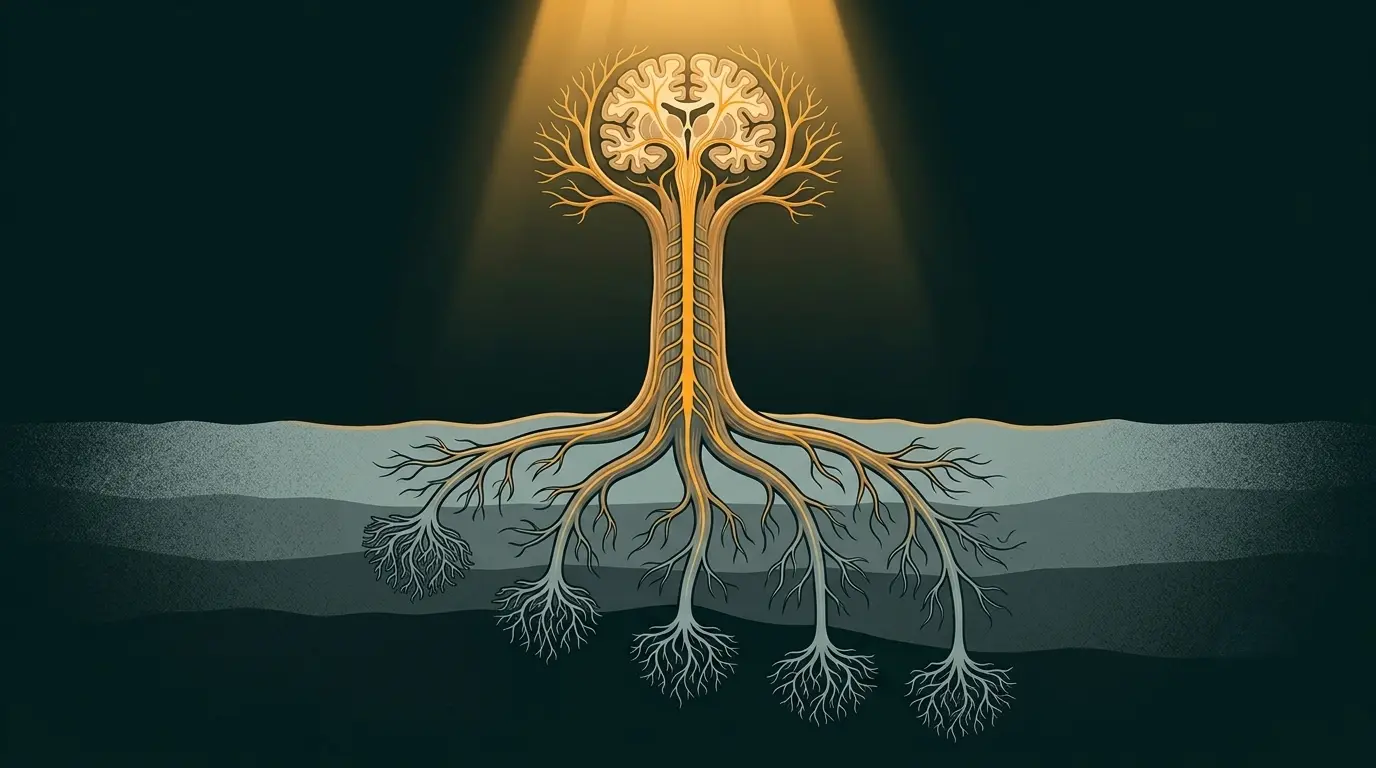
The freeze response is your nervous system deciding that fighting and fleeing will both get you killed. So the best move is to become invisible. This is not calm. It is a high-tension stillness, the body holding its breath and hoping the threat looks past it.
Freeze feels like the world slows down and your limbs turn to stone. You see everything. You cannot move toward any of it. The subconscious appraisal is “I cannot win, and I cannot escape, so I disappear.”
The physical symptoms appear when the body is caught between two systems at once.
Freeze is what researchers call a mixed state. The sympathetic system revs for action while the parasympathetic hits the brake. You are floored and accelerated at the same time. That is why freeze feels like panic that forgot how to move.
The de-escalation move for freeze is a tiny, permission-giving motion. You do not yank a frozen body into action. You remind it, one cell at a time, that movement is allowed.
Our deeper guide to the freeze state walks the longer way out, because freeze rarely lifts on the first try.
Fawn was the last of the five to be named as its own defensive state. The 4Fs model placed appeasement alongside fight, flight, and freeze as a distinct survival strategy, not a personality trait.
Source: PMC review on the 4Fs stress-response framework
Fawn: the response that only appears after the others fail
The fawn response is your nervous system deciding the safest move is to merge with the threat. You agree, you soothe, you become small and pleasing, because a threatened person who is useful is a threatened person who gets to stay alive.
Fawn shows up after fight, flight, and freeze have all been tried and punished. The subconscious appraisal is “I cannot beat them, outrun them, or disappear. So I become what they want.” It is appeasement as armor.
The physical symptoms are quieter than the others, which is exactly why they hide.
The de-escalation move for fawn is the opposite of the others. Fight needed discharge. Freeze needed motion. Fawn needs separation, the slow reclamation of a self that is not for sale.
A study on the 4Fs model describes fawn as strategic appeasement. It notes the real internal conflict this creates when the self you perform clashes with the self underneath.
That dissonance is not weakness. It is the receipt for a strategy that kept you alive and now costs you your shape. We cover the fawn pattern specifically in fawning after narcissistic abuse.
Flop: when the body gives up and goes limp
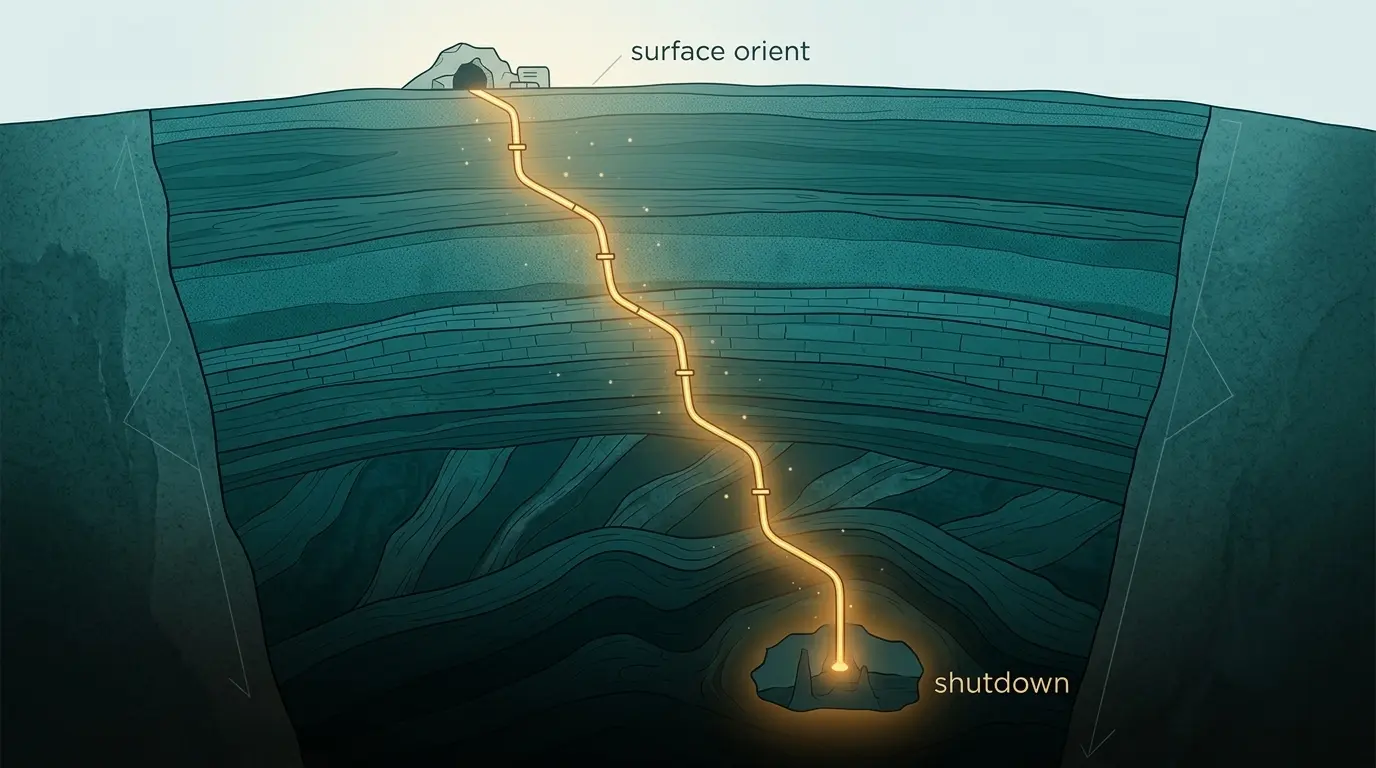
The flop response is your nervous system deciding there is no fight, no flight, no freeze that survives this. So the body does the oldest thing mammals know. It goes limp. It plays dead. It disconnects from the pain of what is happening.
Flop is often confused with freeze, and they are cousins, but flop goes further down. Freeze is stillness with tension. Flop is stillness with surrender. The subconscious appraisal is “nothing I do changes this, so I leave.”
The physical symptoms show up as the body fully drops its guard.
The dorsal vagal shutdown that drives flop is the body’s last-resort brake. When escape is impossible, playing dead can convince a predator that the prey is no longer worth the effort.
In humans, it shows up as the spaced-out, can’t-feel-my-legs response to overwhelm.
The de-escalation move for the flop is a gentle upregulation. You are too far down, so the fix is not stillness and not rest. It is a careful, friendly activation that says “come back.”
Pushing a flopped body to “snap out of it” spikes shame and deepens the drop. You coax it back, the way you would coax someone up from the floor, because that is literally where the nervous system has gone.
Discover Your Inner Self. Join Our Self-Mastery Program.
Self-Mastery Coaching gives you the space, tools, and guidance to grow, reflect, and discover your values and inner strength.

How do freeze and flop differ, and why does the distinction matter?
Freeze and flop both live in the parasympathetic brake, but they sit at different depths. Freeze is immobilization with tension: the body is still, watchful, braced, heart still pounding.
Flop is immobilization with surrender: the body goes limp, heart rate drops, consciousness edges toward the door.
The cleaner way to hold it: freeze is “I will not be seen.” Flop is “I am already lost, so I will not feel.” Freeze is a mixed state where the sympathetic system is still fighting the brake.
Flop is the brake winning completely, the dorsal vagus pulling the body into hypoarousal and, at its extreme, fainting.
This matters because the rescue is different. Freeze needs small motion and sound to prove movement is allowed. The flop needs gentle activation and pressure to prove the body is still here.
Give a flopped person “just move,” and they feel broken. Give a frozen person “just rest,” and they feel more trapped. Name the state, then pick the tool.
The 5 Fs side by side
The comparison below is the working reference. Read it like a field guide, not a verdict on who you are.
| Response | Nervous system branch | Subconscious appraisal | Signature body move | Wrong intervention |
|---|---|---|---|---|
| Fight | Sympathetic (accelerator) | “I can win this” | Tension, heat, anger | Forcing stillness |
| Flight | Sympathetic (accelerator) | “I can escape” | Restlessness, urgency to move | Demanding you sit |
| Freeze | Mixed SNS + PNS brake | “I cannot win or flee, so vanish” | Stillness with tension, dread | Yanking into action |
| Fawn | Ventral vagus (social) | “Merge with the threat to survive” | Agreeing, soothing, self-erasing | Pushing confrontation |
| Flop | Dorsal vagus (brake) | “Nothing works, so leave” | Limpness, drop in heart rate, numbness | Telling them to snap out |
Notice the wrong intervention column. Every failed de-escalation comes from treating one state like another. A flop is not a freeze. A fawn is not a fight. The body knows the difference even when the advice does not.
Why is your default response not a character flaw
Most people fall into one state first. The body learns it early, usually in a home where one strategy kept you safest. That is attachment conditioning, not destiny.
A child met with rage for crying learns to freeze. A child is safe only when they learn to be useful. A child whose pain was ignored learns to flop because no response was ever given. The state that worked becomes the body’s first language.
This is why the same room produces five different bodies. You meet it with a smile and a swallowed no. Neither of you is choosing.
You are both running the program that kept you alive at eight years old. Healing is not erasing it. It is giving the body a second option it can reach without rehearsal.
The cost of chronic dysregulation is real and lands differently per state. Fight burns out through constant activation. The flight never lets it land. Freeze and flop trade feeling for safety.
Fawn trades the self for the relationship. None of these are flaws. They are ledgers the body has paid in the only currency it learned.
Freeze is not pure stillness. It is a mixed state where the sympathetic and parasympathetic systems are both active at once, which is why it can feel like panic trapped inside a body that will not move.
Source: Dorsal vagal shutdown explainer, Neurodivergent Insights
The defense cascade: how your body chooses in order
Your nervous system does not pick randomly. It moves through a sequence researchers call the defense cascade. The cascade runs: orient, then flee, then fight, then freeze, then the deep shutdown of flop. Fawn slides in wherever social leverage appears, usually after freeze fails.
When you know the order, you catch yourself earlier. The fight you picked was the third station. The fawn was the fifth. None of them was a choice. All were a body doing its job with the tools it had.

How to de-escalate each state without making it worse
The rule that saves people is this: match the direction of the state. High-energy states need discharge or motion. Low-energy states need gentle activation. Social states need separation. Get the direction wrong, and your help becomes a threat.
If you dissociate when these states run long, you are not weak. You are deep in the brake. Our piece on dissociation after abuse maps the longer way back to the present.
Can you be in more than one of the 5 Fs at once?
Yes, and this is where most guides stop short. The defense cascade is a sequence, but a real nervous system stacks. You can be frozen and fawning at once. Still smiling, because the body runs the failed strategy and the next one together.
A person in an argument can go still, then suddenly agree with everything, then feel nothing, within the same ten minutes. That is not an inconsistency.
That is the cascade moving faster than the person can name it. Notice the stack. Meet the bottom state first. Let the others loosen once the body feels safe enough to stand down.
The old system, the modern world
Here is the part that should piss you off a little. This system was built for a tiger, a fall, a fist. It was not built for a boss who erodes you by email, a parent who loved you conditionally, a relationship that gaslights you in lowercase.
The threat is chronic now, and the body has no off switch for slow poison.
So the response that saved your life at nine now fires at a text message. The fawn that kept you safe with a volatile parent makes you invisible in a meeting where you had something true to say. The freeze that hid you from rage keeps you from leaving the bed.
That is the paradox worth sitting with. Your responses are not malfunctions. They are intelligent adaptations to environments that ask your body to survive what no body should have to.
The healing is not shutting the system down. It is teaching it that the tiger is gone, one safe moment at a time.
Subscribe to Create Higher Vibrations!
Get Inspiration and Practical advice straight to your inbox.
Your body was not wrong
You were not cowardly when you froze. You were not fake when you fawned. You were not broken when you went limp and felt nothing. You were a body doing the only thing it had learned to do with the danger in front of it.
The strategy that kept you alive is not the flaw. The flaw is a world that asks your nervous system to run an ancient program against a danger it cannot fight, flee, or freeze away.
So tonight, if the jaw locks or the feet will not move, do not argue with the body. Name the state. Pick the tool that matches its direction.
Let the smallest true motion remind the system that the tiger is gone. The response was never the problem. The response was the proof you survived.
For hands-on practice, our somatic exercises for PTSD build the longer road out, one safe repetition at a time.