
Stop Trying to Understand the Narcissist: Why the Problem Is Them, Not You

It’s 2 am. You’re lying in bed, replaying a conversation from three months ago. The one where they said they never said the thing you both heard them say. You’ve examined it from every angle, tried to find the logic, the reason, the human explanation for why someone would do that.
You’re not trying to hurt yourself. You’re trying to solve them. Like they’re a puzzle with a solution you haven’t found yet.
If this sounds familiar, your brain is doing exactly what brains do when confronted with something they can’t categorize.
This article is about why that loop exists, why it’s not your fault, and what actually happens when it stops.
Narcissists possess structurally different brain wiring. Their prefrontal cortex prioritizes dominance over connection. The motives behind their behavior remain inaccessible. Your analysis loop does not indicate weakness. Your brain attempts to apply human logic to an incompatible system. The narcissist does not operate on standard human terms. Recovery begins when you stop trying to understand them. You redirect your energy toward yourself.
Why Can’t I Understand the Narcissist? (Even When I Really Try)
Understanding requires two brains that process social reality through the same framework. Narcissists have structurally different prefrontal cortex connectivity.
Their brains show stronger connections to regions governing social dominance rather than social bonding. In grandiose narcissists, the anterior thalamus lights up.
In vulnerable narcissists, it’s the cingulate cortex. Both configurations prioritize hierarchy over connection.
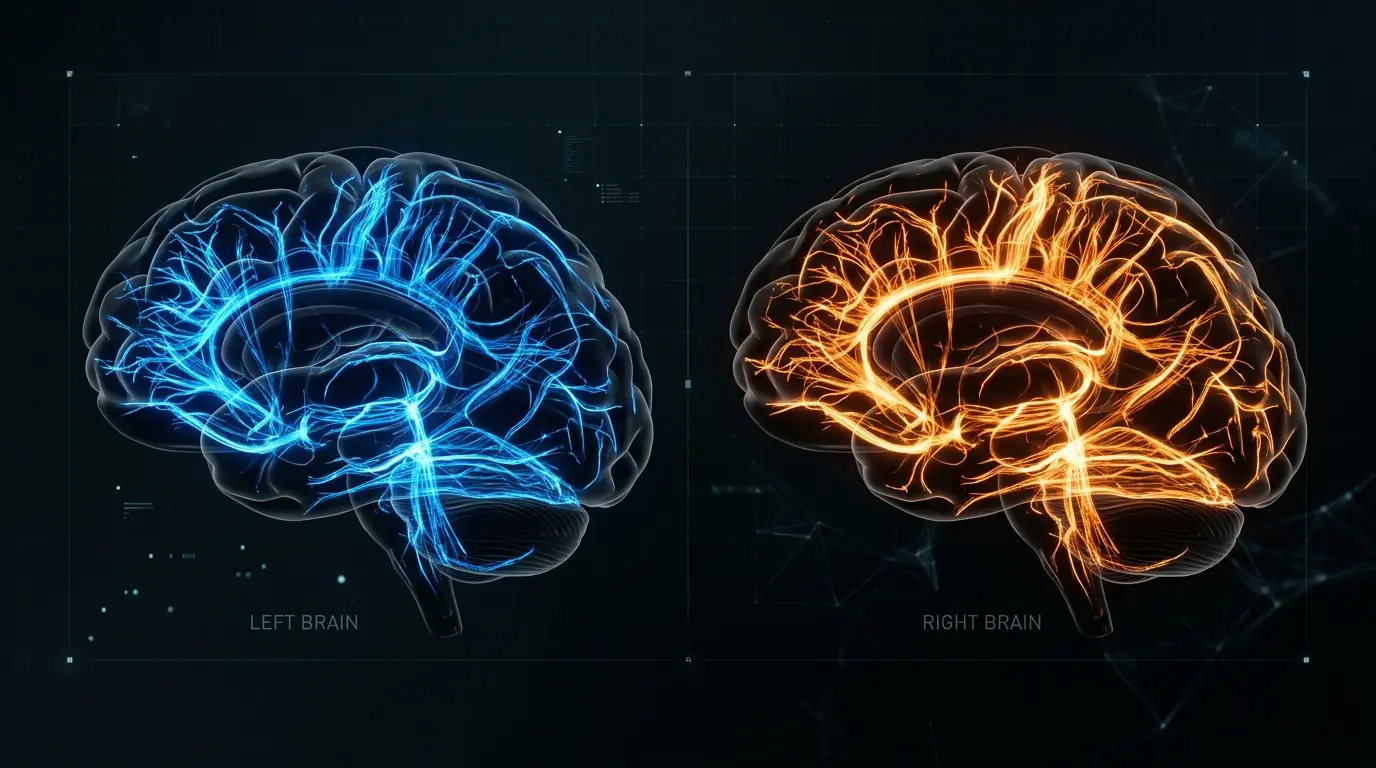
You’re not failing to decode them. You’re trying to read a language your brain was never built to process. The question “why did they do this?” assumes they had human motivations. They might not.
For understanding to work, you need shared mental models, an agreement, conscious or not, about how people operate. You need theory of mind, the ability to attribute thoughts and feelings to someone else.
You need empathy circuits that let you feel what another person might be feeling. All of these depend on prefrontal cortex wiring that is measurably different in people with narcissistic personality structure.
They’re still responsible for what they did. But the internal experience driving their behavior lives in a different operating system. Your brain knows this somewhere deep — and yet it keeps trying anyway.
This isn’t a matter of intelligence or effort. The loop doesn’t discriminate. It traps anyone who assumes the world operates on human logic, and it holds on tight.
Why Does My Brain Keep Trying to Make Sense of What Happened?
Your brain is a pattern-completion machine. It constantly generates models of how the world works. When reality violates those models, it doesn’t update.
It runs more simulations, tries to fill in the missing pieces. This is the same mechanism behind PTSD rumination.
Narcissistic abuse creates a specific kind of cognitive dissonance. The person who said they loved you also hurt you. The person who held you at 3 am also made you feel crazy two hours later.
These two realities can’t coexist in a single coherent model. So your brain keeps trying to merge them into one story, one explanation that makes both things true at once. That explanation doesn’t exist.
There’s a concept in computational neuroscience called predictive processing. Your brain is always one step ahead, predicting what comes next based on experience.
When someone hits you and then apologizes and then hits you again, your prediction engine breaks. It can’t model a pattern that has no stable shape.
So it keeps sampling, keeps checking, keeps waiting for the data to settle into something predictable. It will never settle.
That’s not a failure of your analysis. That’s an accurate reading of a situation with no stable underlying logic. The person who hurt you wasn’t following a pattern your brain could decode.
They were running on dominance wiring with no empathy filter, and no amount of analysis will produce a model that makes sense of that.
The loop isn’t a sign you need to try harder. It’s a sign you’re trying to do something that can’t be done. And recognizing that is the first step toward stopping.

What Happens If I Keep Trying to Understand Them?
Every hour you spend analyzing the narcissist is an hour your brain can’t spend rebuilding you. The analysis loop isn’t neutral. It has costs. Real ones.
Here’s what it’s actually doing to you:
Dr. Sarah Davies, a counseling psychologist who wrote How to Leave a Narcissist… For Good, puts it this way. Too much focus on the narcissist is very much part of the problem. Recovery begins when you turn toward yourself. Not in a narcissistic way. In a human way.
Discover Your Inner Self. Join Our Self-Mastery Program.
Self-Mastery Coaching gives you the space, tools, and guidance to grow, reflect, and discover your values and inner strength.

Why Don’t Narcissists Ever Realize They’re the Problem?
Because their brains literally can’t engage in the mental process that produces self-awareness.
There’s a concept in cognitive psychology called should counterfactual thinking. It’s what happens when you look at a bad outcome and ask, “What should I have done differently?”
Most people do this automatically. It’s how we learn, how we grow. It’s the engine of accountability.
A 2020 study from Oregon State University found that narcissists cannot do this. When they get something right, they say “I knew it all along.” When they get something wrong, they say “nobody could have predicted it.”
Either way, they never learn. The study, published in the Journal of Management, ran four variations across different populations. The result held every time.
Did you know? The Oregon State study found that narcissists’ hindsight bias runs in both directions. They claim credit for successes as if they were always predictable, and deny responsibility for failures as if nobody could have seen them coming. The result: they literally never learn from mistakes.
This is called hindsight bias, and in narcissists it runs in both directions. Success was always foreseeable. Failure was always unpredictable. The common thread: they never needed to do anything differently.
What does this mean for you? Stop waiting for accountability. Their brain cannot produce it. The apology you’re hoping for would be a performance, not a reflection.
And that voice in your head that says “maybe if I just explain it one more time”? It’s trying to install a software update on a machine that doesn’t accept patches.
Subscribe to Create Higher Vibrations!
Get Inspiration and Practical advice straight to your inbox.
How Do I Stop Trying to Understand the Narcissist?
Not by forcing yourself to “let go.” That advice is useless. You’ve tried it. Telling someone to stop thinking about something is like telling someone to stop being hungry. The instruction makes it worse.
Stopping starts with recognizing that the question itself is the trap. Every time you ask “why did they do that?” you’re giving them space in your head, keeping the case open, telling your brain this is still an active investigation.
The real shift is from “why did they do this?” to “what do I do with this?” One question keeps you focused on them. The other puts you back in the center.
Three things that help:
- Name the loop when it starts. “I’m doing the thing again.” That’s it. You don’t have to stop. You just have to see it. Awareness doesn’t break the loop, but it creates a gap where you get to choose.
- Choose one small action for yourself. Not for your recovery. Not for your healing journey. Just one small thing that’s yours. Make the coffee. Walk around the block. Text a friend about something unrelated. The loop thrives on passivity. Action disrupts it.
- Accept that no answer will satisfy you. The answer lives in a brain that doesn’t generate the kind of reasons your brain needs. The search itself is the suffering.
What does it feel like when the loop breaks? It starts with uncomfortable silence, the kind where you realize you haven’t thought about them in three hours and the world didn’t end.
There’s grief in that. You’re not grieving the person. You’re grieving the version of the story where it all made sense.
Then something shifts. Your chest loosens. Your jaw unclenches. You notice the room you’re in, the light coming through the window, the tension your body has been holding without your permission.
The space they used to occupy starts to fill with something that feels like you. Not the you from before. A different one that doesn’t need the story to make sense to keep living.

What the Narcissist’s Brain Is Actually Doing (And Why It’s Not About You)
Narcissists aren’t choosing to hurt you. That’s not a compliment to them. It’s a description of their limitations. Their brains are wired to prioritize social dominance above all else.
Other people aren’t people to them. They’re objects that either feed the False Self or threaten it. You were never in a relationship. You were in a supply chain.
The False Self is a survival structure. It forms early, usually in response to an environment where the real self was too dangerous to show.
The child learns: who I am is not acceptable. So they build someone else, someone impressive, someone who can’t be rejected because there’s nobody real inside to reject.
Understanding this mechanism is not the same as forgiving the behavior. But here’s what the mechanism actually produces:
| Brain Region | Narcissist Type | What It Does |
|---|---|---|
| Anterior Thalamus | Grandiose | It processes social dominance. It processes status. It processes control. |
| Cingulate Cortex | Vulnerable | It processes threat detection. It processes social comparison. |
| Prefrontal Cortex | Both | It connects to dominance networks. It ignores empathy networks. |
Both configurations produce the same outcome: the parts of the brain that generate empathy, remorse, and self-reflection are present but not running the show.
This is why they can seem so normal to outsiders. The public False Self is polished, charming, the version they show the world. The private version, the one you saw at 2 am, runs on dominance wiring with no empathy filter.
The cycle of idealization, devaluation, and discard isn’t a choice. It’s how the system works. You were idealized because the False Self needed what you provided.
You were devalued because no human being can sustain the role of perfect supply. You were discarded because the False Self doesn’t do grief. It does replacement.
None of this was about your worth. You were selected for your empathy, your ability to see the best in someone, your willingness to keep trying. These are beautiful qualities that the narcissist’s brain cannot reciprocate.
Why the Problem Was Never You
You were up against something designed to make you feel exactly the way you feel. The confusion, the self-doubt, the endless analysis. Those are signs you’re human, not signs you’re broken.
Narcissistic abuse works because it targets the parts of you that are most human. Your empathy. Your need for connection. Your belief that people are fundamentally comprehensible.
The narcissist’s brain exploits these qualities because they’re predictable, not because they’re stupid.
The most self-aware people get stuck the longest. If you’re someone who reflects, who questions, who tries to understand, the analysis loop traps you hardest.
Your brain is better at running simulations, better at finding patterns, better at trying. That’s a genuine, hard-won strength that got weaponized against you.
The problem was never you. You tried to apply a human framework to something that doesn’t operate on human terms. The fact that you couldn’t understand them isn’t a failure. That’s an accurate assessment of reality.
Recovery isn’t about becoming someone who doesn’t care. It’s about redirecting all that analytical energy away from them and toward the person who actually deserves it.
You.
There will come a day when you realize you haven’t thought about them. Not because you forced it. Not because you “let go.” But because your brain finally accepted what it knew all along.
The case is closed, not because you found the answer, but because the question was wrong.
The silence after that realization is not empty. It’s the first quiet room you’ve lived in for a long time. And in that quiet, you’ll hear something you almost forgot was there.
Your own voice.