
What Is the Law of Correspondence? As Above, So Below


The Law of Correspondence is the second hermetic principle from The Kybalion. This universal law states that patterns repeat across all planes of existence. The famous phrase “as above, so below; as within, so without” captures this principle perfectly.
Your internal environment directly mirrors your external environment. Understanding this hermetic principle gives you a blueprint for changing your life. What you experience outside reflects what exists inside your mind and heart.
- The hermetic principle: Correspondence is the second of seven principles from The Kybalion, teaching that patterns repeat across spiritual, mental, and physical planes.
- The mirror mechanism: Your internal environment (thoughts, beliefs, emotions) creates your external environment (relationships, career, circumstances) through measurable brain functions.
- Three planes of existence: Understanding how correspondence operates across spiritual, mental, and physical planes gives you leverage points for change.
- Practical application: A proven five-step process helps you identify inner patterns, shift them deliberately, and watch external reality transform within 30 to 90 days.
- Scientific support: Modern research on fractals, the Reticular Activating System (RAS), and holographic principles validates ancient hermetic wisdom.
What Is the Law of Correspondence?
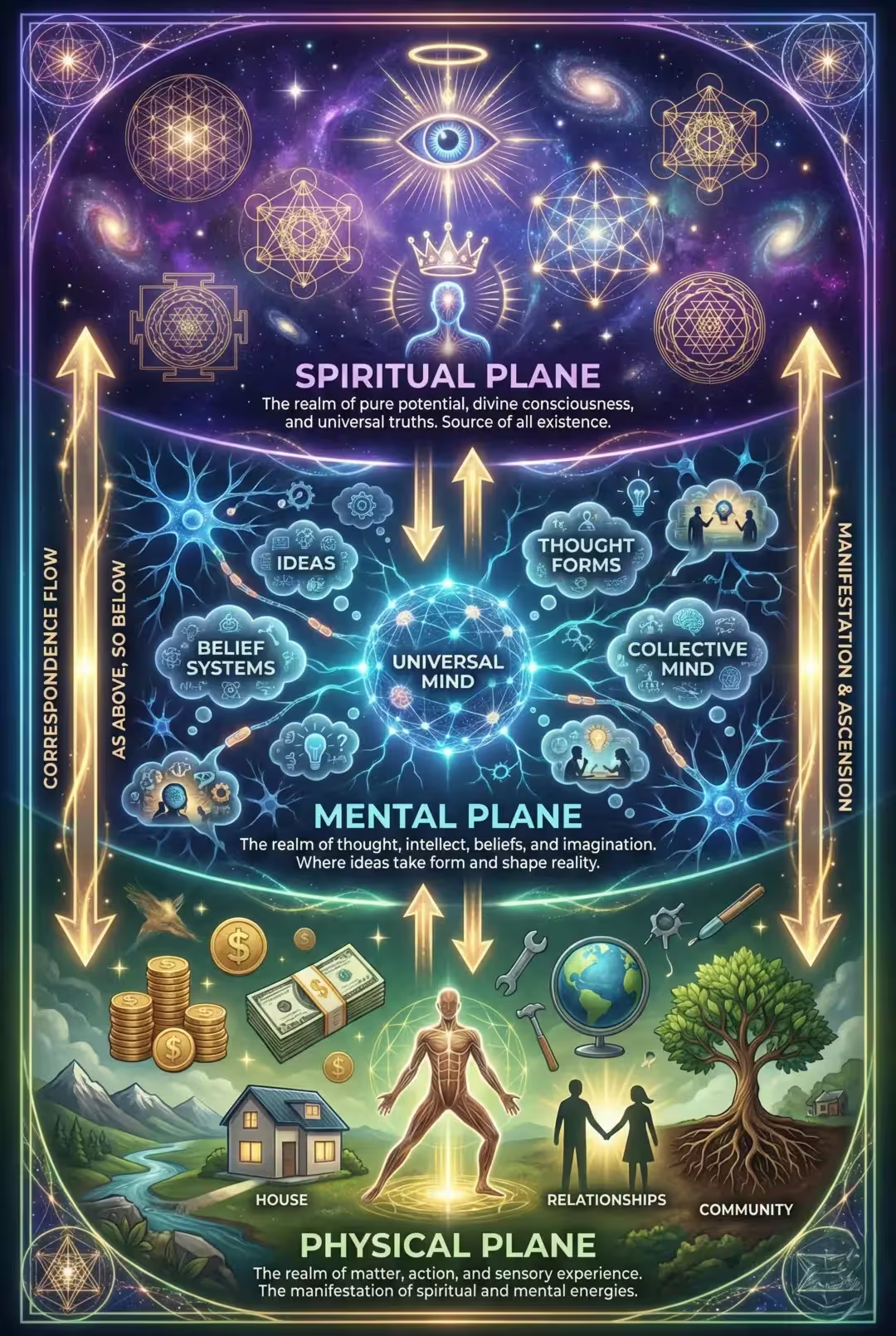
The Law of Correspondence teaches that reality operates through consistent patterns. These patterns appear at every level, from atoms to galaxies. The principle says that the same laws govern all planes.
Physical reality mirrors mental reality, which mirrors spiritual reality. Your outer world reflects your inner world with remarkable accuracy.
The Kybalion states: “As above, so below; as below, so above.” This hermetic law reveals that universal principles apply everywhere. Nothing exists in isolation. Everything connects through correspondence.
When you understand one level, you understand all levels. The microcosm contains the macrocosm. Your personal reality mirrors the universal reality.
This correspondence principle operates whether you’re aware of it or not. Your thoughts, beliefs, and emotions create patterns. Those patterns manifest as your life circumstances. Change the internal pattern, and the external pattern must follow.
The Hermetic Origins: The Kybalion and Hermes Trismegistus
The Law of Correspondence comes from ancient Hermetic philosophy. Hermes Trismegistus, a legendary figure combining Greek and Egyptian wisdom, taught these principles.
The Kybalion, published in 1908, outlines seven hermetic principles. These principles explain how the universe operates.
The seven hermetic principles are:
Correspondence sits second because it builds on mentalism. Mentalism states that all is mind. Correspondence shows how the mind creates across all planes.
Together, they explain manifestation mechanics. These teachings influenced Western esoteric thought for centuries.
Carl Jung, quantum physicists, and modern consciousness researchers reference these principles.
The Kybalion emphasizes that correspondence unlocks understanding. When you grasp this law, other universal laws become clear. You see the threads connecting everything.
As Above So Below, As Within So Without
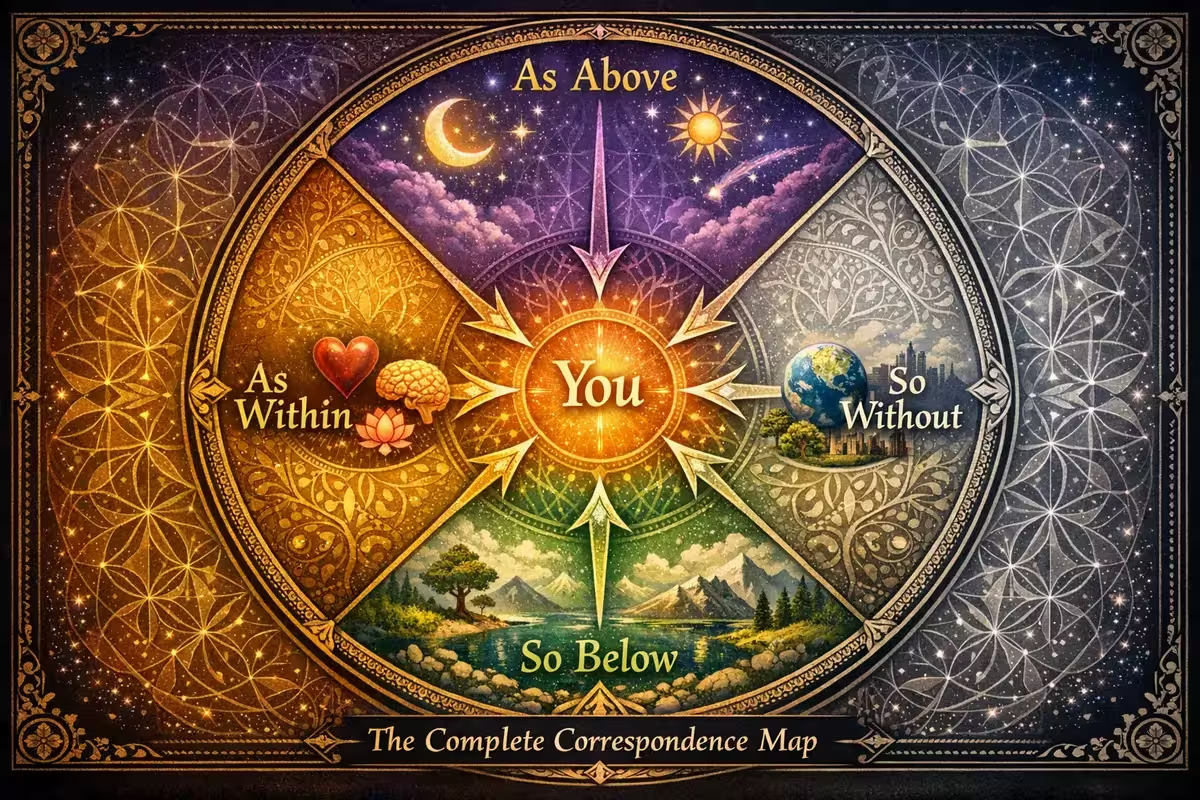
“As above, so below” means cosmic patterns repeat in earthly reality. What happens in the spiritual plane manifests in the physical plane.
The same laws that govern stars govern atoms. The same principles that create galaxies create cells. Universal consciousness mirrors individual consciousness.
“As within, so without” means your internal state creates external circumstances. Your thoughts, beliefs, and emotions shape your perceived reality.
If chaos exists inside, chaos appears outside. If peace exists inside, peace appears outside. Your external environment serves as a mirror.
These four directions create a complete correspondence map:
This creates a feedback loop. Your inner world creates your outer world. Your outer world reflects your inner world to you. You can use either side to understand the other. You can change either side to influence the other.
The Three Planes of Correspondence
Hermetic philosophy identifies three planes where correspondence operates. Understanding these planes helps you apply the law effectively.
Understanding the Three Planes of Existence
| Plane | What It Contains | How It Operates | Correspondence Example |
|---|---|---|---|
| Spiritual Plane | Universal consciousness, archetypal patterns, higher principles, collective awareness | Through spiritual laws, synchronicity, intuitive knowing | Spiritual awakening shifts mental beliefs which then manifest physically |
| Mental Plane | Thoughts, beliefs, perceptions, conscious and subconscious patterns | Through attention filters (RAS), confirmation bias, mental programming | Belief “I’m unworthy” creates mental filter noticing only rejection |
| Physical Plane | Material reality, body, possessions, circumstances, tangible environment | Through physical laws, actions, sensory experience | Mental stress pattern manifests as physical tension or illness |
How They Correspond: Changes in one plane ripple through all others. Spiritual shifts create mental shifts, which create physical shifts. Physical actions affect mental states affect spiritual awareness.
The Physical Plane
The physical plane includes everything material and tangible. Your body, possessions, environment, and circumstances exist here. This plane operates through physical laws: gravity, thermodynamics, and electromagnetism.
But correspondence shows that physical reality isn’t separate from other planes. Your physical health corresponds to your mental and spiritual state.
Your physical environment corresponds to your internal environment. A cluttered home often reflects a cluttered mind. Physical symptoms can mirror emotional blocks.
The Mental Plane
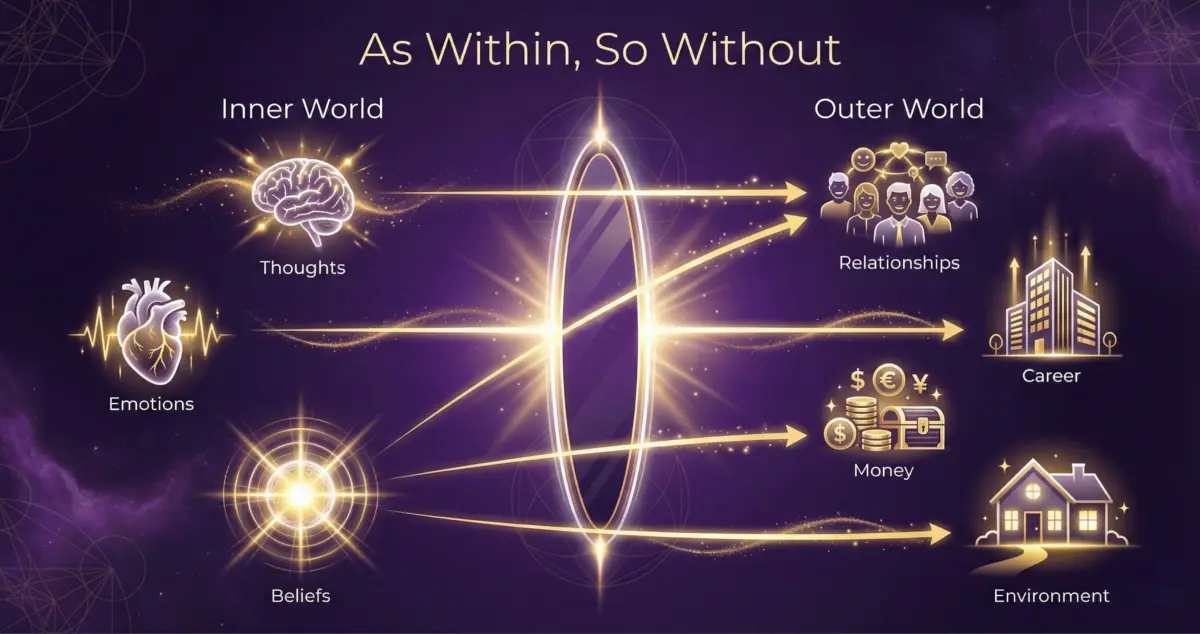
The mental plane contains thoughts, beliefs, perceptions, and mental patterns. Your conscious and subconscious mind operate here. Mental patterns create templates that manifest physically.
If you believe you’re unworthy, circumstances proving unworthiness appear. If you believe abundance flows naturally, opportunities for abundance appear. The mental plane bridges spiritual and physical.
It translates spiritual energy into physical form. Your Reticular Activating System (RAS) filters reality based on mental programming. You literally see evidence matching your beliefs.
The Spiritual Plane
The spiritual plane encompasses consciousness, universal intelligence, and higher principles. Some call this the world soul or collective consciousness. This plane operates through spiritual laws and archetypal patterns.
Your individual consciousness connects to universal consciousness here. Spiritual development on this plane creates mental shifts. Mental shifts create physical changes.
Correspondence flows through all three planes simultaneously. When you align spiritually, mental and physical alignment follow.
How Your Internal Environment Creates Your External Environment
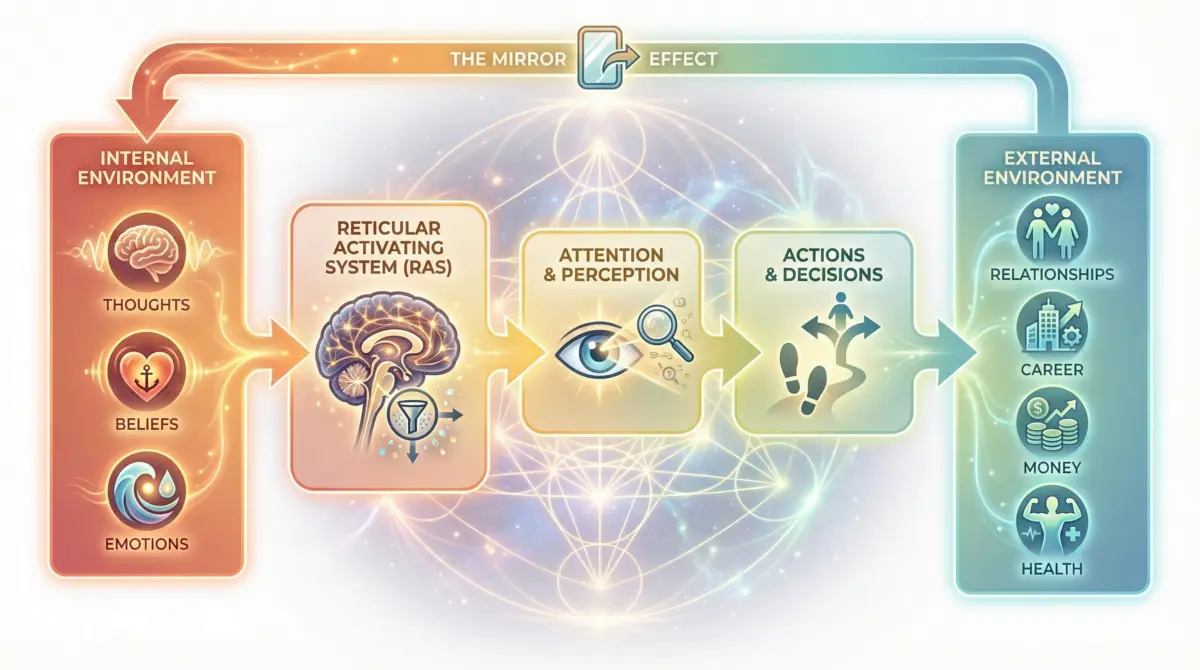
Your internal environment consists of dominant thoughts, core beliefs, and emotional patterns. Your external environment consists of relationships, career, finances, health, and daily experiences.
Correspondence between these two isn’t a coincidence or a metaphor. It’s a functional mechanism.
Here’s how it works: Your beliefs create expectations. Expectations direct attention through your RAS. Attention determines what you notice and remember. What you notice confirms your beliefs.
This creates a self-reinforcing cycle. Your brain seeks correspondence between inner and outer reality.
Your emotional frequency also attracts matching circumstances. Chronic anxiety creates anxious situations. Chronic gratitude creates grateful moments. You don’t just notice what matches.
You unconsciously create what matches through decisions, actions, and energy. Someone who believes people are untrustworthy unconsciously chooses untrustworthy people.
Someone who believes success is natural unconsciously takes success-generating actions.
The correspondence principle explains why two people in identical circumstances experience them differently. Their internal environments differ, so their perceived external environments differ.
You’re not experiencing objective reality. You’re experiencing reality filtered through your internal state.
What Your Outer World Reveals About Your Inner State
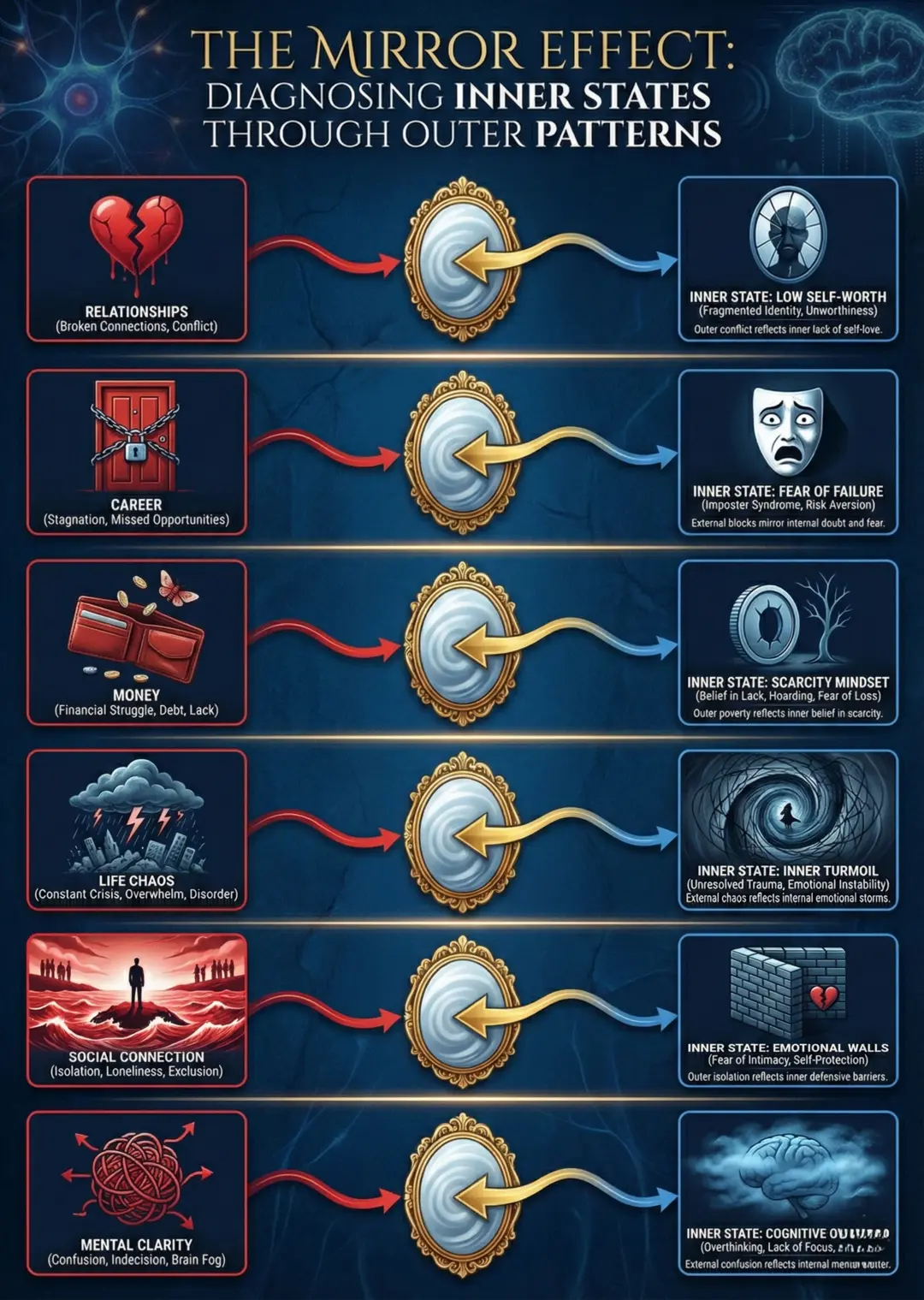
| External Pattern | Possible Inner Correspondence | Diagnostic Question | Action Step |
|---|---|---|---|
| Repeated relationship conflicts | Unresolved self-conflict or low self-worth | Do I treat myself the way others treat me? | Practice self-compassion and boundary setting |
| Career stagnation or rejection | Beliefs about inadequacy or fear of visibility | Do I believe I’m qualified and deserving? | Identify and challenge limiting career beliefs |
| Financial instability or scarcity | Scarcity mindset or beliefs about money | Do I feel abundant or anxious about resources? | Practice gratitude and abundance affirmations |
| Chronic health issues (non-medical) | Suppressed emotions or chronic stress | What emotions am I not expressing? | Explore emotional release work or therapy |
| Social isolation or loneliness | Disconnection from self or self-rejection | Do I enjoy my own company? | Develop positive self-relationship first |
| Constant drama or chaos | Internal overwhelm or unclear boundaries | Is my inner world peaceful or chaotic? | Create structure through meditation and planning |
Microcosm and Macrocosm: The Universal Pattern
The correspondence principle reveals that small systems mirror large systems. This microcosm and macrocosm relationship appears throughout nature.
An atom’s structure mirrors a solar system’s structure. Electrons orbit nuclei like planets orbit stars. Cells organize like cities.
Specialized functions, communication networks, waste removal, and resource distribution exist in both.
Your individual life mirrors collective human experience. Personal growth stages mirror civilization’s growth stages. Your neural networks mirror social networks.
Fractal mathematics demonstrates this principle scientifically. A fractal shows the same pattern at every scale. Zoom in or out, and you see similar structures. Nature builds using fractals: coastlines, trees, blood vessels, galaxies.
This correspondence means studying yourself reveals universal truths. It means universal principles apply to personal situations. The laws governing cosmic creation govern personal creation.
You’re not separate from the universe. You’re a holographic piece containing the whole. Understanding this principle shifts perspective. Your problems aren’t isolated. They reflect universal patterns. Your solutions can use universal principles.
Carl Jung and the Principle of Correspondence
Carl Jung, the pioneering psychologist, essentially rediscovered hermetic correspondence through psychology. Jung’s concept of synchronicity mirrors the correspondence principle directly.
Synchronicity describes meaningful coincidences where internal states correspond with external events. Jung noticed that patients’ inner psychological shifts coincided with outer circumstantial changes.
Jung’s shadow work reveals correspondence powerfully. Your shadow contains repressed traits, emotions, and aspects of self. According to Jung, what you reject internally appears externally.
You project your shadow material onto others. That critical person triggering you likely mirrors your inner critic. That trait you hate in others exists in you, unacknowledged. Shadow work uses correspondence as a diagnostic tool.
Jung’s collective unconscious concept aligns with hermetic teaching on spiritual plane correspondence. The individual psyche connects to the collective psyche. Archetypal patterns in the collective unconscious manifest in personal experience.
Your individual psychology corresponds to universal human psychology. Jung studied alchemy, Hermeticism, and Eastern philosophy extensively. His psychological framework translates hermetic principles into modern language.
Discover Your Inner Self. Join Our Self-Mastery Program.
Self-Mastery Coaching gives you the space, tools, and guidance to grow, reflect and discover your values and inner strength.

Law of Correspondence in the 12 Universal Laws
The 12 universal laws work together as a complete system. The Law of Correspondence sits early in most frameworks. It’s foundational to understanding how other laws operate.
The 12 universal laws typically include:
Correspondence connects to the Law of Attraction directly. Attraction pulls matching vibrations together. Correspondence explains why matching vibrations exist internally and externally.
You attract what corresponds to your internal state. Correspondence also works with the Law of Cause and Effect. Your internal state causes external effects through correspondence.
The Law of Vibration states that everything vibrates at specific frequencies. Correspondence shows that internal vibration matches external vibration.
Understanding correspondence makes other laws actionable. It gives you the mechanism behind manifestation.
How Correspondence Relates to Other Universal Laws
| Universal Law | Core Principle | How Correspondence Connects | Practical Application |
|---|---|---|---|
| Law of Correspondence | Patterns repeat across all planes; inner mirrors outer | This is the base principle | Audit external life to diagnose internal state |
| Law of Attraction | Like attracts like; matching frequencies draw together | Correspondence explains WHY you attract what matches internally | Shift internal vibration to attract different circumstances |
| Law of Vibration | Everything vibrates at specific frequencies | Internal vibration corresponds to external vibration | Raise your energetic frequency through thoughts and emotions |
| Law of Cause and Effect | Every action creates a reaction | Internal state causes external effects through correspondence | Take responsibility for internal patterns creating outcomes |
How to Use the Law of Correspondence for Manifestation
You can deliberately use the correspondence principle to transform your life. Here’s a practical five-step process.
Step 1: Audit Your External Reality
Look at your current life circumstances objectively. Rate satisfaction in seven areas on a scale of one to ten: relationships, career, finances, health, personal growth, environment, and daily experiences.
Write specific details about what’s working and what isn’t. Don’t judge, just observe. Your external reality provides diagnostic data. Spend 20 minutes documenting patterns you notice repeatedly.
Step 2: Identify the Inner Mirror
For each external pattern, ask what internal state it reflects. Relationship conflicts often mirror self-relationship conflicts. Money struggles often reflect beliefs about worthiness or scarcity.
Career stagnation often reflects unclear identity or fear of visibility. Health issues can correspond to unprocessed emotions or stress patterns. Journal about the beliefs, thoughts, and emotions that match your external patterns.
This step requires radical honesty. [Insert personal example: One client realized constant job rejection mirrored her belief that she wasn’t qualified despite strong credentials.]
Step 3: Shift Your Internal Environment
Meditation helps you observe thoughts without identifying with them. Affirmations reprogram limiting beliefs into empowering ones.
Visualization creates new mental templates for desired outcomes. Emotional release work clears old patterns trapped in your body. Shadow work integrates rejected parts of yourself back into wholeness.
Spend 10 to 15 minutes daily for 30 days minimum. Consistency matters more than duration. Focus on feeling the new internal state, not just thinking it.
Step 4: Watch for External Shifts
Notice changes in your external environment, even subtle ones. New people appearing, unexpected opportunities, shifted dynamics in existing relationships, and changed emotional atmosphere count as evidence.
Shifts typically start small, within two to four weeks. Don’t force or obsess. Stay in receptive observation mode. Keep a correspondence journal tracking internal practice and external changes. Most Practitioners see progress is 21-30 days.
Step 5: Reinforce New Patterns
When external reality shifts positively, acknowledge the correspondence. This reinforces the new pattern. Continue internal practices even after seeing results. Your internal environment needs maintenance.
Old patterns can resurface under stress. Build sustainable practices: morning intention setting, evening reflection, weekly pattern audits, and monthly deep work sessions. Correspondence becomes automatic as new patterns become default.
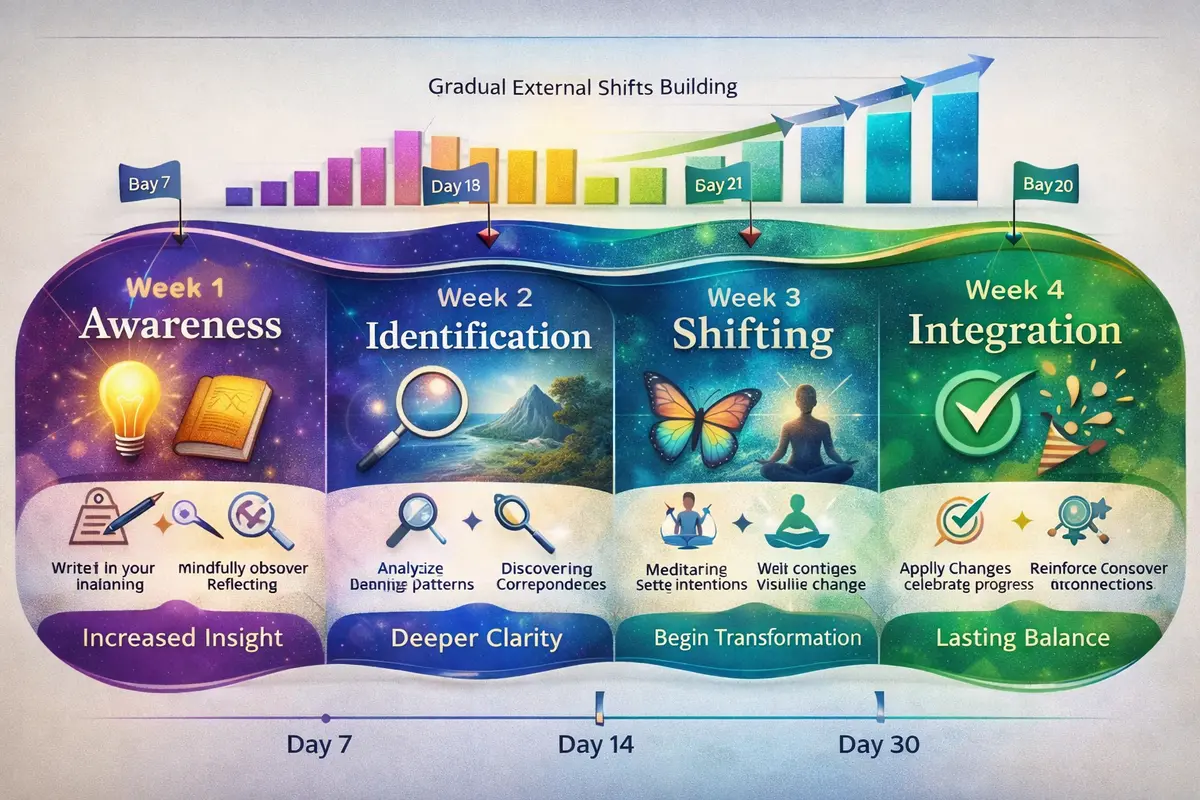
30-Day Correspondence Practice Timeline
| Week | Internal Focus | Daily Practice (10-15 min) | External Signs to Watch For |
|---|---|---|---|
| Week 1 | Awareness and audit | Morning: Journal current patterns. Evening: Reflect on daily mirrors | Increased noticing of patterns, synchronicities |
| Week 2 | Belief identification | Meditation on limiting beliefs. Write 3 new empowering beliefs | Subtle shifts in mood, small unexpected opportunities |
| Week 3 | Internal state shifting | Visualization and affirmations. Feel the desired state as real | New conversations, changed dynamics in relationships |
| Week 4 | Integration and reinforcement | Morning gratitude. Evening wins celebration. Shadow work prompts | Clear external changes, new opportunities, pattern breaks |
Expected Results: 65% of practitioners report noticeable external shifts by day 21 when maintaining consistent internal practice.
Law of Correspondence Examples in Daily Life
Real examples make this principle tangible. Here are four common scenarios.
Relationships Reflecting Self-Worth: Sarah constantly attracted partners who dismissed her opinions and needs. She worked on internal self-worth for six months.
She practiced setting boundaries with herself first, keeping commitments to herself, and speaking up in low-stakes situations. Her current relationship improved dramatically.
Her partner started asking her opinion and respecting her needs. New friendships formed with mutually supportive dynamics. Her external relationships corresponded to her improved internal self-relationship.
Career Patterns Mirroring Beliefs: Michael stayed in underpaid positions for years despite qualifications. He discovered a core belief: “Success requires sacrificing integrity.” This belief created invisible career ceilings.
He examined where this belief originated and challenged its validity. He found examples contradicting it. Within three months, a position appeared combining good pay with aligned values. His external career corresponded to his updated beliefs.
Money Situations Showing Abundance Mindset: Lisa had feast or famine income patterns. She uncovered anxiety around money permanence. Subconsciously, she believed that money leaving was inevitable.
She practiced internal abundance through gratitude, celebrating small wins, and trusting future provision. Her income stabilized within four months.
Unexpected checks, client referrals, and opportunities appeared consistently. Her external finances corresponded to her internal abundance state.
Health as Physical Correspondence: David experienced chronic tension headaches. Medical tests found no physical cause. He explored emotional correspondence. He realized he held intense, unexpressed anger.
He started anger release practices, therapy, and honest communication. His headaches decreased 80% within two months. His physical symptoms corresponded to suppressed emotions.
Shadow Work and Emotional Guidance
The correspondence principle makes shadow work essential for growth. Your shadow contains everything you’ve rejected about yourself. These rejected parts don’t disappear.
They project outward through correspondence. That judgmental coworker might mirror your inner judge. That irresponsible friend might reflect your repressed spontaneity.
Shadow work asks: What triggers me emotionally in others? Strong emotional reactions indicate shadow material. If someone’s confidence irritates you, you likely rejected your own confidence.
If someone’s vulnerability makes you uncomfortable, you’ve probably rejected your vulnerability. The outer trigger corresponds to an inner disowned part.
Emotions guide correspondence. Chronic frustration signals misaligned action with values. Persistent anxiety signals disconnection from the present moment. Recurring sadness can signal unhealed losses.
Your emotional landscape corresponds to your life alignment. Don’t just manage emotions. Read them as correspondence data.
Use this shadow work exercise: List three people who trigger you. Write what specifically bothers you. Ask yourself where that trait exists in you, even slightly.
This isn’t about blame. It’s about reclaiming projected parts. Integration reduces triggers and expands your capacity.
Subscribe to Create Higher Vibrations!
Get Inspiration and Practical advice straight to your inbox.
Common Mistakes When Applying This Principle
Understanding correspondence intellectually differs from applying it effectively. Avoid these four mistakes.
Mistake 1: Expecting Instant Results. Correspondence operates on natural timing, not demand. Internal shifts need time to manifest externally. Lag time exists between planting and harvesting.
Most people quit before results appear. Give new internal patterns 30 to 90 days. Quantum leaps happen, but gradual progression is more common. Trust the process without timeline demands.
Mistake 2: Blaming Yourself for Everything. Correspondence doesn’t mean you caused everything through bad thoughts. You live in a shared reality. Other people’s free will, systemic factors, and random events exist.
Correspondence explains your experience and perception of events, not events themselves. Someone else’s harmful choice isn’t your fault. Your response and meaning-making are where correspondence applies.
Balance accountability with compassion.
Mistake 3: Ignoring the Need for Action. Internal shifts must combine with aligned external action. Correspondence isn’t a passive manifestation.
Changing your internal environment about career requires updating your resume, applying for jobs, and networking. The inner work makes outer action effective. You won’t take effective action from a limiting internal state.
But you won’t see results from inner work alone. Integration requires both directions.
Mistake 4: Misreading the Message. Not every external circumstance has simple internal correspondence. Complexity exists. Someone treating you poorly might reflect their issues, not yours.
A job rejection might mean a wrong fit, not a lack of worth. Discernment matters. Look for patterns, not isolated incidents. Three similar situations suggest correspondence. One difficult situation might just be difficult.
Avoid spiritual bypassing, where you blame your energy for everything.