Meditation for Anxiety: A Practice That Holds Up in Trials
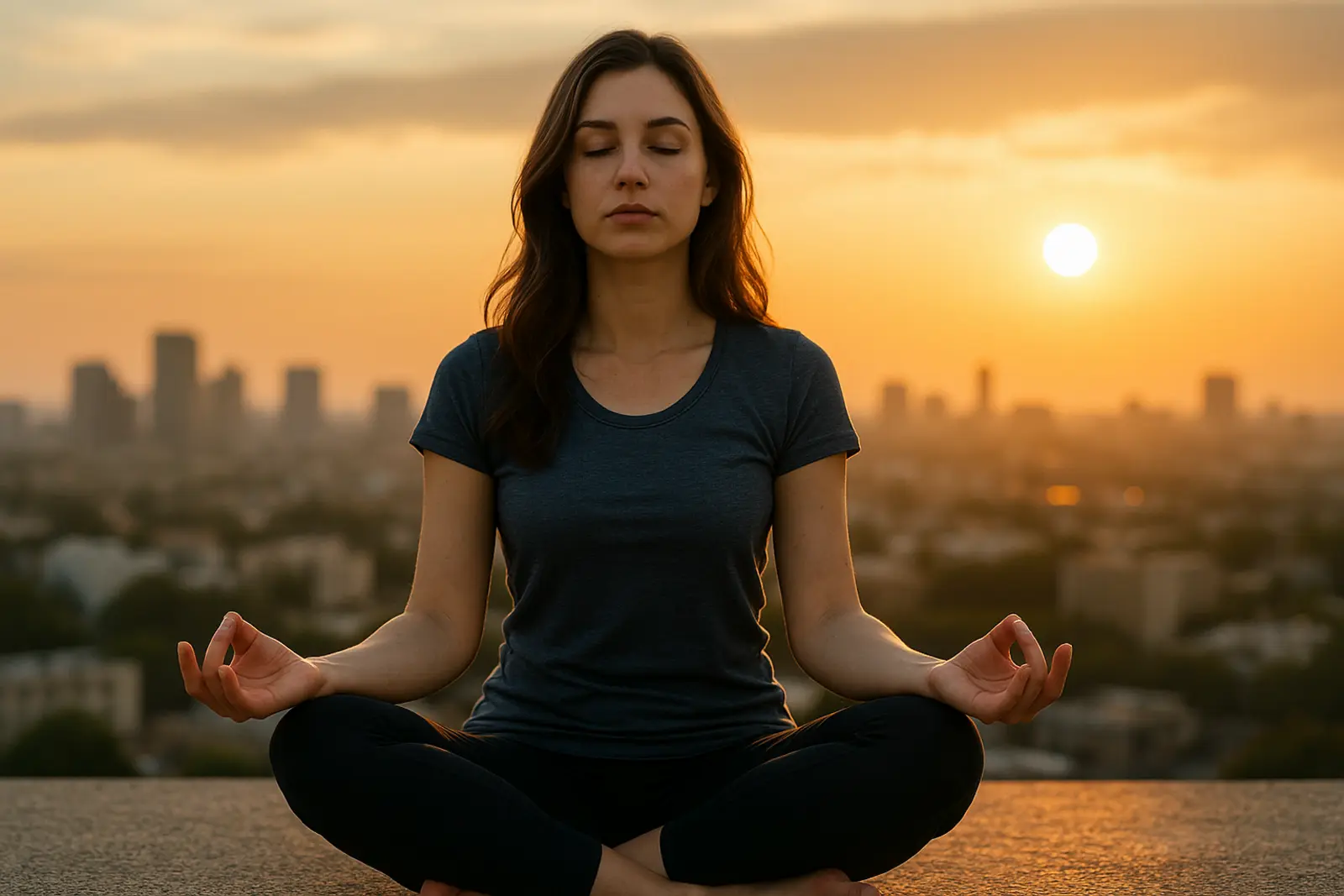
In a 2023 trial, an eight-week meditation course did about as well as Lexapro. The people taking the pill had far more side effects.
Key Takeaways
Meditation for anxiety is the practice of training attention so that anxious thoughts and body sensations can be noticed without being obeyed. It does not stop worry from showing up. It changes what happens next.
Instead of following each thought into a spiral, you learn to see it, name it, and come back to the present moment. Over weeks, that small return lowers how often and how hard anxiety takes over.
Is It Stress or Anxiety?
Stress and anxiety feel alike, but they are not the same thing. Stress is pressure from something in front of you, like a deadline or a hard conversation. It usually eases once that pressure passes.
Anxiety is the fear and dread that can stay after the pressure is gone. It can also arrive with no clear cause. MedlinePlus describes it as a feeling of fear, dread, and uneasiness that can be a normal reaction to stress.
When that feeling lasts for months, or gets in the way of work, sleep, or relationships, it may be an anxiety disorder. That is worth a conversation with a doctor. Meditation helps with everyday stress and anxiety. It also helps alongside treatment for a disorder.
Does Meditation Actually Help Anxiety?
Yes, and the best evidence is recent. In 2023, a team led by Elizabeth Hoge at Georgetown published a randomized trial in JAMA Psychiatry. They compared mindfulness-based stress reduction (MBSR) with escitalopram, the generic form of Lexapro.
MBSR was developed in the late 1970s by Jon Kabat-Zinn at the University of Massachusetts Medical School. The eight-week course blends mindfulness meditation, body awareness, and gentle yoga.
The trial enrolled 276 adults diagnosed with generalized anxiety disorder, social anxiety disorder, panic disorder, or agoraphobia. Of those, 208 finished the eight weeks. Anxiety scores fell by about the same amount in both groups, and the meditation course met the trial’s test for being no worse than the drug.
The side effects were not equal. About 79% of the escitalopram group reported at least one, against about 15% in the MBSR group. Eight percent of the drug group quit because of side effects. Nobody quit MBSR for that reason.
The wider picture is more modest. A 2014 review in JAMA Internal Medicine pooled 47 trials with 3,515 people. It found moderate evidence that mindfulness programs reduce anxiety. It found no evidence that meditation beats other active treatments, such as drugs, exercise, or therapy.
So meditation is one good option among several. For many people, it is the one with the fewest downsides.
How Does Meditation Calm an Anxious Body?
Anxiety is the body’s threat system running when there is no threat to answer. Heart rate climbs. Breathing gets fast and shallow. Attention narrows onto whatever feels dangerous.
Meditation works on that loop from two sides.
The brain changes too. In a small 2010 study, people whose stress dropped most after an eight-week MBSR course also showed less gray matter density in the amygdala, the brain’s alarm center. The study was small. The direction was clear.
How Do You Meditate for Anxiety?
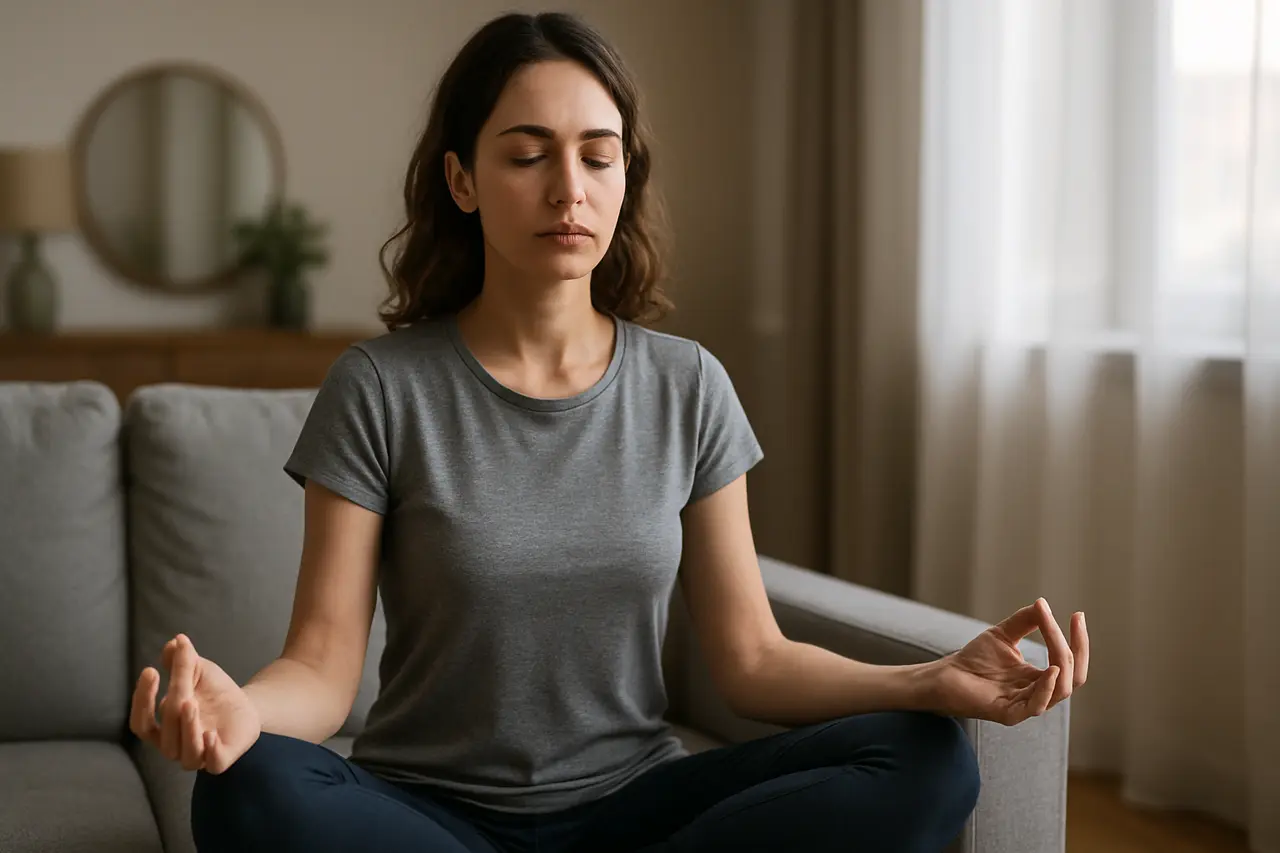
This ten-minute practice is the core of most programs. Do it once a day, at the same time if you can.
The return in step four is the whole exercise. A session with fifty returns is not a failure. It is fifty repetitions.
Which Type of Meditation Is Best for Anxiety?
The best type is the one you will keep doing. Each style below has a different on-ramp.

Is Guided Meditation Better for Anxiety and Overthinking?
For most beginners, yes. A voice gives an overthinking mind something to follow when the breath alone feels too thin. Guided meditation for anxiety also removes the question of whether you are doing it right.
The Georgetown team taught MBSR in weekly classes with an instructor. The Basso study used guided recordings. Both worked. Apps, recorded courses, and local classes all count.
Over time, try a few silent sessions each week. Guided practice teaches the method. Silent practice teaches you to bring it with you.
Can Meditation Help During a Panic Attack?
A panic attack is a sudden wave of intense fear with strong body symptoms, like a pounding heart, dizziness, or shaking. According to the NHS, most panic attacks last between 5 and 20 minutes.
Meditation will not switch an attack off. It can help you ride it out without adding fear about the fear.
People with regular panic attacks often find that a daily practice lowers how often attacks come. If they are frequent, see a doctor to rule out other causes.
What If Meditation Makes Your Anxiety Worse?
It happens, and it is not a sign you are doing it wrong. Psychologists call it relaxation-induced anxiety.
In a small 1983 study by Heide and Borkovec, 14 tense adults tried two relaxation methods. During mantra meditation, more than half reported more tension, not less. For a nervous system that has stayed on alert for years, sudden stillness can feel like danger.
If that is you, start somewhere easier.
If meditation brings up panic, flashbacks, or dissociation, stop the session. Talk with a therapist who knows trauma before you try again.
How Long Does Meditation Take to Help Anxiety?
A single session can lower your heart rate and settle your breathing. Lasting change takes longer.
In a 2019 study by Julia Basso and Wendy Suzuki at NYU, beginners did 13 minutes of guided meditation a day. After eight weeks, they had better mood, attention, and memory.

Their anxiety also rose less during a stress test. After four weeks, those gains had not appeared yet.
The Hoge trial and the 2014 review both measured at eight weeks too. So give a daily practice two months before you judge it.
How Often Should You Meditate for Anxiety?
Daily practice beats long, rare sessions. Ten to fifteen minutes a day is a realistic target for most people.
Tie the session to something you already do. Right after coffee works. So does the first minute after you park the car.
A habit that rides on another habit lasts longer than one that waits for free time. The daily meditation practice guide has more on building the routine.
Can Meditation Replace Anxiety Medication or Therapy?
Not on its own say-so. The Hoge trial suggests MBSR can work about as well as escitalopram for some people with anxiety disorders. It does not tell any one person to stop a prescription.
If you take medication, keep taking it while you build a practice. Talk to your prescriber before any change. Stopping some anxiety drugs suddenly can cause withdrawal effects.
Meditation also pairs well with therapy. Mindfulness-based cognitive therapy blends the two on purpose. Anxiety and low mood often travel together, so the meditation for depression guide may help too.
If anxiety ever comes with thoughts of harming yourself, call or text 988 in the US to reach the Suicide and Crisis Lifeline. Outside the US, contact your local emergency number.
What Is the 3-3-3 Rule for Anxiety?
The 3-3-3 rule is a quick grounding exercise. Name three things you can see. Name three sounds you can hear. Then move three parts of your body, like your fingers, shoulders, and feet.
It is not a clinical treatment. It is a fast way to pull attention out of a worry spiral and into the room. Use it when a full session is not possible, then come back to your practice later.
How Do You Meditate When Anxiety Keeps You Awake?
Racing thoughts at night are common. The day’s distractions are gone, so worry fills the quiet.
Try a body scan in bed. Lie on your back. Move your attention slowly from the top of your head to your toes. Notice each area without trying to relax it. This shifts the mind from storytelling to sensation, which most anxious minds find easier.
If you are still awake after twenty minutes, get up. Sit somewhere dim and repeat the scan. Then go back to bed.
Subscribe to Create Higher Vibrations!
Get Inspiration and Practical advice straight to your inbox.
What Would Two Months of Practice Show You?
Most people judge meditation in the first week, when it feels awkward and the mind will not sit still. The studies measured at eight.
Pick your anchor tonight. Set the timer for ten minutes tomorrow morning. Mark sixty days on a calendar. Then look back at how often anxiety took the wheel. For the bigger picture, the what is meditation guide explains the other forms worth trying.