
How to Stop Identifying With Your Thoughts: 10 Proven Strategies to End Cognitive Fusion for Good

Identifying with your thoughts, a process called cognitive fusion, means treating your mental content as absolute truth and allowing it to define your sense of self.
Research shows this fusion is a primary driver of anxiety, depression, and psychological inflexibility, while learning to separate yourself from your thoughts produces measurable improvements in mental health within weeks.
This guide walks through 10 evidence-based strategies rooted in Acceptance and Commitment Therapy (ACT) and mindfulness science to help you gain clarity and reduce thought-driven suffering.
You’re lying awake at 2 AM, replaying that embarrassing moment from earlier. The thought loop plays endlessly: “I’m such an idiot.” Before you know it, that single thought has become your entire identity.
Sound familiar? You’re experiencing cognitive fusion, where you become so entangled with your thoughts that you believe they define who you are.
-
You recognize your thoughts as mental events instead of facts. This recognition creates distance and reduces emotional distress.
-
You practice cognitive defusion techniques to decrease anxiety and depression. These techniques improve your mental well-being within two to four weeks.
-
You build psychological flexibility to observe your thoughts. This skill prevents you from becoming overwhelmed by your internal narrative.
-
Mindfulness exercises strengthen your ability to notice thoughts. You watch them pass through your mind without attaching to them.
-
You separate yourself from your thoughts to improve stress management. This separation improves your decision making and your quality of life.
What Does It Mean to Identify With Your Thoughts?
Identifying with your thoughts means treating your mental content as absolute truth and letting it define your sense of self. When you fuse with thoughts, you experience no separation between yourself and what crosses your mind.
A thought like “I’m a failure” becomes not just a passing mental event but your core identity.
This process, known as cognitive fusion, happens automatically in most people. Your mind generates thousands of thoughts daily, and many slip by unnoticed. But certain thoughts, especially negative ones, stick.
You grab onto them, replay them, and eventually accept them as factual descriptions of who you are. This fusion creates suffering because you can’t distinguish between temporary mental events and permanent truths about yourself.

Why Stopping Thought Identification Matters
Learning to separate yourself from your mind identification transforms your mental health and daily functioning. Here’s a look at the specific benefits:
Practice Cognitive Defusion
Cognitive defusion helps you recognize thoughts as fleeting mental events rather than facts that demand immediate belief or action. This technique creates psychological distance between you and your thoughts, reducing their emotional impact.
A 2022 study on cognitive defusion found that it effectively reduced cognitive fusion and increased mindful awareness in participants.
The research showed that defusion activities alter the contextual elements that give thoughts their meaning, ultimately reducing the power they hold over your emotions and behaviors.
Here’s how to practice: When a distressing thought appears, say “I’m having the thought that…” before stating the thought. For example, instead of thinking “I’m worthless,” say “I’m having the thought that I’m worthless.”
Then take it further: “I notice I’m having the thought that I’m worthless”. This simple linguistic shift creates distance. Research shows this technique reduces the discomfort of negative thoughts and increases willingness to believe more positive alternatives.
Try singing your negative thought to the tune of “Happy Birthday” or repeating a distressing word 30 times until it loses meaning. These exercises sound silly, but they work by shifting attention from thought content to the thinking process itself.
Cognitive Defusion: Creating Psychological Distance
Recognize thoughts as passing mental events rather than absolute facts. This shift reduces emotional grip and lets you act on your values.
The table below illustrates the difference between cognitive fusion and cognitive defusion, the mental states at the heart of thought identification.
The Fundamental Shift
🪢Cognitive Fusion
“Thoughts = Facts.” You treat thoughts as literal truths or urgent commands.
- High emotional intensity.
- Thoughts dictate immediate actions.
- Example: Thinking “I am a failure” feels like being a failure.
🔭Cognitive Defusion
“Thoughts = Mental Events.” You observe thoughts from a distance as words or images.
- Reduced emotional impact.
- Thoughts are observed, not obeyed.
- Example: Thinking “I am having the thought that I am a failure.”
The Mechanism: Content vs. Process
Defusion interrupts the automatic reaction loop by drawing attention to the thinking process itself, rather than the literal content of the thought.
This creates a metacognitive shift. You see the thought as an object of awareness (a cloud), rather than an unavoidable truth (the weather).
Three Core Defusion Techniques
1. Linguistic Shift
Use phrases to frame your thought as an observation to create distance.
Try this:
“I’m having the thought that [Thought Content].”
2. Humor & Repetition
Shift attention to sound to drain the thought of its seriousness.
- Sing It: Use a silly tune like “Happy Birthday.”
- Repeat It: Say a word 30 times until it becomes noise.
- Character Voices: Speak the thought like a cartoon character.
3. Mindful Observation
Visualize thoughts as temporary objects passing through your awareness.
- Leaves on a Stream: Watch leaves float away.
- Theatre Marquee: Words scrolling on a sign.
- Clouds: Watch them drift by without grasping.
These defusion methods shift attention from the content of thoughts to the process of thinking itself.
Develop Metacognitive Awareness
Metacognition means thinking about your thinking. This awareness allows you to step back and observe your mental processes rather than getting swept away by them. When you develop metacognitive skills, you recognize patterns in how your mind operates.
Adrian Wells’ metacognitive therapy proposes two distinct modes of operation: object mode and metacognitive mode. In object mode, you interpret perceived stimuli as truth.
In metacognitive mode, you understand thoughts as cues that require evaluation. Learning to operate in metacognitive mode reduces the automatic acceptance of thoughts as facts.
Research on metacognition shows it plays a vital role in reducing symptoms of obsessive-compulsive disorder and generalized anxiety by helping patients recognize intrusive thoughts as mental events requiring no action.
Having self-awareness proves particularly powerful for breaking cycles of rumination and worry.
Start practicing by asking yourself questions about your thinking: “What thought pattern am I noticing right now?” “Have I thought this way before?” “What evidence supports or contradicts this thought?”
These questions activate your metacognitive system and create separation from automatic thought patterns.
Use the Leaves on a Stream Visualization
This mindfulness exercise helps you observe thoughts without engaging with them. Picture yourself sitting beside a gently flowing stream with leaves floating on the surface. As each thought enters your mind, place it on a leaf and watch it drift downstream.
The beauty of this exercise lies in its simplicity. You’re not fighting thoughts or trying to make them disappear. You’re simply observing them pass by. This practice builds your capacity to notice mental content without grabbing onto it or pushing it away.
A 2011 meta-analysis examining mindfulness effects on psychological health found that mindfulness practices like this visualization increase subjective well-being and reduce psychological symptoms across various populations.
The research showed these benefits persist with regular practice.
Practice for five to ten minutes daily. When you notice your attention has drifted or you’ve started analyzing thoughts instead of watching them float by, gently return to the visualization.
This gentle redirection strengthens your ability to maintain distance from thought content.
Subscribe to Create Higher Vibrations!
Get Inspiration and Practical advice straight to your inbox.
Challenge Your Self-Concept
Your self-concept is the image you hold of yourself, but it’s not fixed or necessarily accurate. Many people confuse their self-concept with their identity, believing every self-critical thought reflects reality.
A 2023 study found that self-concept clarity positively correlates with subjective well-being, but rigidly holding onto negative self-concepts increases anxiety and depression.
When you identify too closely with thoughts about yourself, you create cognitive dissonance when actions don’t match your self-concept.
For someone with intrusive thoughts in OCD, the clash between self-concept and mental content causes severe distress. Understanding that your self-concept is malleable reduces this conflict.
Begin questioning your self-defining thoughts. Write down three thoughts you have about yourself that cause distress. For each one, list evidence that contradicts it. If you think “I always fail,” identify times you succeeded.
This exercise isn’t about positive thinking. It’s about recognizing your self-concept as a collection of thoughts rather than an immutable truth.
Consider that you contain multitudes. You’re not just one thought or one experience. Your self-concept shifts depending on context, mood, and circumstance. Accepting this fluidity prevents you from cementing negative thoughts into your identity.
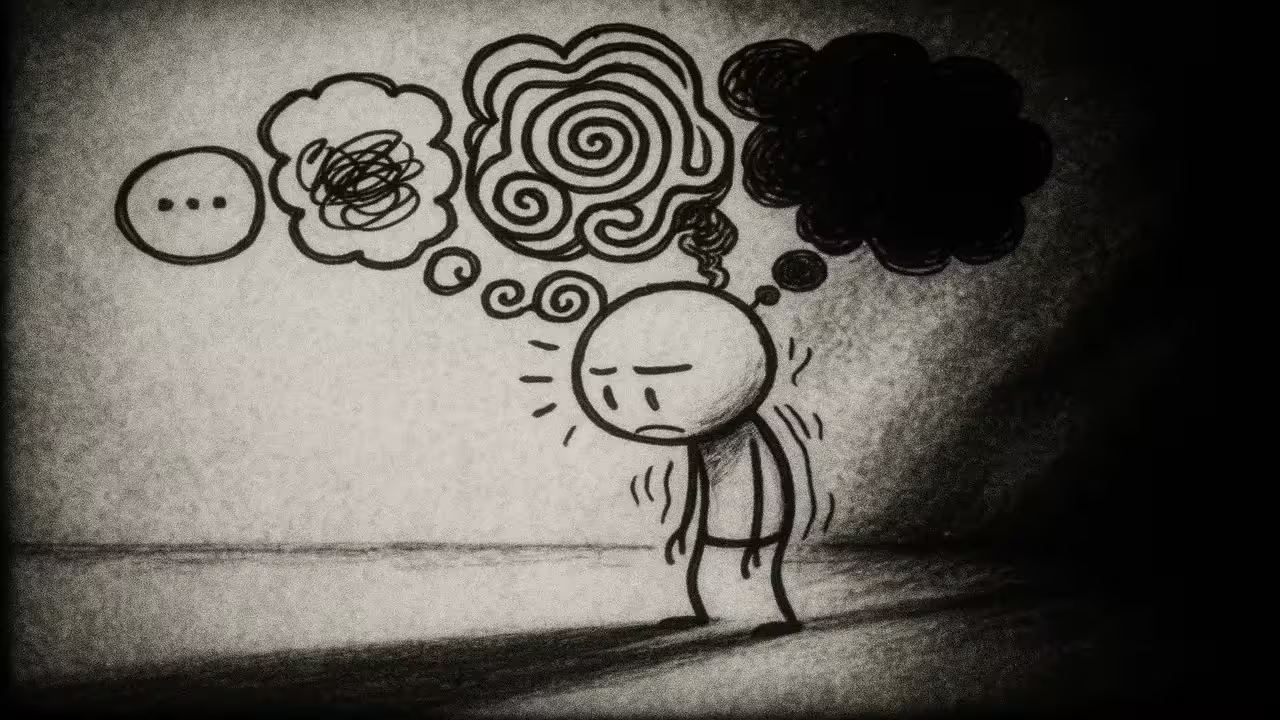
Practice Present-Moment Awareness
Staying anchored in the present moment prevents your mind from spiraling into thought loops about the past or future. A 2020 study on mindfulness and creativity found that present-moment awareness improves concentration and decreases fear of judgment.
When you’re fully present, you experience thoughts as they arise without attaching stories to them.
The 5-4-3-2-1 grounding technique brings you immediately into your sensory experience. Name five things you see, four things you touch, three things you hear, two things you smell, and one thing you taste.
This exercise interrupts thought identification by redirecting attention to physical sensation.
Research indicates that mindfulness observation skills predict better performance on tasks requiring flexible thinking and working memory.
A 2016 study found that observing mental content without reactivity was positively related to inhibitory control, which prevents automatic responses to thoughts.
This inhibition acts as the core mechanism linking mindfulness to improved higher-order cognition.
Set aside 10 minutes daily for present-moment practice. Sit comfortably and notice sensations in your body. When thoughts arise, acknowledge them and return attention to physical sensation.
You’re not trying to stop thoughts. You’re practicing the skill of noticing them without following where they lead.
Build Psychological Flexibility
Psychological flexibility is your ability to stay open to experiences, remain present, and take action aligned with your values even when uncomfortable thoughts and emotions arise. This capacity represents the opposite of rigid identification with thoughts.
A comprehensive 2010 review of psychological flexibility research found it fundamental to psychological health across numerous conditions. The ability to adapt your response to thoughts rather than reacting automatically determines how well you navigate life’s challenges.
Acceptance and Commitment Therapy focuses on building psychological flexibility through six core processes: acceptance, cognitive defusion, present-moment awareness, self-as-context, values clarification, and committed action.
Together, these processes teach you to hold thoughts lightly while moving toward what matters to you.
A 2024 study examining psychological flexibility in a transdiagnostic clinical setting found that participants who increased their flexibility showed improved quality of life and reduced symptom burden that remained stable three months after treatment.
The research demonstrated that psychological flexibility changes were associated with decreased anxiety, depression, and improved general functioning.
Practice psychological flexibility by identifying your core values. When difficult thoughts arise, ask yourself: “Does following this thought move me toward or away from what I value?”
This question helps you choose responses based on values rather than automatic reactions to thoughts.
Interrupt Rumination Patterns
Rumination keeps you stuck in repetitive thought loops that amplify anxiety and depression. A 2012 study comparing brief interventions for reducing rumination in adolescents found that certain cognitive techniques administered briefly could significantly reduce ruminative states.
Breaking these patterns requires recognizing when you’ve entered a loop and actively redirecting your attention.
Research on thought suppression challenges old beliefs that it always backfires. A 2023 study found that training people to suppress distressing thoughts improved mental health, especially for those with anxiety and post-traumatic stress.
When successful, suppression reduces immediate awareness of distressing content and prevents it from driving worry and rumination.
Set a “worry time” each day, a 15-minute window when you allow yourself to ruminate. Outside that window, when ruminative thoughts appear, remind yourself you’ll address them during worry time. This technique prevents rumination from hijacking your entire day.
Use the “thought stopping” method: When you notice rumination starting, say “Stop” firmly (aloud or silently), then immediately redirect attention to a specific task. Research shows that this interruption technique reduces stress and anxiety levels effectively.
Follow the interruption with a grounding exercise or physical activity to cement the pattern break.
Recognize Thoughts as Mental Events
Every thought that crosses your mind is a mental event, not a command requiring obedience or a fact demanding belief. This distinction forms the foundation of separating yourself from your thoughts.
When you view thoughts as mental events, you create space to observe them without reacting.
Consider how you experience physical sensations. When your stomach growls, you notice it but don’t identify as “a person whose stomach growls.” You recognize it as a temporary physical event.
Thoughts work the same way. They’re temporary mental events passing through your consciousness.
The brain generates approximately 6,000 thoughts per day. Most pass unnoticed. Problems arise when you grab certain thoughts and assign them special significance.
A simple exercise makes this clear: For one minute, try not to think about a purple elephant. You probably just thought about one. This demonstrates that trying to control thought content rarely works. What does work is changing your relationship to thoughts.
Label thoughts as they arise: “worrying thought,” “planning thought,” “self-critical thought”. This labeling creates observer distance. You’re not the thought; you’re the person noticing the thought. Practice this labeling throughout your day, especially when thoughts feel overwhelming.
Cultivate Self-Compassion
When you catch yourself identifying with negative thoughts, self-compassion provides an alternative to harsh self-judgment. Research shows that self-compassion reduces rumination and increases psychological resilience.
Instead of criticizing yourself for having difficult thoughts, you acknowledge that all humans experience challenging mental content.
Self-compassion involves three elements: self-kindness, common humanity, and mindfulness. Self-kindness means treating yourself as you would a good friend facing similar struggles.
Common humanity recognizes that difficult thoughts and experiences are part of being human, not personal failings. Mindfulness allows you to observe thoughts without over-identifying with them.
When a thought like “I’m not good enough” appears, try this reframe: “I’m having a thought that I’m not good enough, and that’s painful.
Many people experience this type of thought. I can be kind to myself while this passes”. This statement acknowledges the thought without making it your identity.
Practice the self-compassion break. Place your hand over your heart, take three deep breaths, and say: “This is a moment of suffering. Suffering is part of life.
May I be kind to myself?” This simple ritual interrupts identification with thoughts and activates your self-compassion system.

Physical Self-Care and Lifestyle Support
1. Regular Exercise
Physical activity directly impacts your ability to maintain distance from thoughts. Exercise reduces rumination by giving your mind a different focus and releasing neurochemicals that improve mood.
A 2016 study found that regular physical activity improved participants’ body image and reduced negative self-referential thoughts.
Aim for 30 minutes of moderate exercise five days per week. Walking, swimming, or cycling work well. The key is consistency rather than intensity.
2. Meditation Practice
Meditation trains your brain to observe thoughts without attachment. Research using functional magnetic resonance imaging shows that mindfulness meditation changes brain activity patterns in regions associated with self-referential thinking.
A 2011 meta-analysis found that mindfulness meditation brings about positive psychological effects, including reduced symptoms and improved well-being.
Start with five minutes daily. Sit quietly, focus on your breath, and notice when thoughts arise. Each time you notice a thought and return to your breath, you’re strengthening your ability to separate from mental content.
3. Quality Sleep
Sleep deprivation makes thought identification worse by impairing your prefrontal cortex’s regulatory functions. When you’re tired, you have fewer cognitive resources to maintain distance from negative thoughts. Prioritize seven to nine hours nightly.
4. Balanced Nutrition
Your diet affects your mental clarity and emotional regulation. Stable blood sugar prevents mood swings that make you more vulnerable to fusing with negative thoughts. Focus on whole foods, adequate protein, and regular meal timing.
Additional Benefits of Thought Separation
Here’s a look at a few of the positive effects of learning to stop identifying with your thoughts:

When to Seek Professional Help
Sometimes difficulty separating from thoughts signals a mental health condition requiring professional support. If your thought identification interferes with your work, relationships, or daily functioning, consider consulting a mental health professional.
Persistent rumination despite self-help efforts may indicate depression or anxiety disorders. Intrusive thoughts that cause significant distress might benefit from specialized therapy like Acceptance and Commitment Therapy or Cognitive Behavioral Therapy.
Licensed therapists trained in ACT, CBT, or metacognitive therapy can teach you advanced techniques for separating from thoughts. These approaches have strong research support for treating various conditions where thought fusion plays a central role.
Final Thoughts
Separating yourself from your thoughts is a skill, not a personality trait. Every technique in this article becomes more effective with consistent practice. You don't need to master all 10 strategies at once.
Start with one or two that resonate most, practice them daily for a few weeks, and build from there.
Remember that thoughts are mental events passing through your awareness, not permanent truths about who you are.
When you notice yourself fusing with a thought today, pause and acknowledge it: "I'm having the thought that..." This simple shift creates the space you need to choose your response rather than react automatically.
The freedom you gain from thought separation extends into every area of your life. Better relationships, clearer decisions, reduced anxiety, and greater peace become possible when you stop letting every thought dictate your reality.
Start practicing today, and notice how your relationship with your mind begins to change.