
Selenite Crystal Meaning: Properties, Uses and How to Care for It
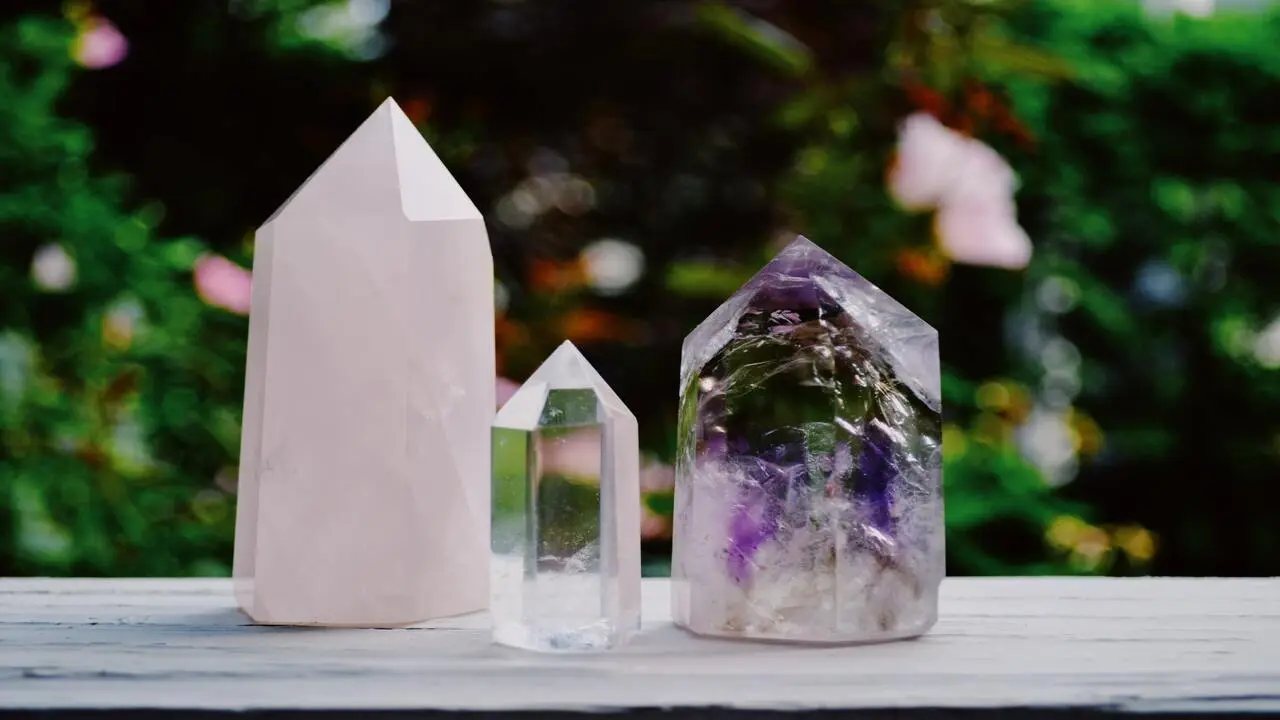
It is named for the moon and softer than your fingernail. Handle it like light you can hold.
Key Takeaways
Selenite crystal meaning centers on purity and light. Named after Selene, the Greek moon goddess, this soft, glowing stone stands for mental clarity, peace and cleansing. It is the stone crystal practitioners reach for to clear a room, a mind or another crystal.
It is also one of the most fragile stones on the shelf. Knowing what selenite is made of explains how to use it well and how to keep it from dissolving.
What Is the Meaning of Selenite?
The core meaning of selenite is purification. In crystal practice it is the cleanser, the stone that clears stuck or heavy energy from everything around it.
Its meaning has several layers.
The moon runs through all of it. Selenite’s pale, milky glow looks like moonlight caught in stone. Many people treat it as a small piece of the night sky, calm and cool.
What Is Selenite Made Of?
Selenite is a variety of gypsum, a soft mineral made of calcium sulfate and water. Its chemical composition is CaSO4·2H2O. It is the clear, bladed crystal form of gypsum, the same mineral used to make plaster and drywall.
The name comes from the Greek word for the moon. Despite the name, selenite contains no selenium. Both words simply share the same Greek root.
Gypsum defines 2 on the Mohs hardness scale. That makes selenite far softer than quartz, which rates 7. Your fingernail can leave a mark on it.
Selenite also has perfect cleavage. It splits cleanly into flat sheets, much like the pages of a book. That is why it forms such smooth blades and why a chip looks like a clean slice.
What Is the Spiritual Meaning of Selenite?
The spiritual meaning of selenite is light. Crystal practitioners sometimes call it “liquid light” for the way its surface seems to glow from within.
Spiritually, selenite is used to open a clear channel to higher guidance. Meditators hold it to still mental noise and feel connected to something larger than themselves. Some use it to sense angelic guidance or to reach their higher self.
It also carries a sense of peace. Selenite is linked to forgiveness, calm and a clean start after conflict. Many people place it in a room where an argument happened, as a way of resetting the space.
What Are the Healing Properties of Selenite?
What is selenite good for? Crystal healing traditions credit it with a clear set of benefits. These are the ones named most often.
Tradition adds one more claim. Selenite is said to be self-cleansing, so it never needs clearing itself.
These uses come from crystal practice. No study has tested selenite for sleep, stress or clarity. What a selenite habit gives you is a daily pause with a clear intention, and that pause is where most of the calm comes from.
What Chakra Is Selenite For?
Selenite is linked to the crown chakra, the energy center at the top of the head. The crown is associated with spiritual connection, awareness and a sense of unity.
It is also linked to the third eye chakra, the center of intuition on the forehead. Placing a small piece between the eyebrows during meditation is a common practice.
Some practitioners use a selenite wand to connect all seven chakras. They start at the crown and sweep it slowly down the body, pausing at each center.
Where Should You Put Selenite in Your Home?
Selenite is mostly a stone for spaces. Where you place it depends on what you want it to do.
Choose a dry spot for every placement. A steamy bathroom or a windowsill with condensation will slowly damage the stone.
Selenite lamps have become popular for bedrooms. A light inside a hollowed block of gypsum gives off a soft, warm glow.
How Do You Use a Selenite Wand?
A selenite wand is a long, smooth stick. It is the classic tool for clearing energy from a person.
To use one, hold the wand a few inches from your body. Start at the top of your head. Move it down slowly toward your feet, as if brushing off dust. Then do your back, arms and legs.
Many people pair each sweep with a breath out. Some picture gray static lifting away with each pass.
A wand works on objects too. Pass it slowly over a new crystal, a piece of jewelry or a secondhand item you want to clear.
Can Selenite Get Wet?
Selenite should not get wet. Gypsum is moderately soluble in water, dissolving at roughly 2 grams per liter at room temperature.
A quick splash will not destroy a piece. A soak, a rinse under the tap, or a steamy room will. Water can cloud the surface, pit it, or round off its sharp edges over time.
If selenite does get wet, pat it dry right away with a soft cloth. Let it air-dry fully before you put it back.
How Do You Cleanse and Charge Selenite?
Selenite is famous for its self-cleansing reputation. Many practitioners say it never needs cleansing. Others like to refresh it anyway.
These methods are all dry and safe for the stone.
To use selenite to charge other crystals, set them on a selenite charging plate overnight. Amethyst, rose quartz and clear quartz are common choices.
To activate a new piece, hold it in both hands. Take a few slow breaths. Then state, out loud or silently, what you want it to hold for you.
What Should You Not Do With Selenite?
Selenite is easy to damage. Avoid these common mistakes.
Store each piece wrapped in cloth or on its own shelf. Treat it the way you would treat glass.
What Shapes Does Selenite Come In?
Selenite is sold in many shapes and forms. Each suits a different use.
Can You Wear Selenite Jewelry?
You can, with care. Wearing selenite keeps its calming meaning close, but its softness makes it a poor choice for rings or bracelets that knock against surfaces.
Pendants and earrings hold up better. Take them off before washing your hands, swimming or showering.
Selenite is not an official birthstone. Some crystal sellers link it to June, but no standard birthstone list includes it.
What Is the Difference Between Selenite and Satin Spar?
Both are gypsum. They differ in how the crystals grow.
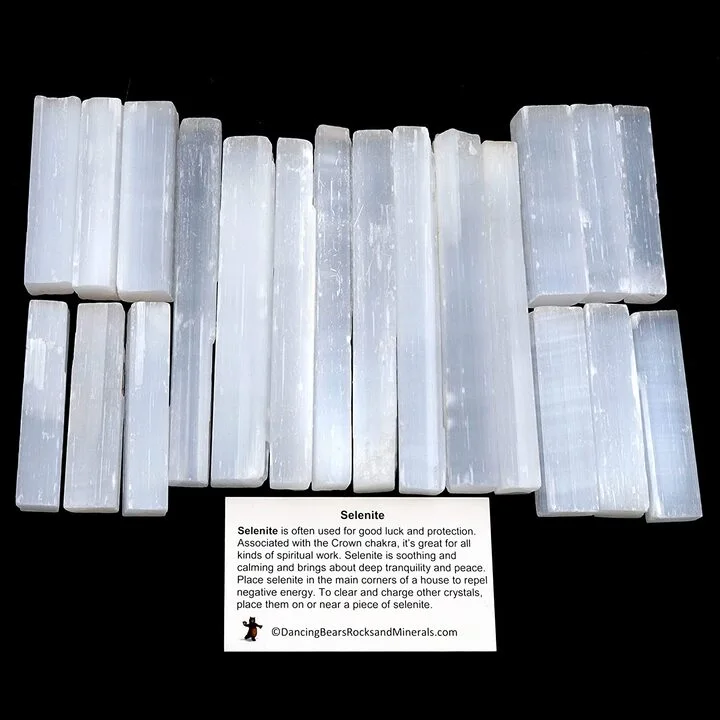
Selenite forms clear, flat, glassy blades. Satin spar is the fibrous form. It has a silky, stripy look and a soft sheen that shifts as you turn it. Geology.com lists both as varieties of gypsum, along with alabaster.
Many wands, towers, and lamps sold as selenite show the silky, fibrous look of satin spar. In crystal practice, the two are used the same way. If you want true selenite, look for a clear, see-through blade.
A third gypsum form, the desert rose, grows in dry sandy areas. Its petal shapes are packed with sand grains.
How Can You Tell If Selenite Is Real?
Glass, plastic, and resin are sometimes sold as selenite. A few simple checks help.
Try the scratch test on a hidden spot, such as the base. A small mark there proves the point without spoiling the piece.
What Zodiac Sign Is Selenite Good For?
Selenite is most often linked to Cancer. Cancer is ruled by the moon in astrology, which matches the stone’s lunar name.
Cancer is known as a sensitive, caring sign that absorbs the moods of others. Selenite’s cleansing role suits that. It is used as a way to release what does not belong to you.
Many practitioners also recommend selenite for Taurus, a sign that values a calm, beautiful home. Of all the zodiac signs, though, Cancer and selenite are the classic match.
What Do Witches Use Selenite For?
In modern witchcraft, selenite is a moon stone. Practitioners use it in several ways.
The logic matches the rest of selenite’s meaning. It is the cleaner and the clarifier.
Where Does Selenite Come From?
Selenite forms wherever mineral-rich water slowly evaporates or cools. Gypsum is the most common sulfate mineral on Earth, so selenite is found worldwide.
People have prized it for a long time. In the first century, Pliny the Elder described a “specular stone” mined around the city of Segobriga in Spain. His translator identifies it as transparent selenite.
Pliny wrote that it could be split into sheets as thin as anyone wished. Shavings of it were strewn over the Circus Maximus in Rome for their bright whiteness.
The most famous selenite of all sits in Mexico. In 2000, miners at Naica in Chihuahua broke into a cave filled with giant selenite crystals. The largest runs about 11 meters long, and it dates to roughly 500,000 years old.
Subscribe to Create Higher Vibrations!
Get Inspiration and Practical advice straight to your inbox.
What the Slowest Crystal on Earth Teaches
In 2011, a team led by A. E. S. Van Driessche measured how fast the Naica crystals grow. They published the result in PNAS. The slowest rate was about 0.000014 nanometers per second. It is the slowest crystal growth ever directly measured.
That is the deepest layer of selenite crystal meaning. Light held still for half a million years, built one layer at a time in warm, still water.
You can borrow that pace. Put your selenite somewhere you pass every evening. Each time you pass it, stop for one breath and let the day settle. Nothing dramatic happens on any single night. Clarity grows the way the crystal did, slowly, in layers.
Pair it with citrine for warmth, or browse the full set of healing crystals.