
Vipassana vs Mindfulness: Which Practice Fits Your Real Life Best?
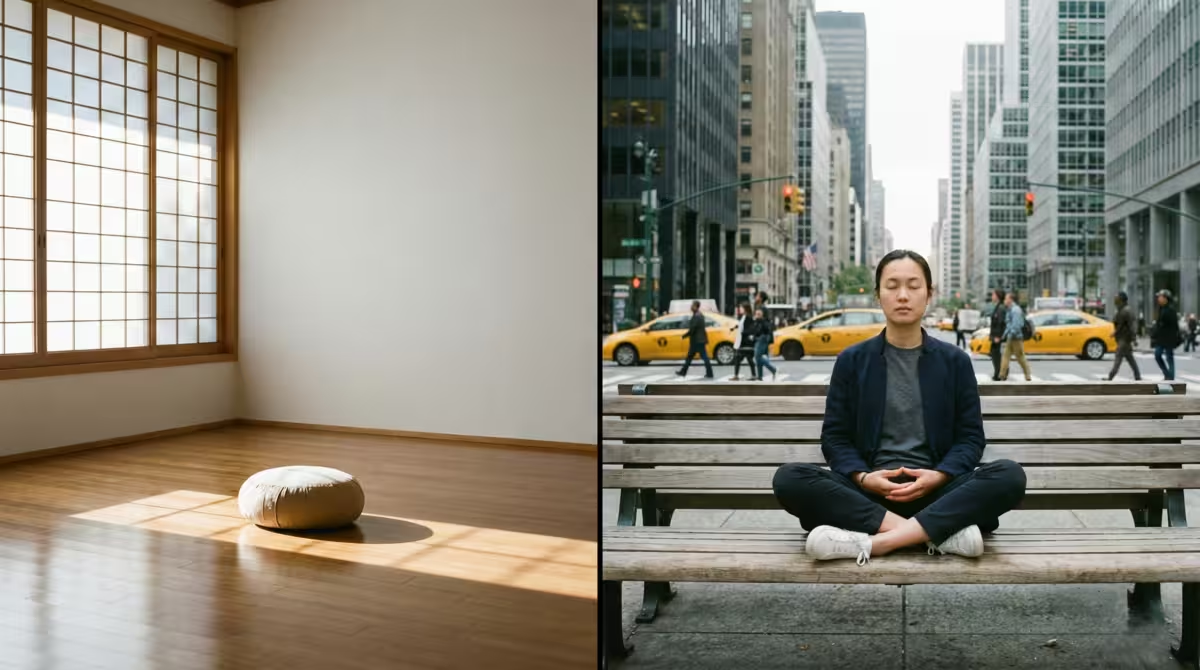
When people compare Vipassana vs mindfulness, they often overlook how different the daily experience feels, even though both are forms of meditation. Standard Vipassana retreats typically run for 10 days with about 10 hours of meditation per day, which is a very different commitment than most mindfulness courses.
- Vipassana involves intensive 10-day retreats with 10 hours of daily meditation, while mindfulness fits busy schedules through short daily sessions.
- Vipassana practitioners observe body sensations to gain insight into impermanence, whereas mindfulness provides flexible tools for tasks like walking or eating.
- Mindfulness-Based Cognitive Therapy (MBCT) helps prevent depression relapse, while Vipassana offers deep emotional resets requiring time away from work.
- 2023 and 2025 studies show both methods improve well-being, and short daily mindfulness sessions can be as effective as longer ones for psychological health.
Vipassana vs Mindfulness: Practical Comparison of Core Definitions That Matter
We find that many people use Vipassana and mindfulness as if they mean the same thing, but practically, they point to different training paths. To compare them well, we first need clear working definitions that you can test in your own life.
Vipassana, as described in our Vipassana meditation guide, is an insight practice from Buddhist traditions that trains you to observe body sensations and mental events with precision and equanimity.
You sit, feel the breath, notice sensations and thoughts, and watch them arise and pass without clinging or resisting.
Mindfulness, as we explain in our overview of what mindfulness means, is broader. It is the quality of being fully present and aware of thoughts, emotions, and surroundings without judgment, which you can apply in meditation or in daily activities like walking, eating, or working.
In practical terms, you can think of Vipassana as a structured, often retreat-based method that uses mindfulness to generate insight, while mindfulness itself is a general capacity and a family of techniques that you can integrate more flexibly into your routine.
How Vipassana Is Practiced: Structure, Intensity, and Daily Life
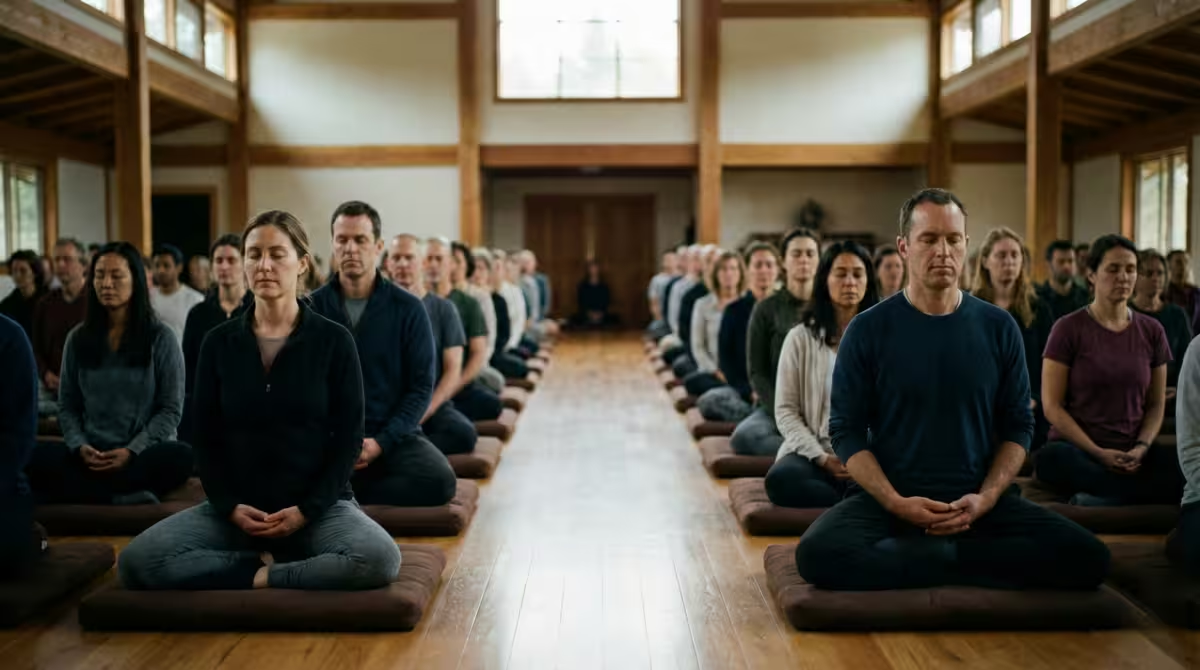
In a practical comparison, Vipassana stands out for its intensity and structure. Traditional 10-day courses often involve early wake-up times, strict silence, and roughly 10 hours of sitting and walking meditation per day, so your attention is repeatedly brought back to raw sensory experience.
We emphasize in our Vipassana introduction that the core training is to notice sensations and thoughts as temporary events.
You learn to stay with discomfort, whether it is a physical ache or an emotional wave, and to observe it closely instead of reacting automatically.
Outside of retreats, Vipassana can also become a daily discipline. Many practitioners keep a morning or evening sitting period where they simply follow the breath and scan body sensations, applying the same non-reactive awareness they cultivated on retreat.
Compared to light-touch mindfulness practices, the Vipassana path usually expects a higher level of commitment in a short period, which can lead to noticeable shifts in perception for many people but also requires careful planning and support.
Discover Your Inner Self. Join Our Self-Mastery Program.
Self-Mastery Coaching gives you the space, tools, and guidance to grow, reflect and discover your values and inner strength.
How Mindfulness Is Practiced: Flexible Tools For Everyday Life
Mindfulness practice, in contrast, is usually taught as a set of flexible tools rather than a single intensive protocol. In our mindfulness meditation overview, we describe simple exercises like following the breath, doing body scans, or observing thoughts as passing events.
From a practical standpoint, this means you can start with just 3 to 10 minutes per day. You might sit, notice your breathing, and gently redirect your attention whenever the mind wanders, or you might bring mindful awareness to daily tasks like washing dishes or commuting.
In many Western contexts, mindfulness is also woven into structured programs, such as 8-week mindfulness courses, stress reduction classes, or therapy protocols.
These programs often include weekly group sessions, guided practices, and homework assignments that help people build habits gradually.
For busy professionals or parents, mindfulness often feels more approachable because it asks for steady but modest daily time blocks rather than a single large retreat commitment.

A side-by-side look at Vipassana and Mindfulness. It highlights four practical differences in how they are practiced.
Retreats vs Courses: Time Commitment And Lifestyle Fit
When we guide people through a Vipassana vs mindfulness practical comparison, time commitment almost always becomes the deciding factor.
Traditional Vipassana retreats require you to step away from daily responsibilities for about 10 full days, which is not realistic for everyone.
On the other hand, mainstream mindfulness programs often run over weeks with shorter weekly sessions.
For example, Mindfulness-Based Stress Reduction programs are typically structured as 8 weeks of weekly 2.5-hour sessions plus a single full-day retreat, which spreads the intensity out over two months.
In practical scheduling terms, Vipassana feels like a short, intense burst that may yield deep insights, while mindfulness courses feel like a gentle but steady training that fits alongside work and family life.
Both options can be effective, but they intersect very differently with job schedules, childcare, and health constraints.
We encourage people to look honestly at their next 3 to 6 months and decide which format they could actually complete, not just which one sounds inspiring.
Mental Health Outcomes: Anxiety, Depression, And Emotional Balance
From a mental health perspective, both Vipassana and mindfulness share a core goal: helping you relate to thoughts and feelings with less reactivity. Where they differ is how quickly and in what context this training unfolds.
Our guide on meditation for anxiety focuses on accessible steps like breath awareness, grounding in body sensations, and short guided practices.
These are closer to mindfulness approaches and can be integrated into daily routines to gradually lower baseline stress and anxiety.
Vipassana retreats, by contrast, can lead to intense emotional exposure because you spend many hours per day with your own mind.
For some people, this concentrated attention leads to rapid insight and a sense of emotional cleansing, while for others it may feel overwhelming if they lack ongoing support afterward.
Mindfulness-based clinical programs, such as MBCT, also explicitly target recurrent depression and relapse prevention.
They combine mindfulness exercises with cognitive therapy techniques, giving people practical tools to notice and reframe unhelpful thought patterns in a structured setting.
Faq About Vipassana and Mindfulness
Vipassana is usually taught as an intensive, retreat-based insight practice, while mindfulness is often offered as shorter daily practices or structured programs.
Mindfulness is generally easier to integrate into daily life through brief, consistent sessions that fit around work and family commitments.
Traditional teaching emphasizes 10-day retreats, but foundational techniques can still be learned and practiced at home with discipline and guidance.
Mindfulness has more structured clinical applications and is commonly used within therapeutic and mental health programs.
Daily mindfulness practices are often more immediately accessible and adaptable for managing stress and anxiety than committing to a full retreat.
Yes. Consistent practice of either approach has been shown to influence brain structure and function over time.
Gentle breathing techniques can stabilize attention and make both Vipassana and mindfulness practices more sustainable, especially for beginners.
What Research Suggests About Vipassana vs Mindfulness
We pay close attention to emerging research because it helps ground personal reports in measurable outcomes.
For Vipassana, a 2025 synthesis across multiple studies found moderate evidence that more intensive retreats tend to produce stronger and longer-lasting benefits, even though many studies still use relatively small samples.
One 6-day Vipassana insight retreat study reported that peak experiences were common among retreat participants and that their positive impact remained strong 2 weeks later, which aligns with many practitioners’ reports of lasting perspective shifts.
On the mindfulness side, an online trial from 2023 compared different daily practice doses and types, such as 10-minute versus 30-minute sessions and sitting versus movement practices.
Interestingly, participants across all conditions showed well-being improvements, and no single practice dose or type clearly dominated others, which suggests that consistency may matter more than duration for many people.
Together, these findings support a practical view, intensive Vipassana retreats may accelerate change over a short period if you can commit, while consistent mindfulness practice, even in small daily doses, can offer steady psychological benefits over time.
Techniques Compared: Breath, Body, Thoughts, And Emotions
At the technique level, Vipassana and mindfulness share certain building blocks, like anchoring attention on the breath and scanning body sensations. However, how these tools are used in practice can feel quite different.
In Vipassana, attention often moves systematically through the body, noticing subtle sensations and treating them all with equal equanimity.
Pain, pleasure, tingling, or numbness are all observed as passing phenomena, which gradually reveal the impermanent and impersonal nature of experience.
Mindfulness techniques, as outlined in our mindfulness and general meditation guides, may focus more on recognizing patterns of thought and emotion, such as noticing when the mind is planning, remembering, or judging.
You practice labeling these mental states and gently returning to the present without pushing anything away.
Vipassana and mindfulness both use open awareness to observe anything that enters your consciousness. Vipassana frames this technique as explicit insight training.
Mindfulness programs often connect these same skills to practical results like better focus, stress reduction, and emotional regulation.
Daily Integration: From Cushion To Work, Family, And Relationships
One of the most important parts of a Vipassana vs mindfulness practical comparison is how well each approach carries over into normal life. After a Vipassana retreat, many people report that conversations feel clearer, reactivity drops, and daily problems feel less solid, at least for a period.
However, integrating these insights requires ongoing practice. Without regular sitting or mindful check ins, retreat benefits may fade as old habits resurface, so we encourage retreat participants to commit to a realistic daily schedule once they return home.
Mindfulness training, in contrast, often builds integration into the program from day one. Exercises like mindful walking, mindful eating, and short pauses at work are core parts of many mindfulness curricula, so the transition from formal practice to daily life is more continuous.
For people whose main goal is to show up differently in work, parenting, or relationships, a daily mindfulness plan that includes simple techniques like three-minute breathing spaces or body awareness check-ins can offer steady, visible changes over time.
Subscribe to Create Higher Vibrations!
Get Inspiration and Practical advice straight to your inbox.
Supportive Practices: Breathing, Movement, And Hybrid Approaches
In real life, few practitioners follow a single script forever. Many combine elements of Vipassana and mindfulness with supportive tools like intentional breathing, movement, or therapy-based approaches to create a sustainable practice.
Resonant breathing, for example, is a simple method where you breathe at a slow, steady rhythm that supports nervous system balance.
Practicing this for just a few minutes before sitting can make either Vipassana-style body scanning or mindfulness-based thought observation feel more stable and grounded.
Hybrid programs like MBCT explicitly integrate mindfulness into cognitive therapy frameworks.
Participants learn to notice thoughts as events in the mind, question their accuracy, and respond with more skill, which makes the training very practical for people dealing with depression or chronic negative thinking.
From our perspective, supportive practices are not distractions from insight or presence; they are scaffolding that can help you stay consistent long enough to experience the deeper benefits of whichever primary method you choose.
Choosing Between Vipassana And Mindfulness
To decide between Vipassana and mindfulness in practice, we suggest starting with a few concrete questions about your current life context. This is less about which method is superior and more about which one you can truly sustain.
| Factor | Vipassana Retreat Path | Mindfulness Daily Practice Path |
|---|---|---|
| Time available in next 3 months | Can you commit 10 days fully away from work and family? | Can you commit 10 to 20 minutes per day plus a weekly group or class? |
| Main goal | Stress reduction, emotional regulation, performance, and mental health support | Comfortable with silence, intensive inner work, and peer group on retreat |
| Support system | Can you commit 10 to 20 minutes per day, plus a weekly group or class? | Prefers discussion, coaching, or therapeutic support along the way |
| Health considerations | Physically and psychologically able to handle long daily sittings | Needs adaptable, paced practice that can be paused or adjusted easily |
A Vipassana retreat suits you if you want deep insight and can take a break from your usual duties. Choose a daily mindfulness practice or a structured class if you prefer to improve your mood or lessen worry. This path also works well to support therapy you already do.
We often see people begin with mindfulness to build basic stability and then explore Vipassana when life circumstances allow for more immersive work, so the choice does not have to be permanent or exclusive.
Conclusion
In a direct Vipassana vs mindfulness practical comparison, the methods share a foundation in present moment awareness but diverge sharply in intensity, format, and day-to-day impact.
Vipassana typically offers an immersive, retreat-based insight training that can catalyze deep shifts over a short period, while mindfulness emphasizes flexible, sustainable practices that you can weave into ordinary life.
From our perspective, the best approach is the one you can actually practice with sincerity and consistency. Commit to regular practice, whether intensive Vipassana, structured mindfulness, or a blended path using tools like resonant breathing and MBCT, and let the results unfold.