
Rogue Psychological Patterns: Why You Act Like Someone You Don’t Recognize

You catch yourself checking your partner’s location. Not because they’ve given you a reason to. Your thumb does it. Opens the app, refreshes, closes it.
You don’t remember deciding to do it. You don’t remember when you started. And standing there, phone in hand, you think: “Who the f*ck am I right now?”
If you’ve noticed yourself doing things that don’t make sense, reacting in ways that feel borrowed from someone else, you’re not losing your mind.
You’re looking at the aftermath of a nervous system that adapted to survive something it was never built to survive.
Rogue psychological patterns are automatic behavioral responses that develop after prolonged exposure to narcissistic abuse. They aren’t signs of a new personality.
They’re survival mechanisms your nervous system built to handle an unpredictable, threatening environment. By the end of this, you’ll understand exactly why you’ve become someone you don’t recognize.
More importantly, you’ll know which parts were armor, which were injuries, and which were the only version of you that could exist inside that cage.
Narcissistic abuse leaves deep emotional scars. It rewires your behavior at the nervous system level. You developed strange automatic patterns. These patterns do not represent character flaws. They operate as survival responses. The abuser conditioned you through an unpredictable cycle of rewards and punishments. You must separate your armor from your injuries. This separation begins your recovery.
What Are Rogue Psychological Patterns?
Rogue psychological patterns are automatic behavioral responses that develop after prolonged exposure to narcissistic abuse.
Rather than being signs of a flawed or entirely new personality, they function as conditioned survival mechanisms that your nervous system built to navigate an unpredictable, threatening environment.
These survival responses frequently manifest as:
The word “rogue” fits because these patterns operate without your authorization. You didn’t choose them. They installed themselves quietly, the way a phone updates overnight. You wake up one day, and your reactions don’t match your values.
Here’s what nobody tells you: narcissistic abuse doesn’t just hurt you. It reprograms you. Your nervous system got retuned for an environment where danger was constant but invisible.
Where the same person could be warm one moment and cruel the next. Your brain did what brains do. It adapted. It built new pathways. It prioritized survival over authenticity. And now, in a world that’s actually safe, those pathways are still firing.
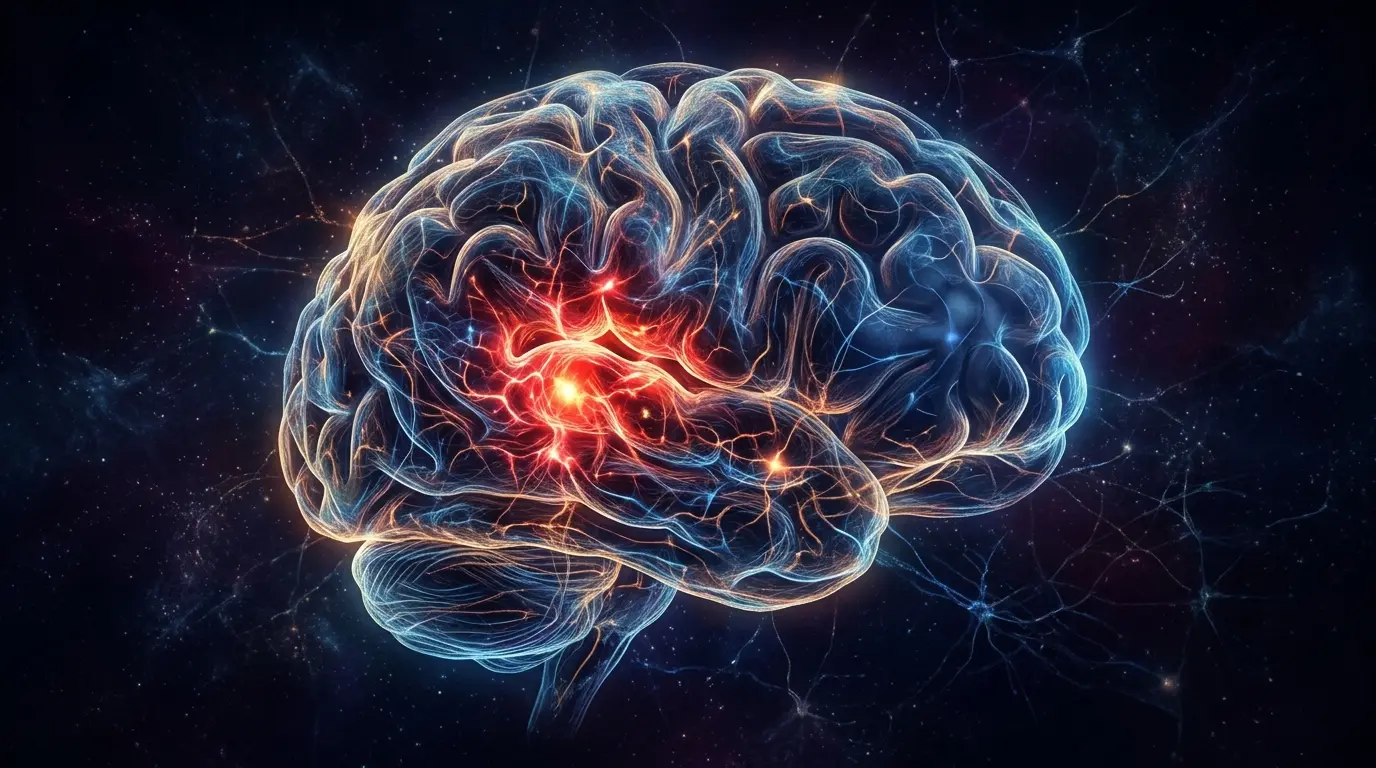
Why Do I Act So Different Now? The Neuroscience of Behavioral Change
After narcissistic abuse, your brain adapted to an unpredictable, threatening environment by rewiring its threat-detection and reward systems. Behaviors like hypervigilance, people-pleasing, emotional numbness, or sudden aggression aren’t character flaws.
They’re survival responses conditioned through repeated intermittent reinforcement. Your nervous system learned to prioritize safety over authenticity, and those patterns persist because the neural pathways remain active.
The mechanism behind this rewiring has a name: intermittent reinforcement. It’s an operant conditioning principle where unpredictable rewards create stronger behavioral patterns than consistent rewards.
It’s the same mechanism that makes slot machines addictive. It’s also the mechanism behind trauma bonding, the intense attachment that keeps survivors tied to their abusers. You don’t win every time. But the unpredictability keeps you pulling the lever.
In a narcissistic relationship, the “lever” is your attempt to get love, approval, or basic safety. Sometimes it works. Sometimes your partner is warm, attentive, exactly who you fell for.
Then, without warning, they’re cold. Dismissive. Cruel. You can’t predict which version you’ll get, so you try harder. You scan for clues. You become a full-time student of someone else’s moods.
Your dopamine system processes this cycle the same way it processes gambling addiction. Research on reward prediction error shows that the brain releases more dopamine in response to unexpected rewards than to expected ones.
The narcissist’s occasional warmth isn’t just comforting. It’s neurologically intoxicating precisely because it’s rare. Research on the neural mechanisms of negative behavior confirms that unpredictable reward-punishment cycles create stronger behavioral conditioning than consistent abuse alone.

Meanwhile, your amygdala is running on permanent overdrive. In a predictable environment, the amygdala activates when there’s a real threat and calms down once the threat passes.
In a narcissistic environment, the threat is constant but invisible. Your amygdala never gets the “all clear” signal. Over time, this chronic activation rewires it to treat everything as potentially dangerous.
The prefrontal cortex, responsible for decision-making and self-trust, gets suppressed under chronic stress. Every choice you made in the relationship was questioned, mocked, or punished.
Your brain learned: my judgment is unreliable. Don’t trust it. A CBT formulation of narcissistic dysregulation maps exactly how this suppression manifests as decision paralysis and eroded self-trust in survivors.
Your autonomic nervous system gets stuck in survival mode. According to polyvagal theory, the nervous system has three states. Ventral vagal is safe and social. Sympathetic activation is fight or flight. Dorsal vagal shutdown is freeze-and-collapse.
Narcissistic abuse keeps you bouncing between the last two. You rarely get the state where you feel genuinely safe. The result is a nervous system that was retuned for war, trying to operate in peacetime. The threat is gone, but the program hasn’t closed.
Discover Your Inner Self. Join Our Self-Mastery Program.
Self-Mastery Coaching gives you the space, tools, and guidance to grow, reflect, and discover your values and inner strength.

The Behavioral Inventory: 9 Patterns You Didn’t Choose
Survivors of narcissistic abuse commonly develop specific behavioral patterns. These include compulsive threat-scanning, automatic people-pleasing, and emotional flashbacks.
Also, decision paralysis, loss of preferences, compulsive checking, reactive aggression, dissociation, and a persistent inability to feel safe. Each pattern served a purpose during the relationship.
Research on emotional reactions during and after interpersonal trauma documents how these responses correlate with the duration and intensity of the abusive dynamic.
These aren’t symptoms. They’re adaptations. Each one kept you alive, or kept you sane, or kept you connected to the only source of safety available.
Understanding what each pattern actually is matters more than what it looks like from the outside. That understanding is the first step to deciding which ones to keep and which ones to retire.
Recent research on the fight, flight, fawn, and freeze responses argues that these survival states aren’t discrete categories. They’re fluid, overlapping responses.
Your nervous system shifts between them based on the perceived nature of the threat. This matters because it means your patterns aren’t fixed traits. They’re states your system learned to enter. And states can be exited.
1. Hypervigilance (Threat-Scanning on Permanent Overdrive)
You notice the slight change in someone’s tone before they finish the sentence. You read the room the moment you walk in. You know who’s upset, who’s performing, who’s about to explode.
You can’t relax at dinner parties. Your body is a radar dish that never powers down.
This isn’t anxiety. It’s a survival response calibrated in an environment where missing a cue meant danger. Your nervous system learned to prioritize threat detection above everything else.
The problem is that it’s still running that program in environments where the threat level is zero.
2. The Fawn Response (Automatic People-Pleasing)
You say yes when you mean no. You anticipate needs before they’re expressed. You smooth over conflict before it starts, not because you’re naturally accommodating, but because conflict feels life-threatening. You’ve lost track of what you actually want.
The fawn response, identified by therapist Pete Walker, is the fourth trauma response alongside fight, flight, and freeze. It develops when your brain learns that the safest strategy is to become whatever the threat needs you to be.
You’re not weak. You’re a strategist who learned that compliance was the only reliable way to stay safe. We cover the fawn response in detail in our dedicated guide.
3. Emotional Flashbacks (Sudden, Disproportionate Reactions)
Something small happens. A tone of voice, a look, a text that doesn’t get answered. Suddenly you’re drowning in an emotion that doesn’t match the moment.
It’s not a memory. There’s no visual flashback. Just the feeling of being small, powerless, and alone.
Emotional flashbacks are your body reliving the emotional state of past trauma without the visual component. They feel disproportionate because they are, to the present moment.
But they’re perfectly proportioned to the past moment your nervous system is actually responding to.
4. Decision Paralysis (Inability to Trust Your Own Judgment)
You stand in the grocery store for ten minutes trying to choose between two cereals. You ask five friends what you should do about a situation you already know the answer to. You second-guess every choice.
Your judgment was systematically undermined. Every decision you made was questioned, mocked, or used against you. Your brain learned: my judgment is unreliable. The prefrontal cortex is still recovering from years of being told it was wrong.
5. Compulsive Checking and Controlling Behaviors
You check your partner’s location. You monitor social media. You need to know where people are, what they’re doing, who they’re with. The shame of this is acute because you know this is what they did to you.
But here’s what’s actually happening: your nervous system learned that information is safety. Not knowing what the narcissist was planning was the most terrifying part. So you developed a compulsive need to know. It’s not jealousy. It’s terror wearing a disguise.
6. Loss of Identity and Preferences
You don’t know what you like anymore. Someone asks what you want for dinner, and you genuinely don’t know. You’ve become a mirror, reflecting what others want to see because your own reflection went dormant.
When your preferences were systematically dismissed or punished, your brain learned: my desires are not safe to express. So they went underground. They’re not gone. They’re waiting.
The process of reclaiming your identity after narcissistic abuse starts with reconnecting with these dormant parts of yourself.
7. Reactive Aggression (The Pattern Nobody Talks About)
You snap. You control. You get jealous. You hear your abuser’s words coming out of your mouth, and you can’t stop them. The shame is so heavy that you sometimes think: maybe I am just like them.
You’re not. Reactive aggression is fundamentally different from predatory aggression. Predatory aggression seeks to dominate. Reactive aggression seeks to survive.
When your reality was systematically denied, you grip harder to your own. When you were made to feel powerless, power became the only thing that felt safe.
This pattern isn’t evidence of who you are. It’s evidence of what was done to you. If you’ve experienced reactive abuse, being pushed to explode and then blamed for it, you know how deeply this pattern cuts.
8. Dissociation During Conflict
Someone raises their voice, and you go numb. Not calm, numb. You feel like you’re watching from outside your body. People think you don’t care. Actually, you care so much that your system shuts down to protect you.
This is dorsal vagal shutdown, your nervous system’s last-resort survival mode. When fight, flight, and fawn all failed, your system learned to disconnect. It’s not a choice. It’s a circuit breaker tripping to prevent a fire.
Our guide to dorsal vagal freeze symptoms covers this survival mode in depth.
9. The Phantom Limb (Craving the Relationship You Know Was Toxic)
You miss them. You want to text them. You romanticize the good times. You know the relationship was destroying you. And still, the craving is physical. It lives in your chest, your stomach, your fingers reaching for your phone.
This isn’t love. It’s dopamine withdrawal. Your brain was conditioned by the most powerful reinforcement schedule known to behavioral science: variable ratio reinforcement.
Your brain isn’t craving the person. It’s craving the unpredictable reward cycle that person controlled. The craving is a withdrawal symptom, not a sign you made a mistake.
Pattern Reference Table
| Pattern | What It Looks Like | What It Represents | How It Formed |
|---|---|---|---|
| Hypervigilance | You cannot relax. You constantly scan your environment. | Your threat detection stays on permanent overdrive. | Unpredictable danger trained you to remain constantly alert. |
| Fawn Response | You always say yes. | You use this survival strategy to prevent conflict. | Compliance represented your safest response. |
| Emotional Flashbacks | You experience sudden intense reactions. | Your body relives past emotional states. | Your nervous system associates triggers with danger. |
| Decision Paralysis | You cannot make choices. | The abuser systematically undermined your judgment. | They punished or mocked every decision. |
| Compulsive Checking | You monitor locations and messages. | You seek information as a safety behavior. | The unknown terrified you the most. |
| Identity Loss | You do not know your own desires. | Your preferences went dormant for survival. | Expressing your wants felt unsafe. |
| Reactive Aggression | You snap at others. You exhibit controlling behavior. | You view power as safety. | Powerlessness created a core wound. |
| Dissociation | You go numb during conflict. | Your mental circuit breaker trips to prevent overload. | Fighting and fleeing and fawning all failed. |
| Phantom Limb | You miss the abuser. | You experience dopamine withdrawal from conditioning. | Unpredictable reinforcement created a deep bond. |
Can Narcissistic Abuse Permanently Change Who You Are?
Narcissistic abuse can create deep behavioral patterns that feel like personality changes, but your underlying personality remains intact.
What changes are your conditioned responses, your nervous system’s baseline state, and your access to parts of yourself that went dormant for survival. These are functional changes, not structural damage.
They respond to targeted recovery work, including somatic therapy, EMDR, and nervous system regulation.
Here’s the uncomfortable truth most recovery articles won’t say: some of these patterns will persist. Not all of them. Not forever. But the idea that you’ll eventually “go back to normal” is a myth. You won’t go back. You’ll go forward.
The question isn’t “will I ever be the same?” The question is: which patterns are still protecting you, and which ones are just running on empty?
As the British Psychological Society noted, too much focus on understanding the narcissist is itself part of the problem. At some point, the energy has to shift from analyzing what they did to rebuilding what was lost.
Your hippocampus can shrink under chronic stress. Research shows reductions of up to 20% in abuse survivors. This is why you have gaps in your memory, why time feels distorted.
The memory-encoding system was suppressed during the period of highest threat. This connects to the brain fog many survivors experience.
Your amygdala can remain hyperactive for months or years after the threat has ended. This is why you still flinch at raised voices, why you still scan rooms.
The amygdala doesn’t update its threat assessment based on new information. It updates based on repeated experience of safety, and that takes time.
But here’s what the research also shows: neuroplasticity means the brain can form new neural pathways at any age. The pathways formed during abuse are not permanent.
They can be actively restructured through repeated new experiences. Therapies like EMDR help reconsolidate traumatic memories. Somatic approaches work with the body’s stored trauma.
You’re not a different person. You’re the same person who learned to survive in a war zone. And now you need to learn, slowly, imperfectly, that the war is over.

Why Did I Become Controlling, Jealous, or Aggressive?
Some survivors of narcissistic abuse develop controlling, jealous, or aggressive behaviors that mirror their abuser’s. This is the pattern that carries the most shame.
But these behaviors aren’t evidence that you’ve become like them. They’re evidence that your nervous system learned power is the only form of safety, and control is the only way to prevent being controlled again.
This is the section to read slowly. Maybe twice. Because this is the pattern that makes survivors question everything: their recovery, their identity, their right to call themselves a victim.
Reactive abuse is what happens when someone pushes you past your capacity to absorb it, then blames you for exploding. The narcissist provokes, provokes, provokes. When you finally react, they point and say, “See? You’re the abusive one.” And the worst part is, you believe them.
But reactive aggression and predatory aggression are not the same thing. Predatory aggression seeks to dominate. Reactive aggression is a cornered animal fighting for its life.
Your abuser’s aggression was strategic, designed to control. Your aggression is a survival response, designed to reclaim agency.
When your reality was systematically denied, you grip harder to your own. When you were made to feel powerless, power became the only thing that felt safe. This doesn’t make the behavior okay. It makes it understandable. And understanding it is the only way to change it.
Put it down. You’re not them. You’re someone who was pushed past their limit and responded the only way their nervous system knew how.
Subscribe to Create Higher Vibrations!
Get Inspiration and Practical advice straight to your inbox.
How Do I Start Reclaiming Who I Was?
Reclaiming yourself after narcissistic abuse isn’t about returning to your old baseline; it’s a complete reconstruction. You are building something entirely new using materials that were forged in a fire you didn’t choose.
To transition from surviving to living, you have to stop treating your survival responses as character flaws. Instead, look at recovery as a step-by-step integration process. Here is your actionable roadmap to reclaiming your agency.
Step 1: Separate Your Armor from Your Injuries
Before you can change your behavior, you need to change how you view it. Break your automatic responses into two distinct categories:
Step 2: Calm the Body with Somatic Practice
Trauma doesn’t live in your brain as a concept; it lives in your body as a physical reality (think braced shoulders, shallow breathing, and a clenched jaw). You cannot simply “think” your way out of a physical state.
Step 3: Expand Your Window of Tolerance
Nervous system regulation is the absolute foundation of recovery. Before you can safely process deep past trauma, your autonomic nervous system must remember how it feels to be safe in the present.
Step 4: Reprocess the Trauma with EMDR
Once your nervous system has a foundation of safety, you can begin updating the old mental software that keeps triggering your survival responses.
Step 5: Begin “Micro” Identity Reconstruction
When an abuser systematically erases your preferences, rebuilding your identity feels like learning a foreign language. Do not try to reinvent your entire life overnight. Start impossibly small.
⚠️ What to Expect: The Non-Linear Reality
Recovery is not a straight line. You will have days when the old software fires for no reason. You will catch yourself compulsively checking a location, or realizing you just “fawned” your way through a conversation.
This is not failure; this is the process. > Imagine standing in your kitchen. Someone walks in, and your shoulders immediately lock up. The old program is running. But this time, instead of judging yourself, you simply notice it: “Oh. There it is. The old alarm.” You let it ring, and then you let it quiet down.
In that exact moment of conscious awareness, your neural pathway shifts forward into something new.
The War is Over
Your nervous system just hasn’t received the memo yet. But it will, one recognized pattern and one chosen response at a time. You aren’t going back to who you were.
You are moving forward to who you were always supposed to be.