
Sacral Chakra Awakening: Signs, Symptoms, and How to Heal Svadhisthana
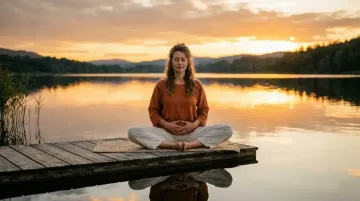
Sacral chakra awakening is the process of activating and rebalancing Svadhisthana, the second energy center located just below the navel. This chakra governs emotions, creativity, pleasure, and relational intimacy.
When it begins to open, people commonly notice warmth in the lower abdomen, emotional waves surfacing, and a renewed pull toward creative expression and sensory joy.
You might not call it a chakra awakening at first. You might call it “finally feeling something again” after years of going through the motions.
Or you might notice your body softening during a yoga class, tears arriving without invitation, or ideas flowing faster than you can write them down. That is often how this energy center announces itself.
If any of that sounds familiar, you are in the right place. This guide walks you through what sacral chakra awakening is, what it feels like, what blocks it, and the practices that genuinely help.
- Your sacral chakra sits below your navel. This center governs how you feel, create, and connect. Life feels fluid when this center opens. Life feels flat or frozen when this center blocks.
- Blockages trace back to emotional suppression, shame, or unprocessed experiences. Recognizing your pattern starts your change.
- Heal your sacral chakra through your body. Use movement, breath, creative expression, and sensory practices. These methods address the water element nature.
- Use multiple methods. A layered approach addresses physical, emotional, and energetic dimensions together. This strategy creates deep shifts.
What Is the Sacral Chakra and Why Does It Matter?
The sacral chakra, or Svadhisthana in Sanskrit, is the second of seven main energy centers in the body. Located just below the navel, it governs emotional balance, creativity, pleasure, and sexual energy.
When this chakra is open and balanced, you feel emotionally fluid, joyful, and creatively alive. When it is blocked, life can feel flat, rigid, or overwhelming.
The name Svadhisthana translates loosely as “one’s own place,” which says a lot. This is the energy center where your personal sense of self, your desires, your feelings, and your relationship to pleasure all live. It is not separate from your psychology. It mirrors it.
Associated with the water element, the sacral chakra carries the quality of flow. Think of how water moves: it adapts, it yields, it finds its way around obstacles. That is exactly what a healthy sacral chakra allows you to do emotionally.
The color associated with this center is orange, vibrant and warm, and its linked sense is taste, reflecting its deep connection to the pleasure of lived experience.
In the body, Svadhisthana sits at the pelvic region, just above the root chakra (which grounds you in safety and survival). That positioning matters. The root chakra gives you a foundation to stand on; the sacral chakra gives you the freedom to feel and create from that foundation.
As someone who has worked with chakra-based healing frameworks for years, I find the sacral chakra is often the first place people sense “something is off,” even when they cannot name it.
The flatness, the creative drought, the sense of being alive but not quite living. That is Svadhisthana asking for attention.
The sacral chakra is not a luxury energy center. It is where your capacity to feel deeply, create freely, and connect genuinely actually lives.

What Are the Signs That Your Sacral Chakra Is Awakening?
When the sacral chakra begins to awaken, people commonly notice a warmth or tingling sensation in the lower abdomen, a surge of creative energy, heightened emotional awareness, and a renewed interest in pleasure and sensory experience.
These signs can feel intense at first because dormant emotional material is surfacing for release and integration.
The first thing people often notice is physical. A gentle heat below the navel, a sense of aliveness in the hips, or a tingling that pulses during meditation or yoga. This is not something to be alarmed by. It is the body responding to energy that has started moving again.
Emotionally, an awakened sacral chakra can bring up material that has been sitting quietly for a long time. You might cry without knowing exactly why, feel unusually tender, or find yourself longing for creative expression in ways you had forgotten. This is not a breakdown. It is a release.
Common signs of sacral chakra awakening include:
As someone who works with body-centered healing, I have watched people burst into tears mid-hip-opener in yoga and then look up with wide, surprised eyes.
“I don’t even know what that was about,” they say. Most of the time, it does not need to be about anything specific. The body released what it was ready to let go.
The signs of sacral awakening are often quiet at first, then undeniable. Trust them.
What Does a Blocked Sacral Chakra Feel Like?
A blocked sacral chakra shows up as emotional numbness, creative stagnation, difficulty feeling pleasure, and struggles with intimacy or personal limits.
It can appear as either a deficiency (shutdown, disconnection, rigidity) or an excess (emotional overwhelm, impulsive behavior, poor personal limits). Both patterns point to an energy flow that needs attention and care.
Think about the last time you felt genuinely excited about something you were creating. Or the last time you let yourself cry at a film and actually felt it. If those feel like distant memories, the sacral chakra may be asking for care.
A deficient pattern often looks quiet from the outside. You move through your days efficiently, tick every box, and still feel oddly hollow. Creative ideas feel forced. Pleasure feels like something that happens to other people.
Intimacy feels uncomfortable, even threatening. This is the sacral chakra in shutdown mode.
An excessive pattern looks different but comes from the same root imbalance. Instead of numbing out, you might feel emotionally flooded, swinging between highs and lows, struggling to maintain personal limits, or reaching for external stimulation (food, screens, drama) to feel something real. The energy is moving, but without direction or grounding.
Common root causes of sacral chakra blockage include:
Your body holds these experiences. Body-based research in integrative health settings points to the fact that emotional experiences are stored not just in the mind but in physical tissues, particularly in the hips and pelvic region, the exact area of the sacral chakra.
This does not mean you are broken. It means your system has adapted to protect you. Healing is about creating conditions where it can finally let go.

What Causes Sacral Chakra Imbalance?
The sacral chakra becomes imbalanced when emotional experiences go unprocessed, particularly those tied to shame, guilt, trauma, or conditional love in early life.
Life circumstances that suppress creative expression, punish emotional honesty, or violate bodily autonomy tend to disrupt the natural flow of this second chakra. Healing begins by understanding these patterns without blame.
Most people who come to sacral healing have spent years not knowing there was a name for what they were feeling.
They knew they could not finish creative projects. They knew intimacy felt draining. They knew something was tight somewhere in the middle of them.
One of the most useful frameworks for understanding this is the concept of somatic memory, the idea that the body stores emotional experience alongside cognitive memory.
Peter Levine, the developer of somatic experiencing (a body-centered trauma therapy), has written at length about how unresolved stress leaves a physical imprint, one that talk therapy alone often cannot fully reach.
Bessel van der Kolk’s widely cited work in trauma research makes a similar case, documenting how the body holds what the mind cannot always articulate.
This is not a reason to feel overwhelmed. Most people carry some degree of sacral imbalance because most people grew up in environments where emotions were complicated. It is simply a starting point.
How Do You Awaken and Heal the Sacral Chakra?
Healing the sacral chakra is a body-centered, emotion-friendly process. It works best when it combines movement, creative expression, emotional release, and mindfulness practices.
A layered approach that addresses the body, emotion, and energy simultaneously tends to produce the deepest and most lasting results. You do not need to choose just one method.
Subscribe to Create Higher Vibrations!
Get Inspiration and Practical advice straight to your inbox.
Yoga and Movement Practices
Hip-opening yoga poses are among the most direct ways to release stored tension in the sacral chakra region. Poses like Pigeon Pose, Goddess Pose, and gentle hip circles encourage the body to let go of stagnant energy.
Fluid movement, such as dance or water-based bodywork, also helps restore the water-element quality of flow.
If you have ever done Pigeon Pose and felt an unexpected wave of emotion, you have experienced why movement matters here. The hips hold stress. This is not mysticism; it is something yoga practitioners and somatic therapists both observe consistently.
Key poses to explore:
Free movement, ecstatic dance, and structured dance therapy are also worth exploring. The sacral chakra does not want technique; it wants permission to move. Give your body that permission, and you might be surprised at what follows.

Meditation and Breathwork for Sacral Healing
A focused sacral chakra meditation typically involves visualizing a warm, vibrant orange light in the lower abdomen, expanding gently with each breath.
Breathwork moves prana (life force energy) through the energy channels, clearing stagnation at the level of the second chakra. Even five to ten minutes daily can begin to soften long-held emotional tension.
Here is a simple practice to start with:
- Sit comfortably with your spine long and your hands resting on your lower abdomen
- Close your eyes and take three slow, full breaths into your belly
- Visualize a warm orange glow just below your navel, two to three inches in
- With each inhale, allow that light to expand; with each exhale, release any tension held there
- Silently or aloud, repeat the bija mantra “VAM” (pronounced “vum”), the seed sound of Svadhisthana
- Continue for five to ten minutes, staying curious about any sensations or emotions that arise
Alternate nostril breathing (Nadi Shodhana) is also useful for balancing emotional energy when you feel reactive or disconnected. It is subtle but genuinely effective for the nervous system.
Discover Your Inner Self. Join Our Self-Mastery Program.
Self-Mastery Coaching gives you the space, tools, and guidance to grow, reflect and discover your values and inner strength.
Affirmations and Journaling for Emotional Release
Affirmations for the sacral chakra work by directly challenging the shame, guilt, and self-denial that create blockages. Statements like “I embrace my creativity,” “I deserve pleasure,” and “My emotions are safe to feel” can gradually reprogram deeply ingrained beliefs when used consistently.
Journaling adds depth by allowing blocked feelings to surface and be witnessed.
Affirmations worth trying:
Pair them with journaling prompts that ask the harder questions:
Consistency matters more than perfection here. A 21-day journaling practice, even when imperfect, builds new emotional pathways.
Think of it less as homework and more as a long-overdue conversation with a part of yourself that has been waiting to be heard.

Crystals, Sound, and Sensory Healing Tools
The sacral chakra responds well to sensory healing tools because it is the energy center most connected to the physical experience of being alive.
Orange and warm-colored crystals, specific sound frequencies, and water-based rituals all work with the natural resonance of this chakra to restore flow.
Crystals to explore:
Sound healing options:
Water and sensory rituals:
As someone who has incorporated water rituals into my own practice for years, I can say that even something as simple as a warm bath with orange essential oil (ylang-ylang, orange, or jasmine all work well) creates a tangible shift in how the body feels.
It is not about magic. It is about signaling to the body that it is safe to relax and receive.
The National Center for Complementary and Integrative Health acknowledges energy-based healing approaches as part of the broader spectrum of integrative health practices, a recognition that these tools are gaining serious attention in mainstream wellness contexts.
The body is the doorway. Sensory practices open it.
How Does Sacral Chakra Healing Connect to Trauma and Emotional Recovery?
The sacral chakra holds the energetic imprint of emotional and relational trauma, particularly experiences tied to shame, violation, or suppressed feelings.
Healing this energy center is not just a spiritual exercise; it runs parallel to trauma-informed therapeutic work, helping people reconnect with the body, reclaim the right to feel, and rebuild a sense of safety in emotional expression.
The language of trauma therapy and chakra healing often describes the same territory from different angles. Both acknowledge that emotional suppression has a physical home in the body.
Both recognize that healing is not purely cognitive. And both point to the body’s capacity to restore itself when given the right conditions.
Frameworks like somatic experiencing and expressive arts therapy naturally complement sacral chakra work.
Body-based research in integrative health settings continues to document the relationship between physical tissue, emotional memory, and healing outcomes, a relationship that chakra practitioners have been working with for centuries.
As someone who has sat with clients processing deep emotional material alongside spiritual healing practices, I have seen that creative shutdown and emotional numbness often begin to lift when body-centered chakra practices are added alongside traditional therapy.
Neither approach alone does everything. Together, they address more layers.
A few important points to keep in mind:
Healing the sacral chakra is, at its core, the work of coming back into your emotional body and deciding it is safe to be there.
How Long Does It Take to Open the Sacral Chakra?
There is no fixed timeline for sacral chakra awakening. Some people notice shifts within days of beginning consistent practice; for others with deeper patterns of suppression or trauma, it is a gradual unfolding over months.
What matters more than speed is consistency, patience, and a willingness to stay with what surfaces rather than push through it.
This was a lesson I had to learn personally. Early in my practice, I wanted a clear arc: begin, do the work, arrive. What I found instead was that the sacral chakra tends to open in spirals, not straight lines.
You will feel like you have broken through something, and then a few weeks later, a layer deeper will surface. That is not regression. That is how real healing works.
Factors that shape your timeline:
Early signs that healing is genuinely underway tend to be subtle. You might notice slightly less reactivity in a situation that usually triggers you. You might finish a creative project you had been circling for months. You might cry at something beautiful and feel grateful rather than ashamed.
This does not mean you are in for a long, painful process. Some people experience rapid, joyful openings. The point is simply not to measure your awakening against anyone else’s.
Key Facts About the Sacral Chakra
Your Sacral Chakra Is Not Broken
The sacral chakra is not a luxury or an abstract concept. It is the place where your capacity to feel, create, and connect lives. If that part of you has gone quiet, it did not disappear. It learned to stay small because small felt safer. That is not a flaw. That is adaptation.
Healing Svadhisthana is the work of gently undoing that adaptation, one breath, one hip opener, one honest journal entry at a time. There is no finish line.
There is only a deepening relationship with your own emotional and creative life, and the slow, steady realization that you were never too much. You were waiting for permission to feel.
If this article resonated with you, a natural next step is exploring a [hip-opening yoga sequence for emotional release], which builds directly on the movement practices described here.
If you are newer to energy work, starting from the ground up with [root chakra healing and building a grounded foundation] will give Svadhisthana the stable base it needs to truly open.
The willingness to begin is the first real shift. You have already made it.