
Citrine Meaning: The Sunshine Stone of Abundance, Confidence and Joy

Shopkeepers kept it by the till for a reason. It is the stone of getting up and going after what you want.
Key Takeaways
Citrine meaning centers on abundance, confidence, and joy. Named after the French word for lemon, this golden quartz is known as the sunshine stone and the merchant’s stone. Crystal practitioners use it to attract success, lift the mood and strengthen personal power.
Its warm color is the whole message. Learn where that color comes from, how people use the stone, and how to tell natural citrine from treated pieces.
What Does Citrine Mean?
The core meaning of citrine is warmth that turns into action. This yellow variety of quartz belongs to the same quartz family as amethyst. Its golden tones have long stood for sunlight, wealth and good fortune.
Citrine carries several nicknames, each pointing to part of its meaning.
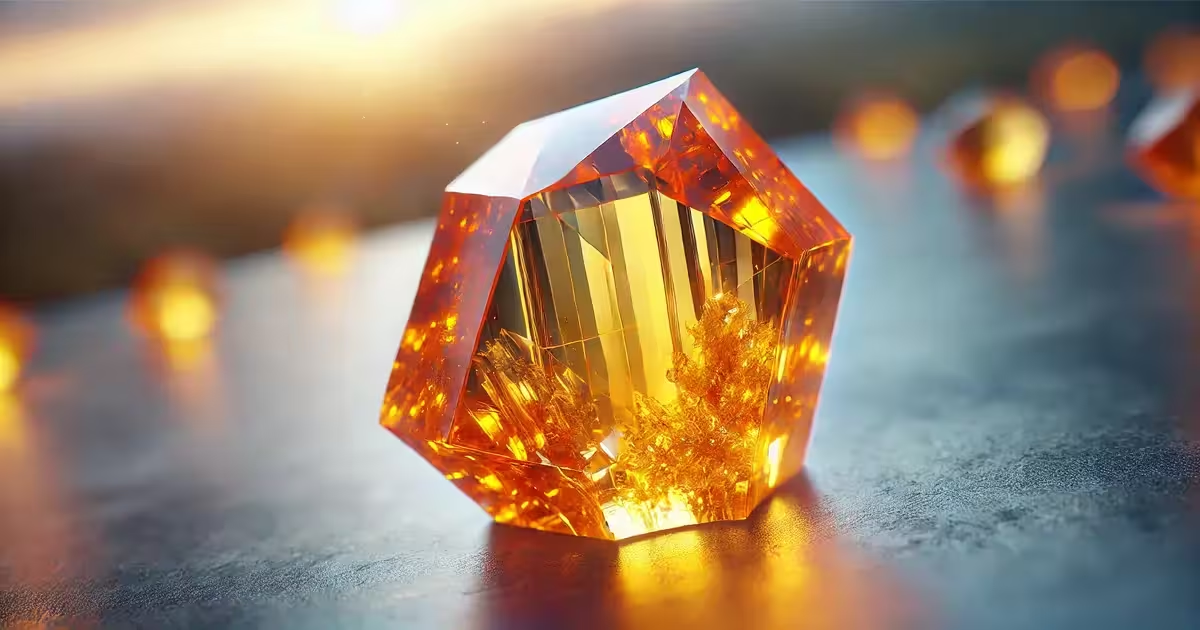
The name itself describes the color. It comes from the Latin citrus, by way of the French citrin and citron, meaning lemon. Natural citrine is often that exact pale lemon shade.
What Is the Spiritual Meaning of Citrine?
The spiritual meaning of citrine is personal power. It is the stone of stepping into your own life with confidence.
In energy work, citrine belongs to the solar plexus chakra, the center just above the navel. The solar plexus is linked to willpower, self-esteem and the courage to act. A strong solar plexus is said to feel like a steady fire in the belly.
Citrine is also tied to the sun. Many practitioners see it as a small piece of sunlight you can hold. It is used to melt heaviness, lift a low mood, even bring warmth back into a cold season of life.
That makes citrine an outward-facing stone. Amethyst turns you inward toward stillness. Citrine turns you outward toward the world.
What Are the Benefits and Healing Properties of Citrine?
Crystal healing traditions credit citrine with a bright, active set of benefits. These are the ones practitioners name most often.
These benefits come from crystal practice. No study has tested citrine for mood, money or motivation. Its value comes from what it reminds you to do, day after day.
How Do You Use Citrine for Money and Abundance?
Citrine’s link to money is its most famous use. The merchant’s stone tradition says a piece near your money helps it grow.
These are the classic money rituals.
Pair each ritual with an action. Citrine works best as a reminder to send the invoice, ask for the raise or check the budget. The stone keeps your attention on the goal. The action moves the money.
What Stones Go Well With Citrine?
Citrine pairs well with stones that either strengthen its fire or balance it. Crystal practitioners use these combinations most.
A common money set is citrine, pyrite and green aventurine kept together in a small bowl on the desk. Refresh the bowl each new moon with a cleanse. Then restate your goal.
Where Should You Place Citrine?
Citrine is an energizing stone, so place it where you want more light and motivation.
Many people keep citrine out of the bedroom. Its bright energy is said to suit waking hours better than sleep. For rest, a calming stone like amethyst or selenite is the usual choice.
How Do You Cleanse and Charge Citrine?
Crystal practitioners cleanse citrine to clear built-up energy and charge it to renew its brightness. These methods are all gentle on the stone.
Sunlight charging is popular because of citrine’s link to the sun. Keep it brief. The GIA’s citrine care guide notes that some citrine color can fade with prolonged exposure to intense light. A morning hour in soft sun is plenty.
The same guide rates citrine 7 on the Mohs scale and calls it suitable for all jewelry. It recommends warm, soapy water for cleaning. It also warns that abrupt temperature changes can crack the stone, so skip steam cleaners and never pour hot water on a cold stone.
Can Citrine Go in Water?
Yes. Citrine is quartz, hard enough to handle water safely. The GIA recommends warm, soapy water for cleaning it.
A few cautions apply. Skip long soaks for pieces with cracks, glue or metal settings. Dry the stone right after rinsing. Many people also place a clean citrine in a glass bowl of water on the altar as a ritual for fresh starts.
Is Your Citrine Natural or Heated Amethyst?
Most citrine sold today started as amethyst. The GIA states that natural citrine is rare. Most citrine on the market is heat-treated amethyst.
Heating works because amethyst loses its purple above roughly 200 to 300 °C. The stone turns yellow, orange or brown. Deeply orange or brownish pieces are sometimes called “burnt amethyst.”
A few signs help you tell the two apart.
Two other stones also pass as citrine. Madeira citrine is a deep orange made from heated amethyst with a certain iron content. Lemon quartz is clear quartz that has been irradiated to a bright yellow.
Subscribe to Create Higher Vibrations!
Get Inspiration and Practical advice straight to your inbox.
Does Heat-Treated Citrine Still Work?
Crystal practitioners disagree. Some say only natural citrine carries the stone’s true energy. Others say heated citrine is still quartz. It is still golden, still a fair symbol of warmth.
A middle view is common. Heated citrine is treated as a different stone with its own character, often called “baked” or “heated” citrine. Many people keep one of each.
What matters most is honesty at the point of sale. A good seller labels treated stones. If a price seems too good for a large, vivid cluster, ask how it was made.
Why Is Citrine the November Birthstone?
Citrine is one of two November birthstones, along with topaz. The GIA also lists it as the gem of the 13th wedding anniversary.
The pairing has history behind it. Before modern gemology, citrine’s golden color caused it to be confused with topaz. The two stones can still look alike when cut. Hardness tells them apart: citrine rates 7 on the Mohs scale, while topaz rates 8.
Citrine’s low price has made it a popular November gift. The GIA calls it the top-selling yellow-to-orange gem today.
What Zodiac Sign Should Wear Citrine?
Citrine is most often linked to Leo, the sign ruled by the sun. Leo’s warmth and confidence match the sunshine stone’s meaning.
Crystal practitioners also recommend it for Gemini, Aries and Libra. For November birthdays, it suits Scorpio and Sagittarius, the two signs that share the month.
Who Should Not Wear Citrine?
Citrine is physically safe for anyone to wear. It is simply quartz.
Some cautions come from practice. Because citrine is so energizing, some people find it too stimulating at night. Others who feel anxious or restless prefer a calmer stone.
In Vedic astrology, citrine is often worn as a lower-cost substitute for yellow sapphire, the stone of Jupiter. Astrologers in that tradition advise checking your birth chart first, since they consider Jupiter stones unsuitable for certain charts.
Where Does Citrine Come From?
Most citrine, both natural and heated, comes from Brazil. Natural citrine is also found in Russia and Madagascar. Other sources include Bolivia, Zambia and Uruguay.
Brazil’s giant amethyst geodes are often heated into large citrine “cathedrals,” according to the GIA. In Bolivia, amethyst and citrine sometimes share a single crystal, a two-toned gem called ametrine.
People have treasured golden quartz for a long time. Many citrine brooches survive from the Victorian era. Queen Victoria was reportedly fond of the stone.
Put the Sunshine Stone to Work
Citrine has always been a working stone. Merchants did not set it by the till to admire it. They set it there to be reminded, every time they looked, that the day was for doing business.
Borrow that habit for one month. Set a piece of citrine where you handle money or plan your work. Each time you notice it, take one small action toward a goal you have been putting off. Send the email. Price the project. Open the account.
At the end of the month, count the actions rather than the results. That count is the real measure of what the stone reminded you to do.
Citrine also sits well beside rose quartz when the goal is warmth in relationships. The wider collection lives in our crystal library.

