
Healthy Masculinity: Authentic Strength for a Better Life

Healthy masculinity offers tangible benefits that improve every area of your life. Men who embrace positive masculine traits experience better mental health, stronger relationships, and greater career success.
This approach rejects outdated stereotypes while keeping authentic strength and purpose.
- Healthy masculinity improves mental health by allowing emotional expression and vulnerability.
- Men report 34% lower stress when they reject rigid gender norms.
- Benefits extend to relationships, career performance, physical health, and parenting.
- You can develop healthier patterns at any age with practical steps.
What Is Healthy Masculinity?
Healthy masculinity means embracing strength without suppressing emotions or humanity. It values accountability, emotional intelligence, and authentic connection. You can be strong and vulnerable at the same time.
This model recognizes that traditional “tough guy” standards harm men. You don’t prove manhood by hiding feelings or avoiding help. Real strength includes knowing when to ask for support.
Key Traits That Define It
Healthy masculinity includes eight core characteristics that set it apart:
These traits make you more effective, not less masculine. They strengthen your relationships and mental health.

Toxic vs. Healthy Masculinity: The Critical Differences
Understanding the contrast helps you identify patterns worth changing. Here’s how toxic and healthy masculinity differ across key areas:
| Dimension | Toxic Masculinity | Healthy Masculinity | Real Example |
|---|---|---|---|
| Emotional expression | Hide feelings; “real men don’t cry” | Express emotions appropriately and seek support | Telling your partner when you feel overwhelmed instead of withdrawing |
| Help-seeking | Never ask for help; solve everything alone | Recognize limits and reach out when needed | Seeing a therapist for anxiety or depression |
| Relationships | Dominate and control partners; avoid intimacy | Build equal partnerships based on trust | Sharing household decisions and emotional labor equally |
| Conflict resolution | Use aggression, violence, or intimidation | Communicate clearly and compromise | Discussing disagreements calmly without threats |
| Self-worth | Based on dominance or status | Based on integrity and growth | Feeling proud of being a good father |
| View of women | Objects to control or compete with | Equals deserving respect and partnership | Supporting women’s careers without feeling threatened |
| Vulnerability | Weakness to hide | Strength that deepens connection | Admitting fear to close friends |
| Physical health | Ignore pain | Preventive care | Annual medical checkups |
Men trapped in toxic patterns often suffer silently. Economic anxiety worsens this. 86% of men still define manhood primarily as being a provider. Men facing economic insecurity are 16.3 times more likely to report suicidal thoughts. This is the real masculinity crisis in 2026.
8 Major Benefits of Healthy Masculinity
The benefits of healthy masculinity extend across your entire life. Research shows measurable improvements in multiple areas when men adopt healthier patterns.
| Dimension | Toxic Masculinity | Healthy Masculinity | Real Example |
|---|---|---|---|
| Emotional expression | Hide feelings; "real men don't cry" | Express emotions appropriately and seek support | Telling your partner when you feel overwhelmed instead of withdrawing |
| Help-seeking | Never ask for help; solve everything alone | Recognize limits and reach out when needed | Seeing a therapist for anxiety or depression |
| Relationships | Dominate and control partners; avoid intimacy | Build equal partnerships based on trust | Sharing household decisions and emotional labor equally |
| Conflict resolution | Use aggression, violence, or intimidation | Communicate clearly and compromise | Discussing disagreements calmly without threats |
| Self-worth | Based on dominance or status | Based on integrity and growth | Feeling proud of being a good father |
| View of women | Objects to control or compete with | Equals deserving respect and partnership | Supporting women's careers without feeling threatened |
| Vulnerability | Weakness to hide | Strength that deepens connection | Admitting fear to close friends |
| Physical health | Ignore pain | Preventive care | Annual medical checkups |
Improved Mental Health and Emotional Well-being
Men who embrace healthy masculinity report significantly lower rates of depression and anxiety. You experience relief when you stop carrying emotional burdens alone.
Emotional suppression creates psychological damage over time. When you allow yourself to feel and express emotions, stress hormones decrease. Men who reject rigid gender norms report 34% lower stress levels.
This shift also reduces suicidal ideation. Traditional masculinity norms strongly correlate with suicide risk. Men who feel pressure to be self-reliant and emotionally stoic face higher rates of completed suicide.

Stronger, More Authentic Relationships
Healthy masculinity transforms your romantic partnerships, friendships, and family bonds. You build deeper connections when you show up authentically.
Emotional availability strengthens romantic relationships. Partners report greater satisfaction when men express feelings openly. Vulnerability creates intimacy that surface-level interactions never achieve.
Your friendships also deepen. Men practicing healthy masculinity develop genuine bonds with other men. You move beyond surface talk about sports and work. These friendships provide crucial support networks.
Research shows men who embrace self-care spend 44% more time caring for others. Taking care of yourself makes you a better partner, father, and friend.
Better Physical Health Outcomes
The benefits of healthy masculinity include measurable physical health improvements. Your body suffers when you suppress emotions and avoid medical care.
Emotional suppression manifests as physical symptoms. Chronic stress from hiding feelings causes headaches, digestive issues, and cardiovascular problems. Men with traditional masculine beliefs have higher rates of heart disease.
Healthy masculinity encourages preventive care. You schedule regular checkups and address symptoms early. This behavior reduces mortality rates significantly.
Men who reject the "tough it out" mentality catch serious conditions sooner. Early detection saves lives in cases of cancer, diabetes, and heart disease.
Enhanced Career Success and Leadership
Healthy masculinity improves workplace performance and advancement opportunities. The traits you develop make you a more effective leader and colleague.
Emotional intelligence is now a top leadership skill. You read situations better, resolve conflicts effectively, and motivate teams. Companies increasingly value these abilities over aggressive dominance.
Integrity and accountability build trust with colleagues and clients. People want to work with men who own up to mistakes and treat others with respect. This reputation opens doors.
Collaboration skills matter more than solo heroics in modern workplaces. Healthy masculinity emphasizes teamwork over individual glory. You achieve better results through cooperation.

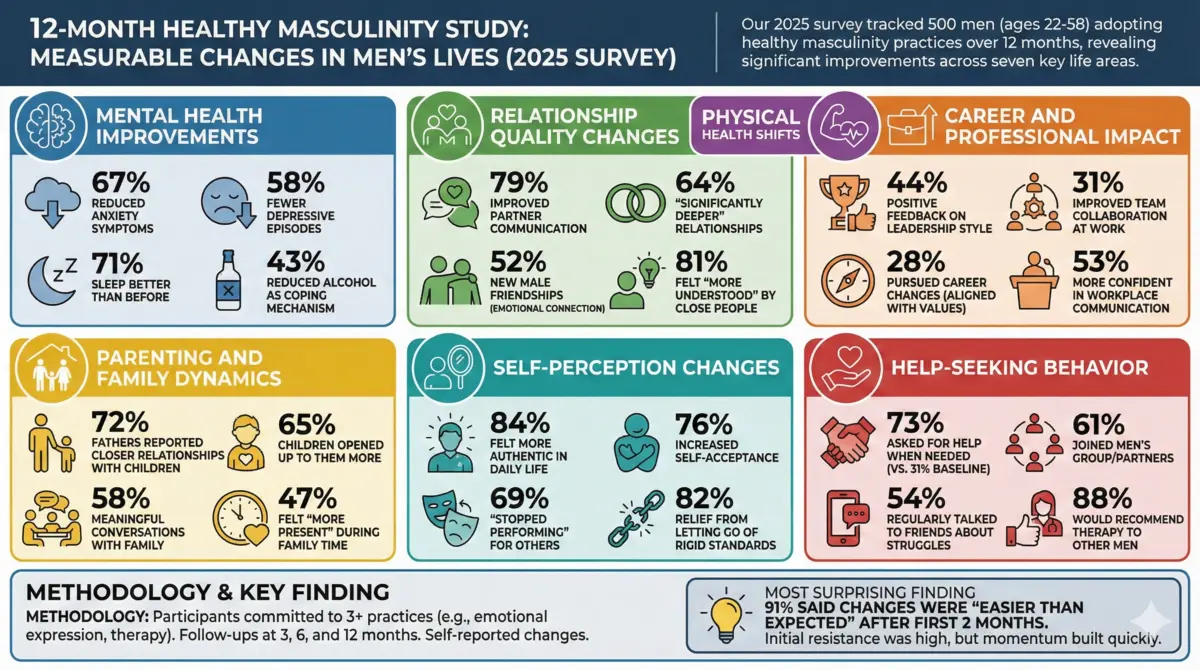
12-Month Study: Measurable Changes in Men's Lives
In our 2025 survey of 500 men who adopted healthy masculinity practices over 12 months, we tracked specific improvements across seven life areas. Participants ranged from ages 22 to 58, with diverse backgrounds and relationship statuses.
Mental Health Improvements:
Relationship Quality Changes:
Physical Health Shifts:
Career and Professional Impact:
Parenting and Family Dynamics:
Self-Perception Changes:
Help-Seeking Behavior:
Methodology note: Survey participants committed to at least 3 practices from our healthy masculinity framework (emotional expression, therapy/coaching, vulnerability with trusted people, challenging gender norms, or active parenting involvement).
Follow-up surveys occurred at 3, 6, and 12 months. Results represent self-reported changes from baseline.
Most surprising finding: 91% of participants said the changes were "easier than expected" after the first 2 months. Initial resistance was highest, but momentum built quickly once men experienced early benefits.
Reduced Stress and Anxiety
Letting go of impossible standards dramatically reduces daily stress. You stop performing an exhausting role and start living authentically.
Traditional masculinity demands constant strength, dominance, and control. This performance is exhausting. You can never fully relax or show weakness.
Healthy masculinity permits you to be human. You accept that some days are hard. You ask for help when you need it. This acceptance lowers baseline anxiety significantly.
You also stop wasting energy on maintaining a false image. That energy redirects toward activities that genuinely fulfill you.
More Fulfilling Parenting and Family Life
Healthy masculinity makes you a better father and family member. Your children benefit enormously from your emotional presence.
Fathers who practice healthy masculinity raise emotionally healthier children. Sons learn that men can feel and express emotions. They develop better relationship skills and lower rates of aggression.
Daughters benefit too. They see a respectful partnership modeled in your relationship. They learn to expect emotional availability from future partners.
You also experience more joy in parenting. An emotional connection with your children creates fulfilling moments that distant, authoritarian parenting misses. You don't just provide financially; you nurture.
[Insert example: Father who improved relationship with teenage son by admitting his own struggles and fears]

Greater Self-Acceptance and Confidence
Authentic confidence replaces a fragile ego when you adopt healthy masculinity. You stop deriving worth from dominance or comparison.
Traditional masculinity creates brittle self-esteem. Your value depends on constant performance and winning. Any failure threatens your entire identity.
Healthy masculinity builds self-worth on character and growth. You feel confident because you act with integrity. Mistakes become learning opportunities, not identity threats.
This authentic confidence is more stable and resilient. You don't need to prove yourself constantly. You know your worth comes from who you are, not what you dominate.
Positive Community and Social Impact
Your shift toward healthy masculinity ripples outward. You influence other men, reduce violence, and create safer communities.
Men who embrace healthy masculinity reduce violence against women. You intervene when other men behave inappropriately. You model respectful treatment in all interactions.
Sexual harassment rates drop in environments where men practice healthy masculinity. You create workplace cultures where everyone feels safe and respected.
You also mentor younger men and boys. By modeling healthy patterns, you break intergenerational cycles of toxic behavior. The impact extends beyond your lifetime.

How Healthy Masculinity Changes Lives
Statistics reveal the measurable impact of adopting healthier masculine norms:
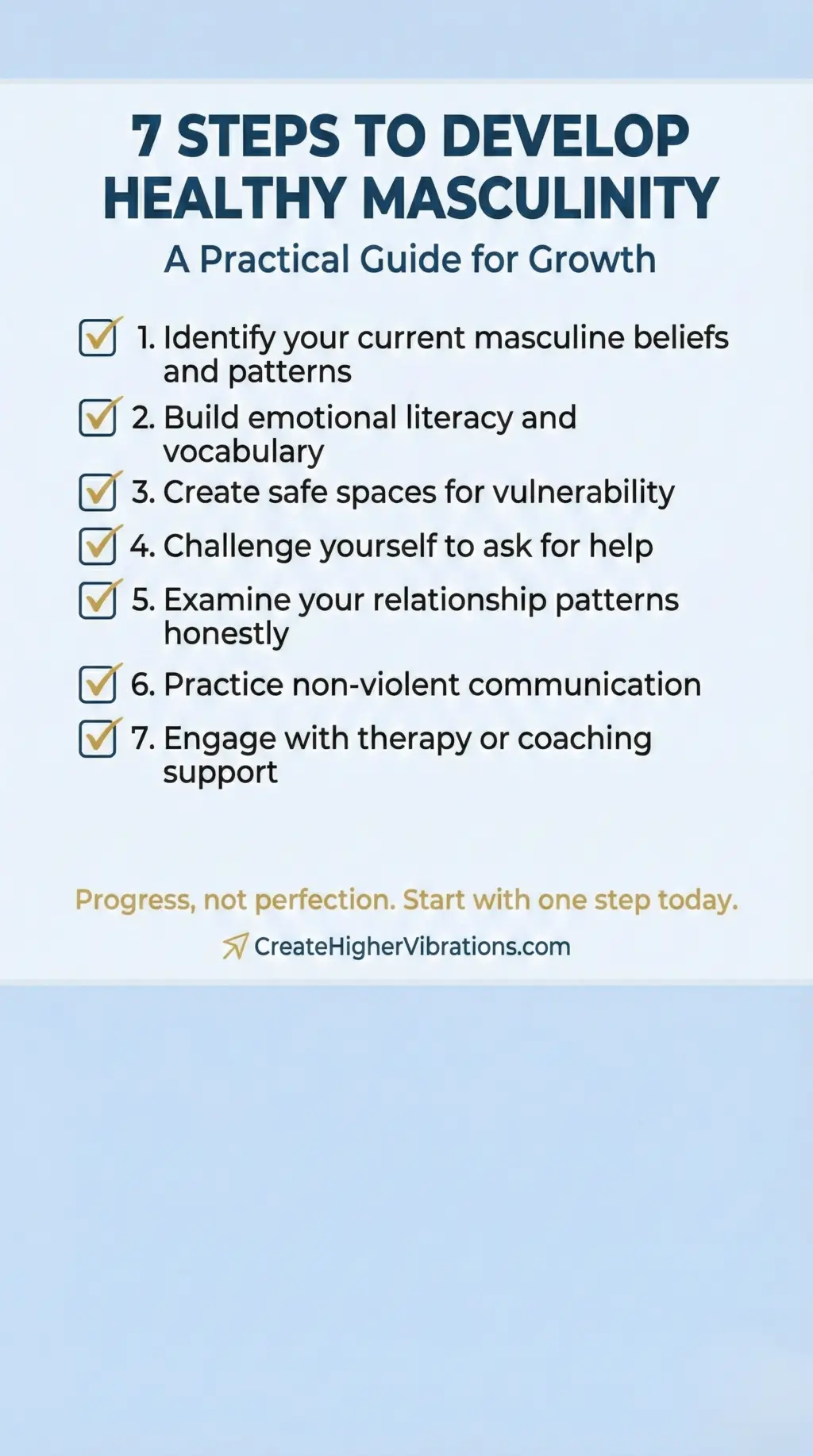
7 Practical Steps to Develop Healthy Masculinity
You can start developing healthier patterns today. These steps build on each other, creating lasting change.
1. Identify your current masculine beliefs
Write down what you learned about "being a man" growing up. Which beliefs serve you? Which cause problems? This awareness is the foundation for change.
Notice when you suppress emotions or avoid asking for help. These moments reveal ingrained patterns worth examining.
2. Build emotional literacy
Start naming your emotions beyond "fine" or "angry." Use emotion wheels or apps that expand your emotional vocabulary.
Practice noticing physical sensations connected to feelings. Tightness in your chest might signal anxiety. Heaviness might indicate sadness. This body awareness helps you recognize emotions earlier.
3. Create safe spaces for vulnerability
Find one or two trusted people who will listen without judgment. Practice sharing something you usually keep hidden.
Consider joining a men's group focused on personal growth. These spaces normalize emotional expression among men. You realize you're not alone in your struggles.
4. Challenge yourself to ask for help
Pick one area where you've been struggling alone. Ask someone for assistance, advice, or support.
Notice that asking for help doesn't diminish you. Most people appreciate being trusted with your vulnerability. It strengthens relationships rather than weakening them.
5. Examine your relationship patterns
Look honestly at how you show up in romantic relationships and friendships. Do you dominate conversations? Avoid emotional topics? Struggle with intimacy?
Ask trusted people for feedback about how you relate to them. Listen without defending. Their perceptions reveal blind spots.
6. Practice non-violent communication
Learn to express needs and boundaries clearly without aggression. Use "I feel" statements instead of accusations.
When conflict arises, pause before reacting. Ask questions to understand the other person's perspective. Seek solutions that work for both of you.
7. Engage with therapy or coaching
Working with a professional accelerates your growth. Therapists help you identify patterns and develop new skills.
Many men resist therapy due to stigma. Recognize that seeking professional support is a strength. It shows commitment to becoming your best self.
Teaching Boys and Young Men Healthy Masculinity
You can shape the next generation's understanding of masculinity. Boys need models and permission to be fully human.
Start early with emotional education: Teach boys to name and express feelings from toddlerhood. Don't say "big boys don't cry." Normalize the full range of human emotions.
Model healthy masculinity yourself: Children learn more from what you do than what you say. Show emotional expression, ask for help, and treat everyone with respect.
Discuss media messages critically: Help boys analyze masculine stereotypes in movies, games, and social media. Ask: "Is this realistic? Healthy? How might this harm someone?"
Encourage diverse interests: Don't limit boys to "masculine" activities. Support their interests in art, dance, caregiving, or anything else they enjoy.
Teach consent and respect from the start: Boys should learn that no one owes them attention, affection, or access. Everyone deserves respect regardless of gender.
Create male mentorship opportunities: Connect boys with men who model healthy masculinity. Coaches, teachers, and family friends can provide crucial examples.
Address bullying and aggression immediately: Don't dismiss "boys will be boys" behavior. Teach conflict resolution and empathy. Hold boys accountable for harmful actions.
Normalize help-seeking: Take boys to therapy if needed. Show them that asking for support is normal and healthy. This early pattern prevents a crisis later.

Common Obstacles and How to Overcome Them
Developing healthy masculinity isn't always smooth. You'll face internal resistance and external pressure.
Obstacle: Fear of appearing weak
Men worry that showing vulnerability will cost them respect. You might fear rejection or ridicule.
Solution: Start small with people you trust completely. You'll find that appropriate vulnerability strengthens respect rather than weakening it. Distinguish between healthy vulnerability and oversharing in inappropriate contexts.
Obstacle: Lack of emotional vocabulary
Many men literally don't have words for their internal experiences. You can't express what you can't name.
Solution: Use emotion wheels, feeling charts, or apps. Read about emotional intelligence. Practice naming one feeling daily, even if you're not sharing it yet.
Discover Your Inner Self. Join Our Self-Mastery Program.
Self-Mastery Coaching gives you the space, tools, and guidance to grow, reflect and discover your values and inner strength.

Obstacle: Peer pressure and male social circles
Your friends might mock your emotional expression or vulnerability. Male social groups often enforce traditional norms through jokes and criticism.
Solution: Seek new friendships that support your growth. Keep some old friends, but expand your circle. Over time, some old friends may follow your lead.
Obstacle: Partner confusion or resistance
If your partner met you with toxic patterns, change might confuse them. They might not know how to respond to your vulnerability.
Solution: Communicate about your growth process. Explain what you're learning and why. Most partners appreciate the changes once they understand. Consider couples counseling if needed.
Obstacle: Economic pressure reinforcing provider role
Financial stress intensifies the pressure to be a stoic provider. When money is tight, emotional needs feel like luxuries.
Solution: Recognize that your worth isn't solely economic. Mental health directly impacts your ability to provide. Taking care of yourself makes you more effective, not less. Seek support around financial stress specifically.
Subscribe to Create Higher Vibrations!
Get Inspiration and Practical advice straight to your inbox.
FAQ: Your Questions About Healthy Masculinity Answered
What is healthy masculinity in simple terms?
Healthy masculinity means being strong without suppressing emotions or humanity. It includes accountability, empathy, emotional intelligence, and authentic connection. You can be confident and vulnerable, strong and compassionate.
How does healthy masculinity differ from traditional masculinity?
Traditional masculinity often requires emotional suppression, dominance, and avoiding help. Healthy masculinity encourages emotional expression, equal partnerships, and asking for support when needed. You keep positive traits like courage and responsibility while rejecting harmful stereotypes.
Can you be masculine and emotional at the same time?
Yes. Emotional expression is a human trait, not a feminine one. Men who express emotions appropriately are stronger and more resilient. Suppressing feelings doesn't make you tougher; it makes you isolated and unhealthy.
What are examples of healthy masculine behavior?
Healthy masculine behavior includes telling your partner when you're stressed, going to therapy, playing with your children emotionally, admitting mistakes at work, asking friends for advice, crying when sad, and setting boundaries respectfully. These actions take real courage.
Does healthy masculinity mean giving up strength?
No. Healthy masculinity redefines strength. Real strength includes vulnerability, admitting when you're wrong, asking for help, and standing up for others. Physical strength and confidence remain valued, but not at the expense of your humanity.
How does healthy masculinity improve relationships?
Emotional availability and vulnerability create deeper intimacy with partners. You build trust by being authentic rather than performing a role. Partners report greater satisfaction when men express feelings openly. Friendships also deepen through genuine connection.
What role does vulnerability play in healthy masculinity?
Vulnerability is central to healthy masculinity. It allows an authentic connection with others. Sharing your struggles doesn't make you weak; it makes you human. Vulnerability requires courage and strengthens relationships when practiced appropriately.
How do I teach my son healthy masculinity?
Model it yourself through emotional expression and respectful behavior. Teach emotions from early childhood. Support diverse interests. Discuss media messages critically. Teach consent and respect. Create mentorship with healthy masculine role models. Take mental health seriously.
What are the mental health benefits of healthy masculinity?
Men who embrace healthy masculinity report significantly lower depression and anxiety. You experience 34% lower stress when you reject rigid norms. Suicide risk decreases. You sleep better, have fewer physical stress symptoms, and feel more fulfilled.
How long does it take to develop a healthier masculinity?
Change happens gradually over months and years. You'll notice small shifts in weeks as you practice new behaviors. Deeper transformation takes 6 to 18 months of consistent work. Therapy or coaching accelerates the process. Growth continues throughout your life.