
10 Best Root Chakra Healing Practices For Daily Life That Actually Keep You Grounded

Root chakra healing practices ground your energy at the base of your spine. They reduce anxiety, increase physical stability, and help you feel safe in your body. Simple techniques like visualization, yoga poses, and sound therapy take 5-15 minutes daily.
Over 60 million Americans meditate regularly, and adding root chakra focus makes those sessions more targeted and effective.
- Heal your root chakra in 5-15 minutes daily through grounding, breathwork, and movement. Consistency produces better results than intense, occasional efforts.
- Watch for physical signs like lower back pain, cold hands, or tight hips. Emotional signs include money anxiety and chronic restlessness.
- Practice grounding anywhere by placing your feet flat on the floor for 10 breaths, using box breathing (4-4-4-4 pattern), or making barefoot contact with the earth.
- A stable root chakra provides the foundation to process emotions safely and pursue spiritual work without feeling ungrounded or overwhelmed.
Best Root Chakra Healing Practices for Daily Life
When we talk about the best root chakra healing practices for daily life, we are talking about habits that help you feel safe in your body and steady in your decisions.
The root chakra, or Muladhara, sits at the base of the spine and is linked to survival needs, stability, and your connection with the earth.
Why Daily Practice Matters For Muladhara
We view the root chakra as the energetic “ground floor” of your system, so consistency matters more than intensity.
Small daily actions, practiced over weeks and months, make a bigger difference than rare, intense rituals that are hard to maintain.
Core Pillars Of Root Chakra Healing Practices

Understanding The Root Chakra’s Role In Your Daily Stability
Our content on the root chakra highlights its core purpose: to give you a stable base for physical, emotional, and spiritual life.
When Muladhara is balanced, you tend to feel more secure, more present, and less driven by fear and scarcity.
Common Signs Your Root Chakra Needs Attention
You might notice ongoing financial anxiety, chronic restlessness, or a constant feeling of being “on edge.”
Physically, recurring lower back pain, tight hips, and cold feet or hands can be subtle invitations to look at your grounding.
How The Root Chakra Connects To The Earth Element
We associate the root chakra with the earth element, which is about solidity, structure, and support.
Daily root chakra healing practices for daily life often include direct contact with the ground, slower breathing, and routines that reintroduce predictability.
Discover Your Inner Self. Join Our Self-Mastery Program.
Self-Mastery Coaching gives you the space, tools, and guidance to grow, reflect, and discover your values and inner strength.

Simple Grounding Practices You Can Use Anywhere
Grounding is the most direct way to support your root chakra in everyday situations, from a stressful commute to a difficult meeting.
We recommend starting with short, repeatable techniques that you can rely on several times a day.
Everyday Grounding Techniques
Nature-Based Grounding
Whenever possible, we suggest getting your bare feet on natural ground, such as grass or sand, even for a few minutes.
For many people, simply leaning against a tree or sitting on the earth while breathing slowly is enough to reset the nervous system and calm root-level fear.
Discover five simple daily practices to balance the root chakra and cultivate grounding, safety, and vitality in daily life.
Root Chakra Breathwork: Calming Survival Stress
Breathwork is one of the most practical root chakra healing practices for daily life because it can be done discreetly almost anywhere.
We use simple respiratory patterns that signal safety to the nervous system and help settle fight-or-flight activation.
Breathing Techniques For Muladhara
Why Breathwork Supports The Root Chakra
Rapid, shallow breathing often reflects fear or perceived threat, even when nothing dangerous is present.
By training slower, deeper breathing, you create a physiological baseline that supports inner messages of “I am safe” and “I can handle this.”
Movement, Yoga, And The Root Chakra In Daily Routines
Because Muladhara is located at the base of the spine, movement that involves the legs, hips, and lower back is especially helpful.
We see yoga and mindful walking as two of the most accessible root chakra healing practices for daily life.
Yoga For Grounding And Stability
Postures like Mountain Pose, Warrior I and II, Chair Pose, and Malasana (yogi squat) emphasize stable feet and strong legs.
Even a 10-minute sequence of these poses, practiced consistently, can help retrain your body to feel supported and capable.
Everyday Movement Tips

Working With Tiger Eye And Other Supportive Symbols
We often see clients drawn to tangible symbols when working with the root chakra, and stones are a common choice.
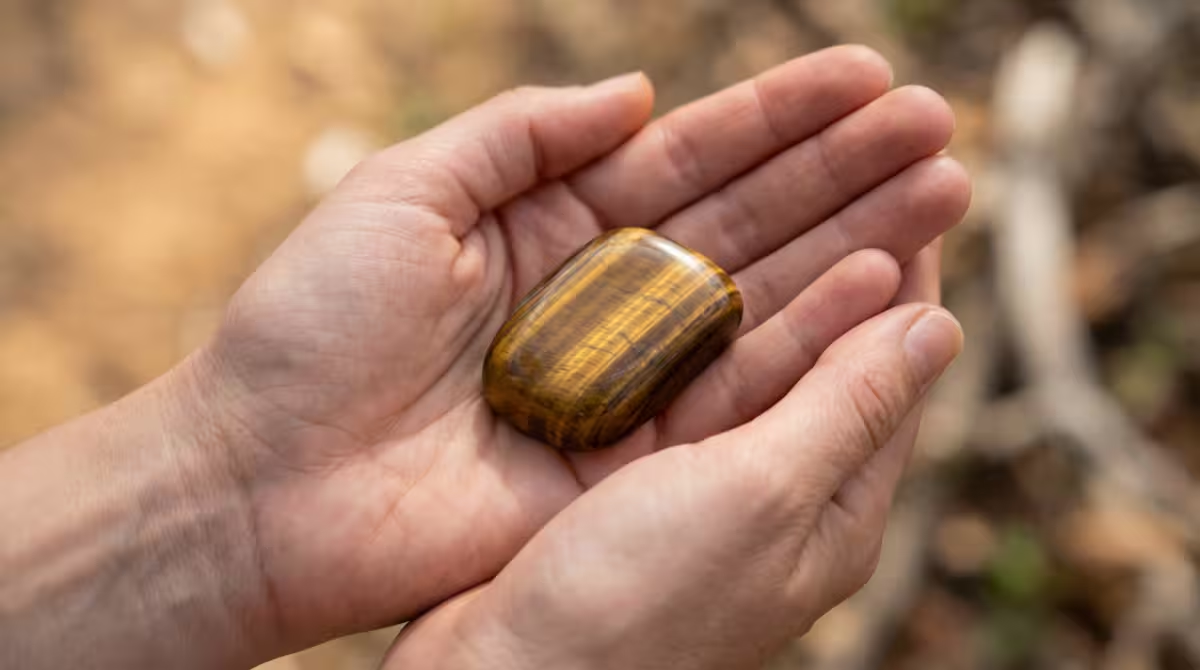
Tiger eye, in particular, has a strong association with courage, focus, and grounded confidence.
Tiger Eye For Daily Use
Tiger eye is a durable, semi-precious stone suitable for daily wear in pendants, bracelets, or pocket stones.
Many people like to hold tiger eye during breathwork or grounding exercises as a way to anchor their attention.
How To Integrate Stones Into Your Routine
Subscribe to Create Higher Vibrations!
Get Inspiration and Practical advice straight to your inbox.
Root Chakra Affirmations And Mindset Shifts
Our root chakra content emphasizes that internal language shapes how safe or unsafe we feel in everyday life.
Affirmations are most effective when paired with breath and body awareness, not used as disconnected words.
Practical Root Chakra Affirmations
How To Use Them Daily
We recommend choosing one affirmation and repeating it quietly during your grounding or breathing practice for 2 to 5 minutes.
Over time, you can integrate it into transitions, like starting your workday, commuting, or preparing for sleep.
Daily Routines That Quietly Support Muladhara
Beyond specific techniques, the structure of your day has a major impact on root chakra stability.
We encourage clients to view routine itself as medicine for Muladhara.
Foundational Daily Habits
Designing A Root-Friendly Day
Even 5 minutes of grounding in the morning, a 10-minute walk later, and 5 minutes of breathwork at night add up over time.
Your goal is not perfection, but predictability and kindness toward your body and nervous system.
How The Root Chakra Supports Emotional And Spiritual Work
In our broader chakra framework, the root provides the safety needed for emotional processing in the sacral and solar plexus centers.
It also allows heart, throat, third eye, and crown practices to feel integrated rather than destabilizing.
Link To The Heart And Upper Chakras
Without a rooted base, heart-opening practices can feel overwhelming or confusing instead of compassionate.
Grounding also helps you discern intuitive insights from anxiety when working with the third eye and crown chakras.
Balancing Bottom-Up And Top-Down Practices
We often suggest pairing spiritual or intuitive exercises with something physical and grounding, such as a walk or gentle yoga.
This keeps your system balanced so that growth feels sustainable rather than draining.
Signs Your Root Chakra Needs Attention
We encourage you to notice both physical and emotional signs that your root chakra may need more attention.
Part of the best root chakra healing practices for daily life is the ability to respond early instead of waiting for a crisis.
Common Patterns Of Imbalance
What To Do When You Notice These Signs
Start by returning to simple practices like feet-on-floor grounding, slow breathing, and short walks.
From there, you can gradually reintroduce supportive routines around sleep, food, movement, and connection.
FAQ
Simple routines like grounding, breathwork, movement, affirmations, and time in nature support the root chakra in everyday life.
A stable root chakra forms the foundation for the sacral, solar plexus, heart, throat, third eye, and crown chakras to function harmoniously.
Grounding stones are often used in daily rituals to encourage stability, protection, and a sense of safety in the body.
Root chakra work supports emotional flow in the sacral chakra and confidence in the solar plexus, creating a stable base for growth.
Yes. Feeling grounded and safe in the body makes it easier to open the heart chakra and experience connection and compassion.
Grounded energy helps keep spiritual insight practical and clear, supporting intuition without becoming overwhelming.
Traditional chakra names offer deeper insight into the system and are often explored as part of a broader chakra study or spiritual education.
Conclusion
The best root chakra healing practices for daily life are less about dramatic rituals and more about steady, repeatable choices that signal “I am safe, I am supported” to your body and mind.
By combining grounding, breathwork, movement, affirmations, and simple routines, you create a practical foundation that supports not only Muladhara but your entire chakra system and daily well-being.