
Improving Emotional Intimacy Through Vulnerability: 10 Practical Ways To Feel Closer

Intimacy is not just a feeling; it is a practice, and in one randomized controlled trial with 26 married couples. Those who learned to lean into vulnerability through Emotionally Focused Couple Therapy experienced significantly higher intimacy and lower shame compared with couples who did not.
When we bring mindful vulnerability into our relationships, emotional connection becomes less of a mystery and more of a skill we can consciously grow together.
Key Takeaways
What is emotional intimacy in a relationship?
How does vulnerability improve emotional connection in relationships?
Is emotional intimacy only about feelings?
What role does honesty play in intimacy?
Understanding Emotional Intimacy Through Vulnerability
Why Vulnerability Matters
Emotional intimacy is the depth of emotional connection in relationships, the sense that your inner world is seen, respected, and held with care. It is less about constant intensity and more about sustainable honesty, comfort, and mutual presence.
Vulnerability is the doorway to that depth. Without vulnerability, we can share space, tasks, and even a bed, yet still feel unseen.
What Emotional Intimacy Feels Like
When emotional intimacy is strong, the relationship feels like a judgment-free zone where you can share fears, hopes, and dreams. You do not have to perform or hide, and you can disagree without fearing emotional abandonment.
This kind of connection supports long-term relationship satisfaction and resilience, especially during transitions or stress.
How Vulnerability Fuels Emotional Connection
Vulnerability is not oversharing everything at once, it is the aware choice to reveal what is real for you in the present moment. It includes sharing needs, limits, confusion, and even the parts of yourself you were taught to hide.
When you allow yourself to be known in this way, you invite your partner into closer emotional connection in relationships, and you model that openness is welcome.

The Foundations: Emotional Safety And Openness Before Deep Disclosure
Emotional intimacy thrives in an environment of emotional safety and openness. Safety does not mean the absence of conflict, it means you both feel confident that your vulnerability will not be used to shame, punish, or control you.
Before you ask your partner to “be more vulnerable,” it helps to ask if the current conditions actually support that level of openness.
What Emotional Safety Looks Like In Practice
These behaviors quietly say, “Your feelings are safe with me,” which is exactly what allows vulnerability to emerge.
Building Trust Through Honesty, Even In Small Moments
Building trust through honesty is less about grand confessions and more about everyday consistency. Following through on what you say, telling the truth about small things, and admitting when you are unsure all matter.
Over time, each honest moment becomes a brick in the foundation that will hold deeper disclosures later.
Discover Your Inner Self. Join Our Self-Mastery Program.
Self-Mastery Coaching gives you the space, tools, and guidance to grow, reflect and discover your values and inner strength.

Authentic Communication: Speaking From The Heart Instead Of Performing
Authentic communication means your words, tone, and body language match your inner experience. In intimate relationships, people feel disconnected not just because of what is said, but because of what is held back or disguised.
Vulnerability brings your inner truth closer to the surface, so your partner does not have to guess what you really feel or need.
Shifting From Surface Talk To Emotional Truth
Many couples spend years talking primarily about logistics, plans, and other people. There is nothing wrong with this, but alone, it does not feed emotional intimacy.
To deepen the connection, begin to add language about how experiences impact you emotionally, not just what happened.
This type of authentic communication makes you more reachable, not more demanding.
Using “I” Statements To Share Vulnerably Without Blame
“I” statements are a simple yet powerful container for vulnerability. They help you share your emotional reality without turning it into an accusation.
For example, “I feel shut out when you look at your phone while I am sharing something important” invites connection, while “You never listen” usually invites defensiveness.
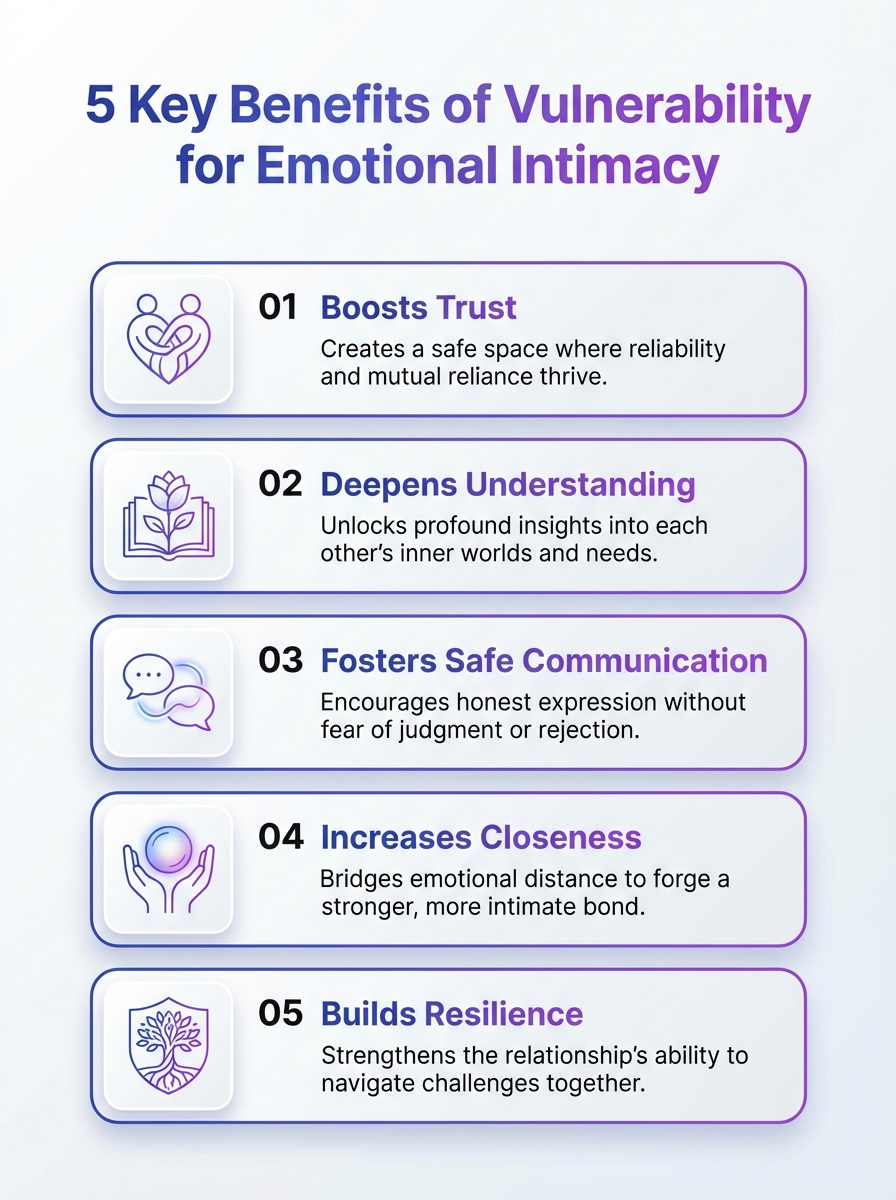
An at-a-glance look at how vulnerability enhances emotional intimacy, highlighting five key benefits. Practical steps help readers embrace vulnerability in relationships.
Sharing Vulnerabilities Gradually: A Step-By-Step Approach
Improving emotional intimacy through vulnerability rarely happens in one big conversation. It is usually a series of smaller, courageous moments that build on each other over time.
We often see couples get discouraged because they attempted one deep share, felt misunderstood, then shut down entirely.
Three Levels Of Vulnerable Sharing
Moving too quickly into deep territory before safety is established can feel flooding, which may lead to shutdown rather than closeness. Instead, let each level be an experiment that teaches you both how to respond to one another’s rawness.
Co-Creating Agreements Around Vulnerability
We recommend couples consciously agree on how they want to handle tender disclosures. For example, you might create a shared understanding that when one person says “I am going to share something vulnerable,” the other pauses, listens, and avoids problem-solving unless asked.
Simple agreements like this protect the emotional space you are both trying to cultivate.
Listening As Vulnerability: Receiving Your Partner’s Inner World
We often focus on the courage required to share, but it also takes vulnerability to listen fully. When you listen deeply, you temporarily set aside your defenses and your need to be right so that you can meet your partner where they are.
This kind of listening is itself an act of love, because you are allowing their reality to matter alongside your own.
Active Listening To Strengthen Emotional Connection
Active listening includes reflecting back what you heard, asking clarifying questions, and checking if you truly understood. It shifts the focus from defending your position to understanding their experience.
Even if you disagree about the details, you can still validate the feelings that your partner is naming.
Letting Go Of Fixing And Staying Present Instead
Many partners jump into problem-solving because they feel uncomfortable with emotional pain. It can feel vulnerable to simply sit with your loved one’s sadness or fear without rushing to change it.
Yet, this non-fixing presence is often exactly what increases emotional safety and openness, and what makes future vulnerability more likely.

When Past Wounds Block Vulnerability: Projection, Triggers, And Old Stories
Sometimes you genuinely want more emotional intimacy, but you find yourself shutting down, getting angry, or blaming almost automatically. In these moments, old wounds and unexamined patterns are usually running the show.
Psychological projection, emotional triggers, and attachment patterns can all interfere with your capacity to be vulnerable in the present.
Understanding Psychological Projection In Relationships
Psychological projection happens when we attribute our own disowned feelings or fears to our partner. For example, we might accuse them of being uncaring when we are the one shutting down.
This pattern makes authentic communication difficult because the conversation is now about our stories instead of what is actually happening.
When we own our projections, we reclaim our power to respond differently instead of repeating the same reactions.
Working With Emotional Triggers Instead Of Avoiding Them
Feeling “too sensitive” or “overreactive” is often a sign that current events are awakening unresolved pain. Triggers are not proof that you are broken, they are invitations to understand yourself more deeply.
In relationships, naming your triggers, such as “I get activated when I feel ignored because of my history,” can actually invite compassion and deeper intimacy rather than distance.
Rebuilding Emotional Intimacy After Betrayal Or Disconnection
When trust has been broken through betrayal, lies, or pattern-level dismissal, vulnerability often feels unsafe. The nervous system learns to brace rather than open, and emotional intimacy can feel like a distant memory.
Yet many couples do rebuild emotional connection in relationships after rupture, when both partners commit to honest repair work.
Honesty And Accountability As The First Bridge
After a betrayal, the partner who broke trust needs to practice clear, consistent honesty without minimizing or deflecting. Accountability is not about endless punishment, it is about demonstrating reliability with both actions and words.
The injured partner may need space to ask questions and express the full range of their feelings without being rushed to “get over it.”
Creating New Patterns Of Safety
Rebuilding means more than apologizing. It includes shifting behaviors that created vulnerability to harm in the first place, such as secrecy, dismissiveness, or defensiveness.
Transparent routines, deeper check-ins, and shared boundaries around sensitive areas, like digital activity or finances, can gradually restore emotional safety and openness.
Everyday Habits That Nurture Emotional Intimacy Through Vulnerability
Emotional intimacy is not built only in big talks, it is maintained in daily habits. Many of these habits are simple, but they require consistency and intention.
Think of them as micro-vulnerabilities, small opportunities to show your inner world and invite your partner into it.
Daily Rituals That Support Emotional Connection
These rituals encourage authentic communication without needing a crisis to start talking deeply.
Normalizing The Language Of Feelings
Many of us were not taught emotional vocabulary, so we say “fine” when we are actually sad, tired, or frustrated. Expanding your language for inner experience makes vulnerability clearer and less confusing.
Instead of “I am upset,” you might say “I feel hurt and a bit lonely right now,” which gives your partner more to respond to with care.
Subscribe to Create Higher Vibrations!
Get Inspiration and Practical advice straight to your inbox.
Navigating Differences In Vulnerability Styles And Attachment
Not every partner has the same comfort level with emotional exposure. One may share easily and seek closeness, while the other prefers more space, reflection, or privacy.
These differences often relate to attachment histories, nervous system patterns, and past experiences with trust and intimacy.
Recognizing Your Vulnerability Patterns
Some people tend to pursue connection, increasing contact and disclosure when they feel insecure. Others tend to withdraw or shut down, especially when conversations feel high-stakes.
Neither style is “wrong,” but both benefit from awareness and compassionate conversation rather than judgment.
Creating A Shared Language Around Needs And Limits
Talking explicitly about how much emotional intensity feels manageable is itself an act of vulnerability. You might say, “I want to go deeper with you, and I also need us to go slowly so I do not shut down.”
Mutual respect for these limits prevents resentment and supports sustainable growth in emotional intimacy.

Measuring Growth: Signs Your Emotional Intimacy Is Deepening
Because emotional intimacy is felt rather than seen, couples often ask us, “How do we know if our work with vulnerability is actually helping?” There are recognizable signs that your connection is growing more secure and authentic.
Instead of looking for perfection, watch for gradual shifts in how you both respond to each other over time.
Key Indicators Of Deeper Emotional Intimacy
These shifts signal that vulnerability is no longer a threat, but a shared practice that strengthens your bond.
Conclusion
Improving emotional intimacy through vulnerability is a conscious choice to live more honestly with yourself and your partner. It is not about perfection; it is about returning, again and again, to authentic communication, emotional safety, and openness, and building trust through honesty in the moments that matter.
As you practice sharing your inner world and receiving your partner’s with compassion, emotional connection in relationships stops feeling fragile and starts feeling steady, spacious, and real. This is the heart of self-mastery in a relationship, and it is available to you one courageous, honest conversation at a time.