
Aquamarine Meaning: Calm, Courage and the Stone of the Sea
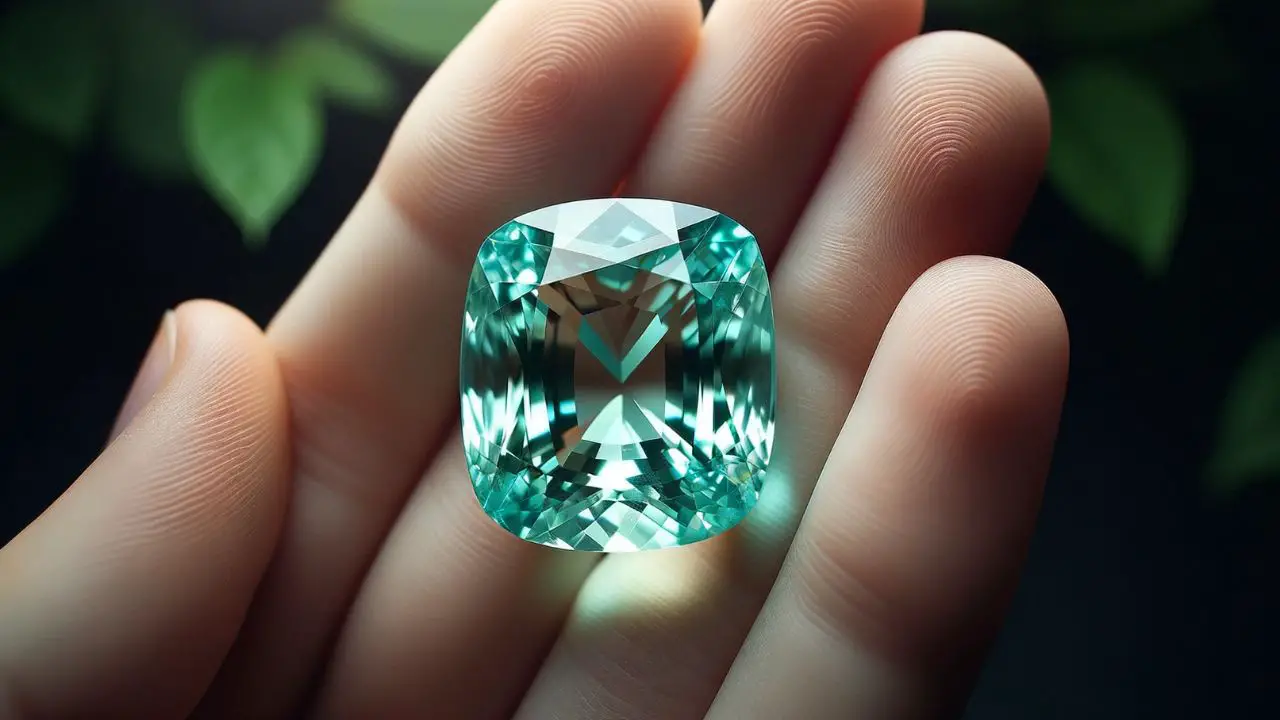
Sailors once carried it to calm the waves. Today people carry it to calm the words stuck in their throat.
Key Takeaways
Aquamarine meaning centers on calm, courage and clear communication. Named from the Latin for “sea water,” this pale blue gem was once carried by sailors to calm the waves and keep them safe. Today it is linked to the throat chakra and used to speak honestly without losing your peace.
Its meaning has been remarkably steady across centuries. Knowing its history, its colors and how people use it gives the stone far more weight in your hand.
What Does Aquamarine Mean?
The core meaning of aquamarine is calm water. The stone stands for a mind as clear as the sea on a still day.
The name says it plainly. According to the Gemological Institute of America, “aquamarine” comes from two Latin words: aqua, meaning water, and marina, meaning of the sea.
Aquamarine’s meaning has several layers.
What Is the Spiritual Meaning of Aquamarine?
The spiritual meaning of aquamarine is peaceful truth. It is a stone for saying what is real without adding storm to it.
In energy work, aquamarine belongs to the throat chakra, the center of speech and self-expression. A blocked throat chakra is often described in everyday terms: a tight throat before you speak, agreeing when you mean no, or talking around a point instead of making it.
Aquamarine is used to loosen that knot. Many practitioners also connect it to the heart, since truthful speech works best when it comes with care. Its watery color ties it to the element of water and to the flow of emotion.
That is why many people choose it during grief or after a breakup, when feelings need to move rather than freeze.
What Are the Benefits and Healing Properties of Aquamarine?
Crystal healing traditions credit aquamarine with calm, clarifying benefits. These are the ones practitioners name most often.
These benefits come from crystal practice. No study has tested aquamarine for calm or clarity. Its value lies in the pause it invites before you speak.
How Do You Use Aquamarine?
Aquamarine is best used where words matter. These are the most common ways people work with it.
Set one intention each time. “I say what I mean, calmly” is a good place to start.
How Do You Cleanse Aquamarine?
Aquamarine is a durable gem. The GIA’s aquamarine care guide rates it 7.5 to 8 on the Mohs scale and notes that its color is stable against light.
For physical cleaning, warm, soapy water is always safe. Ultrasonic and steam cleaners are usually safe unless the stone has liquid inclusions or fractures. Heat is not recommended.
Crystal practitioners also cleanse it energetically.
Can Aquamarine Go in Water?
Yes. Aquamarine is hard and stable, so water will not harm it. The GIA lists warm, soapy water as a safe way to clean it.
Take care with stones that have visible cracks, glue, or a delicate setting, since water can work into gaps. Dry the piece after rinsing. Avoid hot water and sudden temperature changes, because heat is not recommended for this gem.
What Does an Aquamarine Ring or Necklace Mean?
An aquamarine necklace keeps the stone near the throat, the placement most practitioners prefer. It is a common choice for teachers, speakers and anyone who wants to feel steady when they talk.
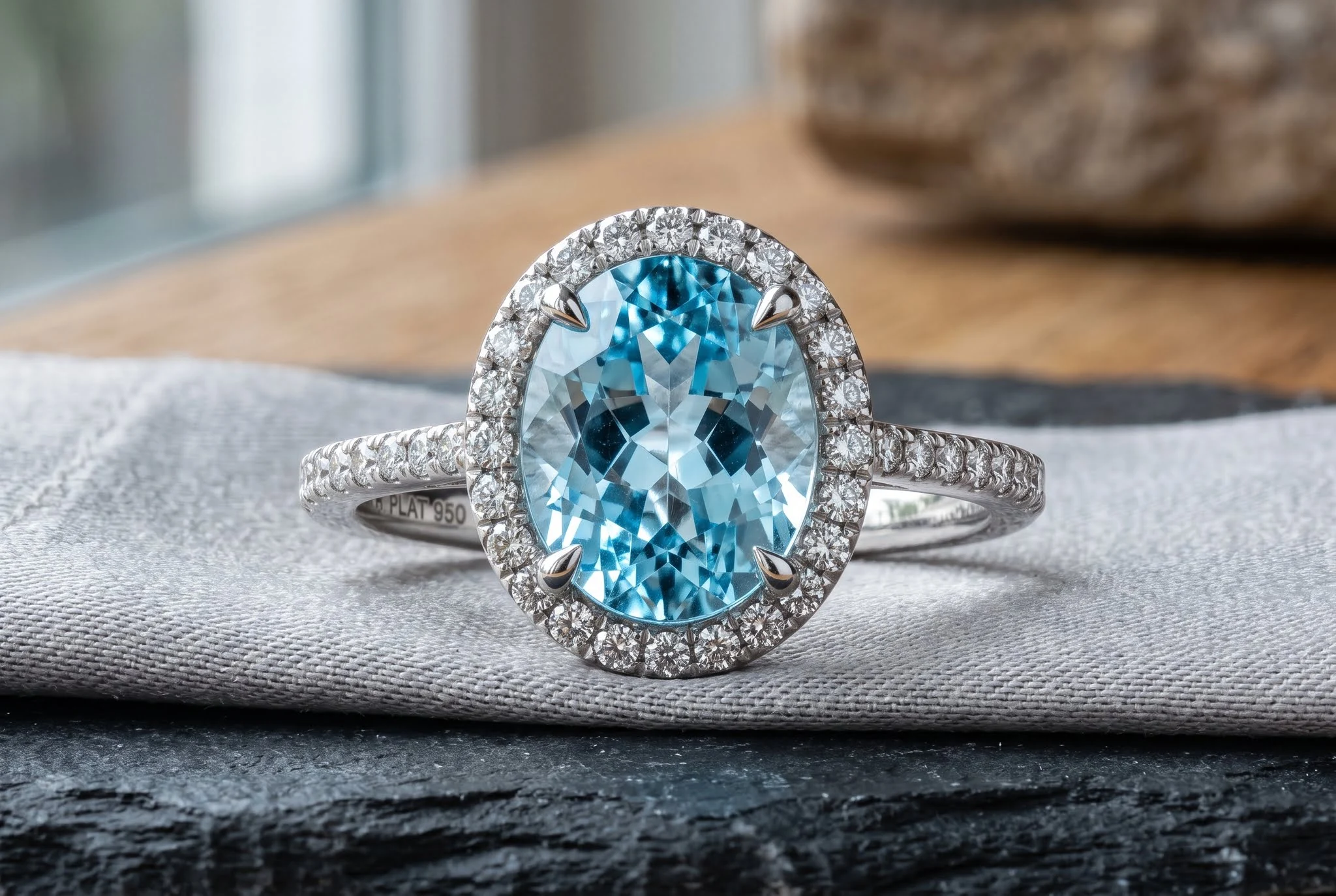
An aquamarine ring carries the stone’s old link to marriage. Aquamarine has long been thought to bring happiness to couples, so it is a popular choice for engagement rings and anniversary gifts.
Aquamarine is durable enough for daily wear. Protect it from hard knocks, since any gem can chip if struck at the wrong angle.
How Can You Tell If Aquamarine Is Real?
Blue glass and blue topaz are the most common look-alikes. A few clues help.
For a valuable piece, ask a gemologist to test it.
What Stones Pair With Aquamarine?
Aquamarine pairs well with stones that support calm speech or balance its cool energy.
Why Is Aquamarine the March Birthstone?
Aquamarine is one of two March birthstones, along with bloodstone. It is also the gem of the 19th wedding anniversary.
Its calm sea color suits the turn from winter to spring. The GIA notes that its clear, often inclusion-free stones came to symbolize purity of spirit and soul.
In astrology, aquamarine is most often linked to Pisces, the water sign that covers much of March. It is also recommended for Aries, whose fiery energy it cools, and for Aquarius and Gemini, signs tied to communication and ideas.
What Is the History of Aquamarine?
Sailors are at the heart of aquamarine’s story. Ancient mariners claimed the gem would calm waves and keep them safe at sea.
Older lore about beryl, the mineral family aquamarine belongs to, goes further. It was believed to protect the wearer against foes in battle and in lawsuits.
It was said to make the wearer unconquerable and amiable, and to quicken the intellect. Aquamarine was also thought to bring happiness in marriage.
Famous stones carry the story forward.
What Is Aquamarine Made Of?
Aquamarine is a variety of beryl, a mineral made of beryllium, aluminum, silicon and oxygen. It is the same mineral as emerald. The difference is the trace element that colors each one.
Iron gives aquamarine its blue to blue-green shades. Emerald’s green comes from chromium or vanadium. Other beryls include pink morganite and golden heliodor.
Aquamarine often grows in large, clean, six-sided crystals, which is why big stones stay affordable. According to the GIA, the largest gem-quality aquamarine crystal mined to date is 19 inches long.
Where Is Aquamarine Found?
Brazil has been an important source for two centuries. Stones come from pegmatite deposits in the state of Minas Gerais, near the gem center of Teófilo Otoni.
Aquamarine is also mined high in Pakistan’s Karakoram mountains, where miners climb to more than 3,000 meters. Other sources include Kenya, Madagascar, Nigeria, Zambia and Mozambique.
What Is Green Aquamarine?
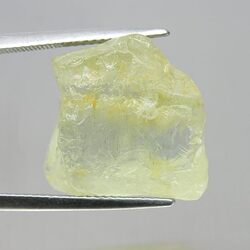
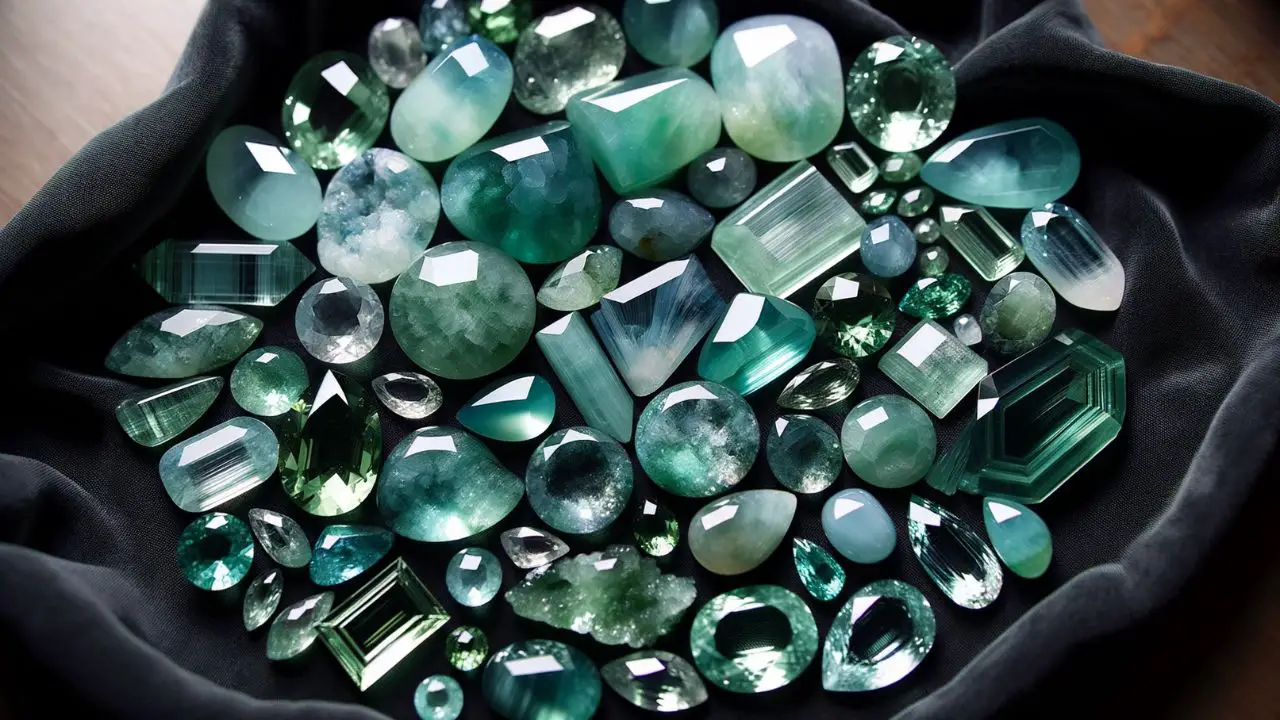
Green aquamarine is the same gemstone as blue aquamarine, a variety of the mineral beryl, with a stronger green tint. Both shades come from traces of iron inside the crystal.
Ferrous iron gives aquamarine its blue. Ferric iron adds a yellow tone, and that yellow mixed with blue reads as green.

Is Green Aquamarine Rarer Than Blue?
Some of the blue aquamarine sold today started out greener. Heating reduces the yellow tone from ferric iron, which shifts the stone toward blue. Naturally blue stones sell for more than heated ones.
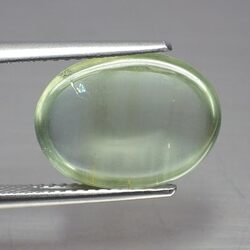
Green and yellow-green stones are the same mineral in a different shade. That includes cat’s-eye aquamarine, which shows a single band of light when cut as a smooth dome. All of them share the same hardness, durable enough for everyday jewelry.
What Does Green Aquamarine Mean?
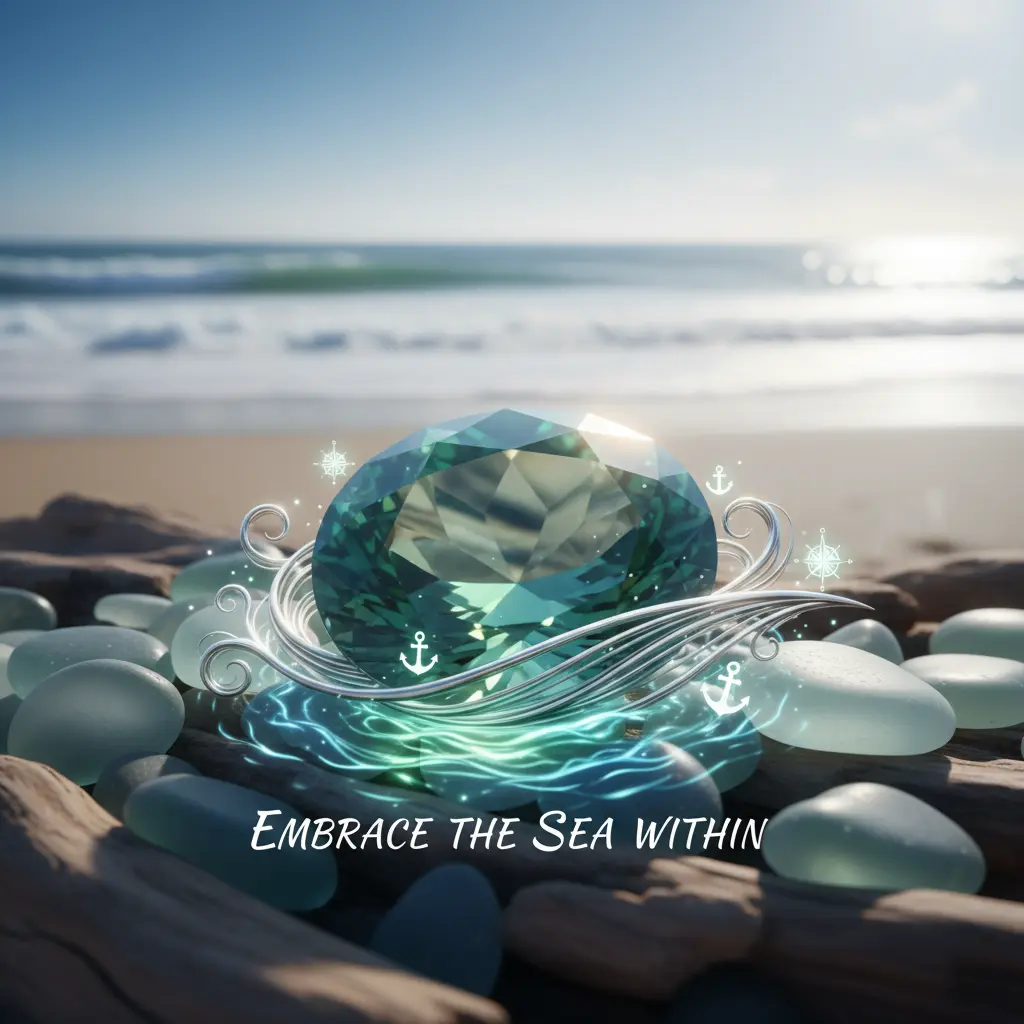
Crystal healers give green aquamarine the same meaning as blue: peace, nerve, and truthful speech through the throat chakra. The green shade is often linked to the heart as well, so people use it for compassion and for letting go of old emotional hurts in meditation.
Use it the way you would use blue aquamarine. Wear it near the throat, hold it while you meditate, or carry a tumbled stone for hard conversations.
Subscribe to Create Higher Vibrations!
Get Inspiration and Practical advice straight to your inbox.
The Sailor’s Pocket
Picture a sailor before a long voyage, pressing a small blue stone into a pocket. The sea will do what it does. The stone is for the one who has to face it.
Your sea may be a meeting, an apology or a truth you have been holding back. Aquamarine will not calm it for you. It will ride along in your pocket while you step aboard.
Tomorrow, name the one conversation you keep circling. Hold the stone, breathe out slowly, then say the first sentence out loud once before you say it for real.
If you want a bolder companion stone, tiger’s eye brings the fire aquamarine cools. Every other stone mentioned here has its own page, gathered under healing crystals.