
Visualization Manifestation: How to Use Your Mind to Create Real Change

Visualization manifestation is the practice of deliberately creating vivid, emotionally charged mental images of your desired outcomes to prime the brain for action, attention, and alignment.
It draws on real neuroscience, including how your brain filters reality, builds new pathways, and responds to mental rehearsal. When you combine it with a calm meditative state, the practice becomes significantly more powerful.
This guide explains how visualization manifestation actually works, why it fails for so many people, and how to build a simple, consistent practice that creates genuine change.
- Visualization manifestation trains your brain filter system to notice relevant opportunities.
- The meditative state lowers mental resistance. Meditation makes mental imagery more receptive to your subconscious mind.
- Emotion acts as the carrier wave. Feeling the outcome now matters more than seeing the outcome.
- Process visualization consistently outperforms outcome visualization for your motivation.
- Consistency over time matters more than the duration of any single session.
Definition: Visualization manifestation is the intentional practice of creating detailed, sensory-rich mental images of desired goals while generating the emotions of already achieving them. It uses neurological principles, including neuroplasticity and the reticular activating system, to align the brain with the outcomes you want to create.
What Is Visualization Manifestation?
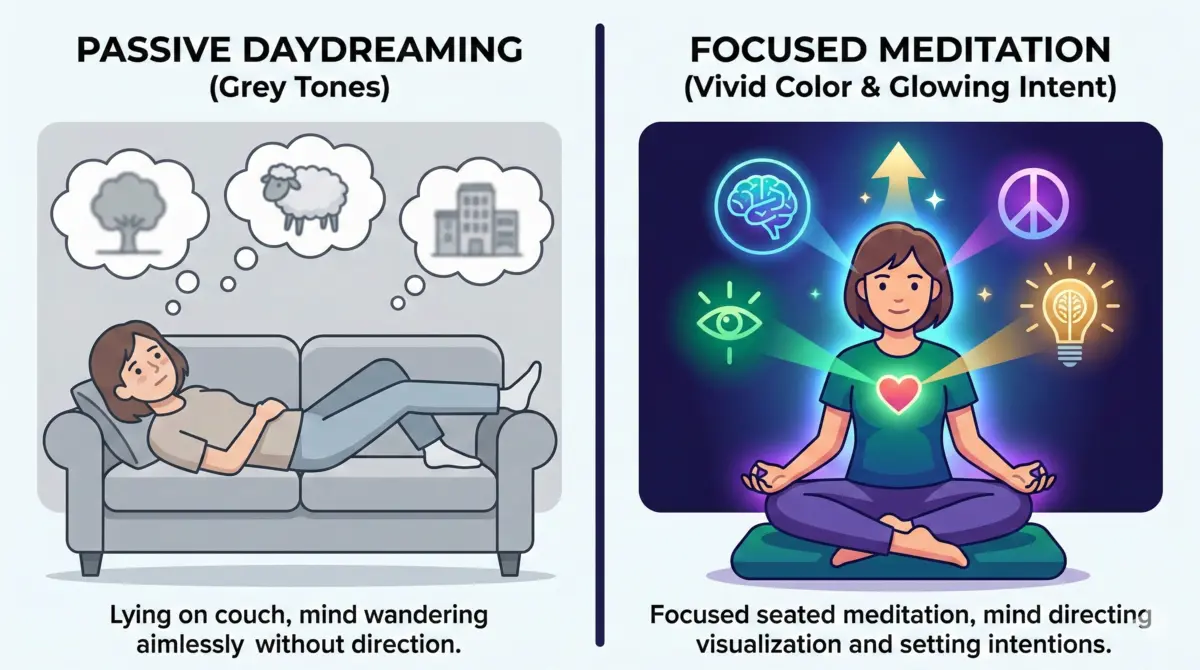
Visualization manifestation is not daydreaming. Daydreaming is passive, random, and emotionally flat. Visualization manifestation is deliberate, sensory, and emotionally engaged.
You are not hoping a scene appears in your mind. You are actively constructing it and attaching real feeling to it.
At its core, the practice asks your brain to experience your desired future as though it is already real.
When done consistently and with enough emotional specificity, this trains neural circuits that shift attention, behavior, and decision-making to align with that future. It is not magic. It is directed neuroplasticity in practice.
How Meditation Deepens the Manifestation Process
Meditation is the most effective entry state for visualization manifestation. During meditation, your brain shifts from active beta wave activity, which is associated with stress, critical thinking, and reactivity, into slower alpha and theta states.
These slower states make the subconscious mind far more receptive to new imagery and emotional input.
This is why sitting quietly and breathing before you visualize produces stronger results than trying to visualize while distracted or rushing. The meditation creates the neurological conditions for visualization to land at a deeper level.
Positive Psychology’s research on guided imagery supports this, noting that practices like peaceful place visualization are most effective when preceded by grounded, attentive breathwork. The combination is the point.
Why Your Brain Responds to Visualization
Visualization manifestation is not just feel-good thinking. Neuroscientists now have a clear picture of what happens in the brain when you visualize vividly and consistently.
Understanding this changes how seriously you take the practice.
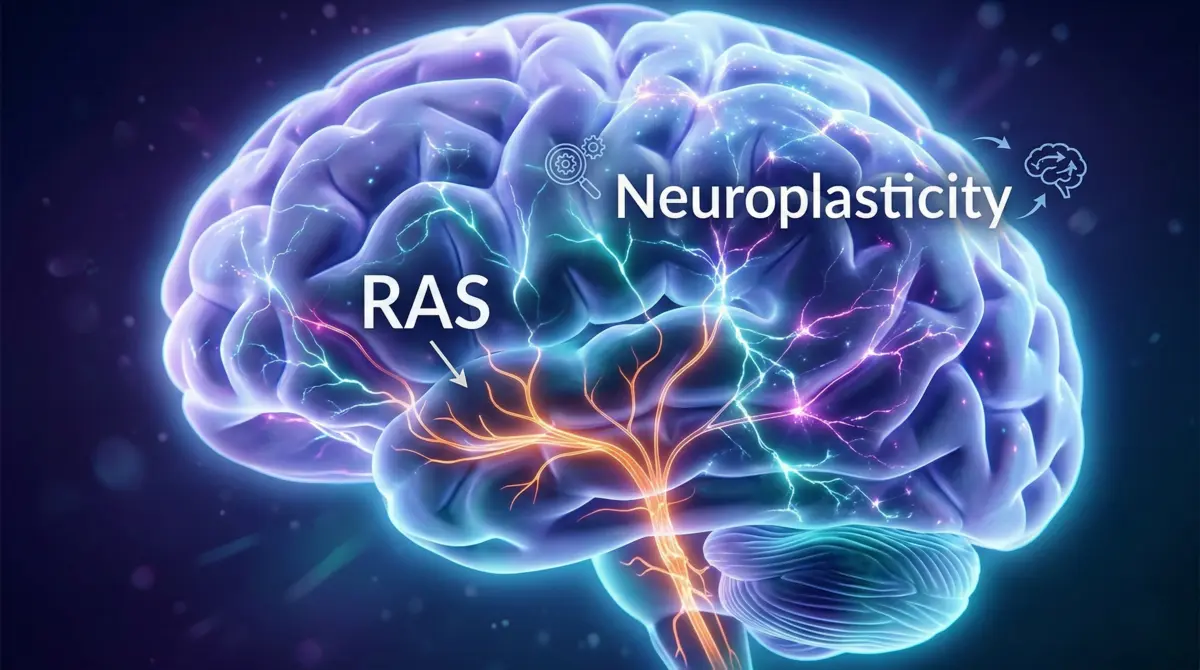
The Reticular Activating System: Your Brain’s Hidden Filter
Think about the last time you bought a new car, or even thought about buying one. Suddenly, you saw that car everywhere. The cars were always there. Your brain just started filtering for them. That filter is your reticular activating system (RAS).
The RAS is a network of neurons in your brainstem that acts as a gatekeeper for what information your conscious mind pays attention to. You receive millions of sensory inputs per second, and the RAS decides what to surface.
When you visualize a specific outcome consistently and emotionally, you signal to the RAS that this outcome is important. It begins filtering your environment for matching people, ideas, and opportunities that were always there but previously invisible.
Neuroscientist James Doty at Stanford explains this as redirected attention, where training the brain to focus makes you systematically more likely to notice and act on aligned opportunities.
Manifestation becomes less about cosmic attraction and more about trained, selective attention.
Subscribe to Create Higher Vibrations!
Get Inspiration and Practical advice straight to your inbox.
Dopamine, Neuroplasticity, and Mirror Neurons
Three additional mechanisms strengthen why consistent visualization works.
Dopamine is released in anticipation of a reward, not only when you receive it. As the Rowan Center for Emotional Health explains, when you vividly imagine achieving a goal, your brain releases a small surge of dopamine in advance.
That chemical preview reinforces the drive to take the actions that match the image you held. Visualization fuels motivation before a single action is taken.
Neuroplasticity refers to the brain’s ability to rewire itself through repeated experience. Every time you run a detailed visualization session, you are reinforcing specific neural pathways.
Neuroscientists confirm that repeated visualization activates motivation and reward circuits and reshapes neural connections toward goal-directed behavior. Repetition is the mechanism, not belief alone.
Mirror neurons, discovered in the 1990s, fire both when you perform an action and when you vividly imagine performing it. This means a detailed mental rehearsal of a goal activates the same brain circuits as living that experience.
Elite athletes have used this for decades. The same principle applies to any goal you want to manifest, from a difficult conversation to a career outcome to a personal transformation.
Why Most People’s Visualization Doesn’t Work
The practice is simple in theory. But most people run into the same two problems, and neither is about believing hard enough.
Outcome Visualization vs. Process Visualization
Outcome visualization is picturing the result. You have the job. You are at your ideal weight. You are holding the check. It feels good briefly, and then motivation fades.
Psychology Today notes that outcome-only visualization, without engaging all senses or picturing the process, can actually reduce motivation by giving the brain a premature sense of completion.
Process visualization works differently. You see yourself taking the specific steps, handling the obstacles, building the habits, and making steady progress. You feel the satisfaction of doing, not just the having.
This type of visualization builds genuine confidence and aligns behavior with the goal. For most practical outcomes, a combination works best: begin with the outcome to establish emotional direction, then shift to the process to build momentum.
Action visualization vs attraction visualization covers this distinction in depth for those who want a detailed framework.
Discover Your Inner Self. Join Our Self-Mastery Program.
Self-Mastery Coaching gives you the space, tools, and guidance to grow, reflect and discover your values and inner strength.
The Missing Emotional Bridge
Seeing a mental image is not enough. The emotion attached to the image is the real signal your nervous system responds to. If you visualize a goal with no feeling, your subconscious registers it as neutral information.
When you generate the actual emotion, the feeling of relief, confidence, joy, or ease that comes with achieving the goal, the nervous system responds as though that state is real. This is the emotional bridge.
The simplest way to access it: before you begin your visualization session, recall a real past experience where you felt exactly the emotion you want your goal to produce.
Hold that feeling for 30 seconds, then transition into your visualization from that state. The emotional frequency becomes the carrier wave for everything you picture.
How to Practice Visualization Manifestation
A consistent 10 to 15-minute daily session is more effective than occasional hour-long sessions. Mornings work well because the mind is naturally closer to the relaxed alpha state just after waking.
Evenings work well because theta states near sleep make imagery particularly receptive.
Here is a simple step-by-step framework for a single session:
- Find a quiet place where you won’t be interrupted for 10 to 15 minutes
- Close your eyes and take five slow, deep breaths to enter a relaxed state
- Recall a real memory where you felt a strong positive emotion (confidence, joy, or peace)
- Hold that emotional state for 30 seconds before you begin visualizing
- Construct your desired outcome in specific sensory detail: what you see, hear, feel, smell
- Shift to process visualization: picture yourself taking the next concrete steps toward this goal
- Spend 2 to 3 minutes in the “already there” feeling, as if the outcome is a current reality
- Breathe out slowly, set one aligned action you will take today, then open your eyes
The action at step 8 is not optional. Visualization organizes and amplifies action. It does not replace it.
Visualization Meditation Techniques for Manifestation
Goal Achievement Visualization
Sit comfortably and close your eyes. Visualize one specific goal as already achieved. Use all five senses to make the scene as detailed as possible: where you are, what you hear, what the air feels like, what you are wearing, and who is with you.
Then step back and watch yourself in that scene from the outside. Feel the satisfaction, gratitude, and calm confidence of that moment. This technique reinforces identity and builds motivational clarity.
Identity-Based Visualization
Instead of seeing yourself achieve a goal, see yourself as the person who has naturally become that outcome. There is a difference between “I am getting the promotion” and “I am someone who leads teams with confidence.”
Identity-level visualization, seeing who you are rather than just what you have, creates the deepest and most lasting behavioral alignment. The subconscious responds most strongly to changes in self-concept.
A 2023 study published in peer-reviewed research found that people who practice belief-in-manifestation consistently rate themselves as more successful and show higher hope scores, a concrete sign of identity-level shifts in self-perception.
Sensory-Rich Scene Visualization
Choose a real or imagined setting where your desired outcome is already present. This could be a serene space you know well or an entirely constructed environment.
Immerse yourself in sensory detail: the temperature of the air, the texture of surfaces around you, the sounds in the background. The more sensory channels you activate, the deeper the subconscious encoding.
This is the “safe place” or “peaceful scene” technique, elevated from relaxation into manifestation practice by anchoring your goals within it.

Combining Visualization with Affirmations and Scripting
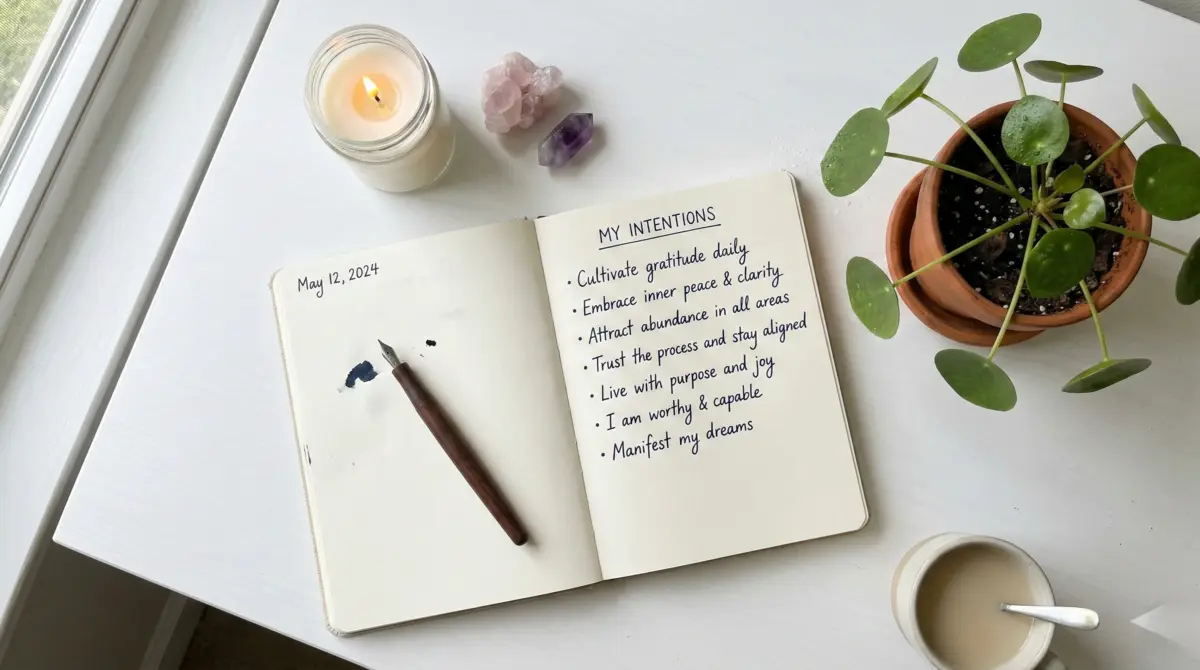
Visualization works even better when paired with affirmations repeated before or during the session, and with scripting (writing your desired reality in the present tense as though it has already happened) done directly after.
Action visualization combined with written scripting reinforces the brain’s encoding of new self-concept patterns through multiple channels simultaneously: visual, auditory, and kinesthetic.
Even five minutes of morning scripting after a short visualization session creates a compounding effect over weeks.
How Long Does Visualization Manifestation Take to Work?
There is no universal timeline because outcomes vary by complexity, current belief patterns, and consistency of practice.
Simple behavioral shifts, like showing up more confidently in meetings or noticing new opportunities in a familiar space, can appear within one to two weeks of daily practice.
Larger external changes typically unfold over months because they require consistent, aligned action, not just visualization.
Early signs that your visualization practice is working include a lighter general mood, spontaneous moments of gratitude, and faster emotional access to your desired state during sessions.
Some practitioners call this “bridge events,” unexpected encounters or information that moves you toward your goal.
These are not coincidences. They are the RAS filter doing exactly what the visualization trained it to do.
Your Mind Is Already Practicing
Every day, whether you intend to or not, your brain is running mental simulations. Most of them are unconscious, shaped by habit, worry, or the past. Visualization manifestation is simply the decision to run those simulations on purpose.
You do not need a perfect practice. You need a consistent one. Ten minutes each morning, a meditative breath to settle the mind, a clear and feeling-rich image of where you are headed, and one aligned action you take after.
That sequence, repeated over weeks, is what rewires the brain and retrains the filter that decides what you notice in the world around you.
The neuroscience backs it. The technique is learnable. And the only thing that separates people who find this useful from those who dismiss it is usually the willingness to try it seriously for long enough to feel the shift.
Start small. Start today. The version of you that already lives this way is closer than you think.